Shopping Cart
There are no more items in your cart
Drying Psilocybes with Silica Gel | EDABEA
Categories :
Mushrooms
Drying and Preserving Psilocybe cubensis Specimens with Silica Gel
The correct drying of mycological material is crucial for its long-term preservation, whether for collecting, microscopic study, or botanical documentation. Fresh Psilocybe cubensis mushrooms contain about 90% water by weight — meaning the drying process drastically reduces their weight and directly impacts the quality and durability of preservation. This article describes the pre-drying process with ventilation and the final drying with silica gel, with photographs of each phase. If you want to delve deeper into the species' biology, you can check our article on Psilocybe cubensis: history, science, and cultural context.
Necessary Materials
- Cultivation Kit Psilocybe cubensis B+ or another substrate with mature mushrooms
- Orange Silica Gel without Cobalt Chloride (important: use only non-toxic silicon dioxide gel)
- Low-flow fan
- Newspaper
- Hermetically sealed cardboard box, trunk, or glass jar
- Vacuum Sealer for final preservation (optional)
Optimal Harvesting Time for Drying
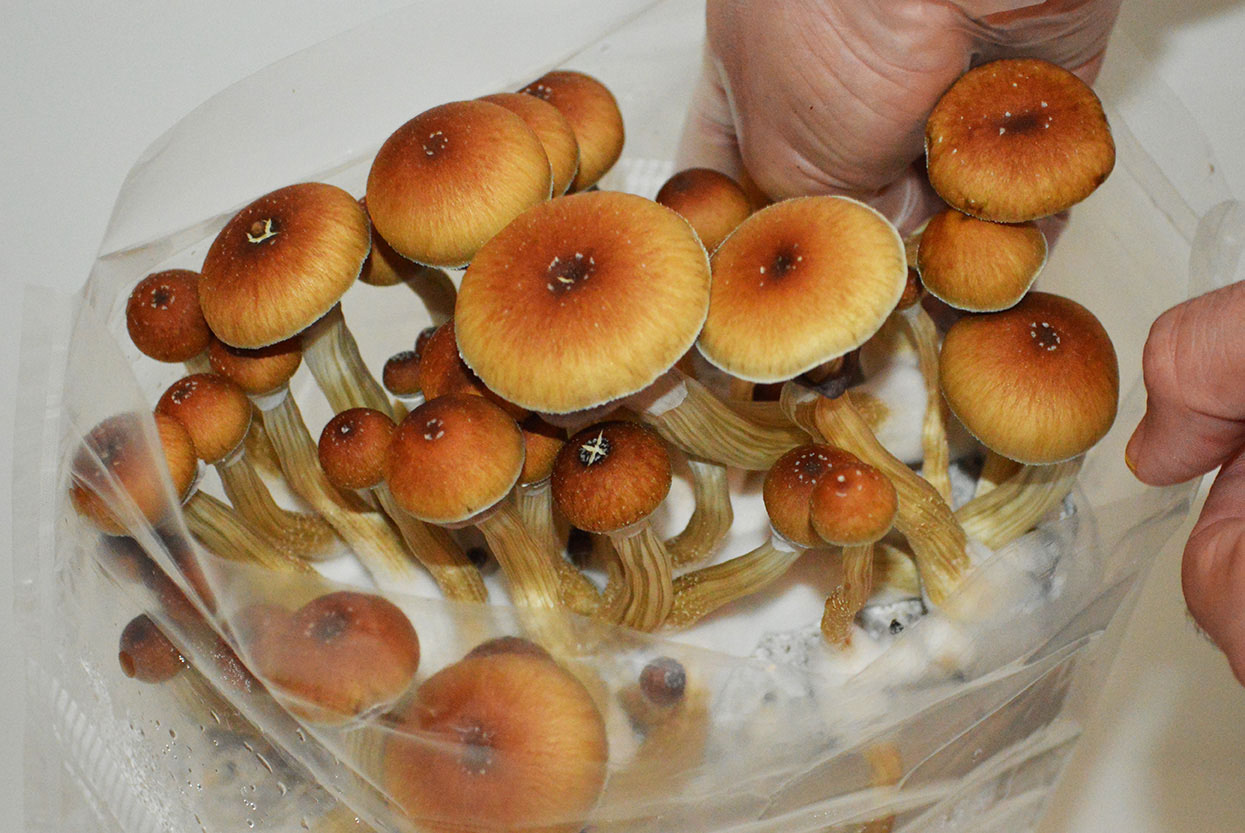
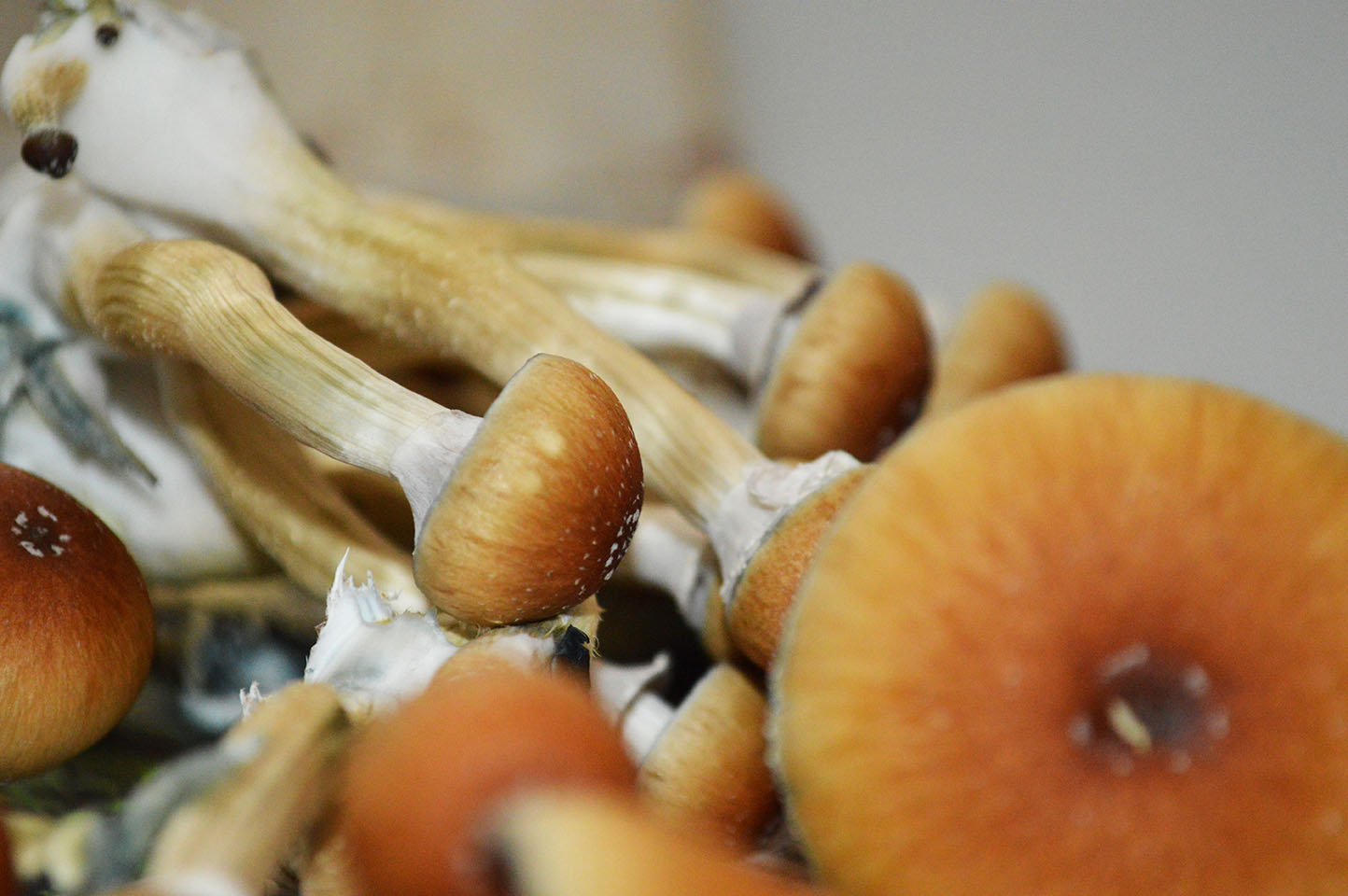
The optimal harvesting time to obtain specimens with the best dry weight ratio is just before the partial veil — the membrane connecting the cap and stem of the mushroom — breaks. At this moment, the fungus has reached full development but has not yet released spores. Once the veil breaks, the mushroom begins its final maturity and spore release, which reduces the specimen's quality for preservation.
 |
 |
 |
 |
 |
 |
Once harvested, carefully remove the mushrooms from the substrate following the cultivation kit instructions and place them on newspaper to start the pre-drying phase.
Phase 1 — Pre-drying with Ventilation
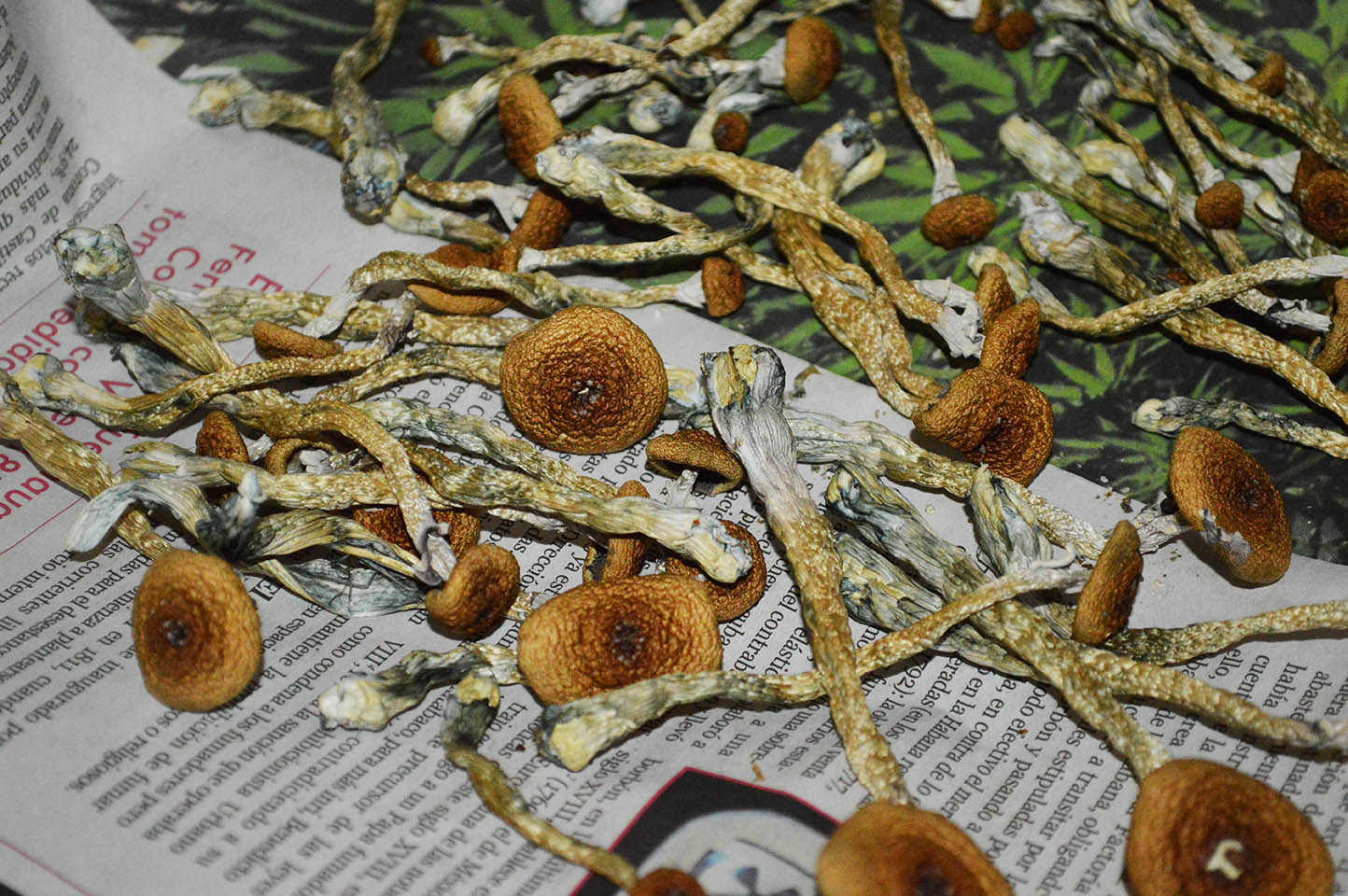
Freshly harvested mushrooms contain approximately 90% of their weight in water. Before placing them in the silica gel container, it’s advisable to pre-dry for 48 to 72 hours to eliminate most of this surface moisture. The most effective method is to place the specimens on newspaper and position a low-flow fan to circulate the air around them without directing it straight at them — direct airflow can dehydrate them unevenly and damage the specimen.
After this period, the mushrooms will have drastically reduced in weight and will exhibit a more compact texture, ready for the final drying phase with silica gel.
 |
 |
Phase 2 — Final Drying with Silica Gel
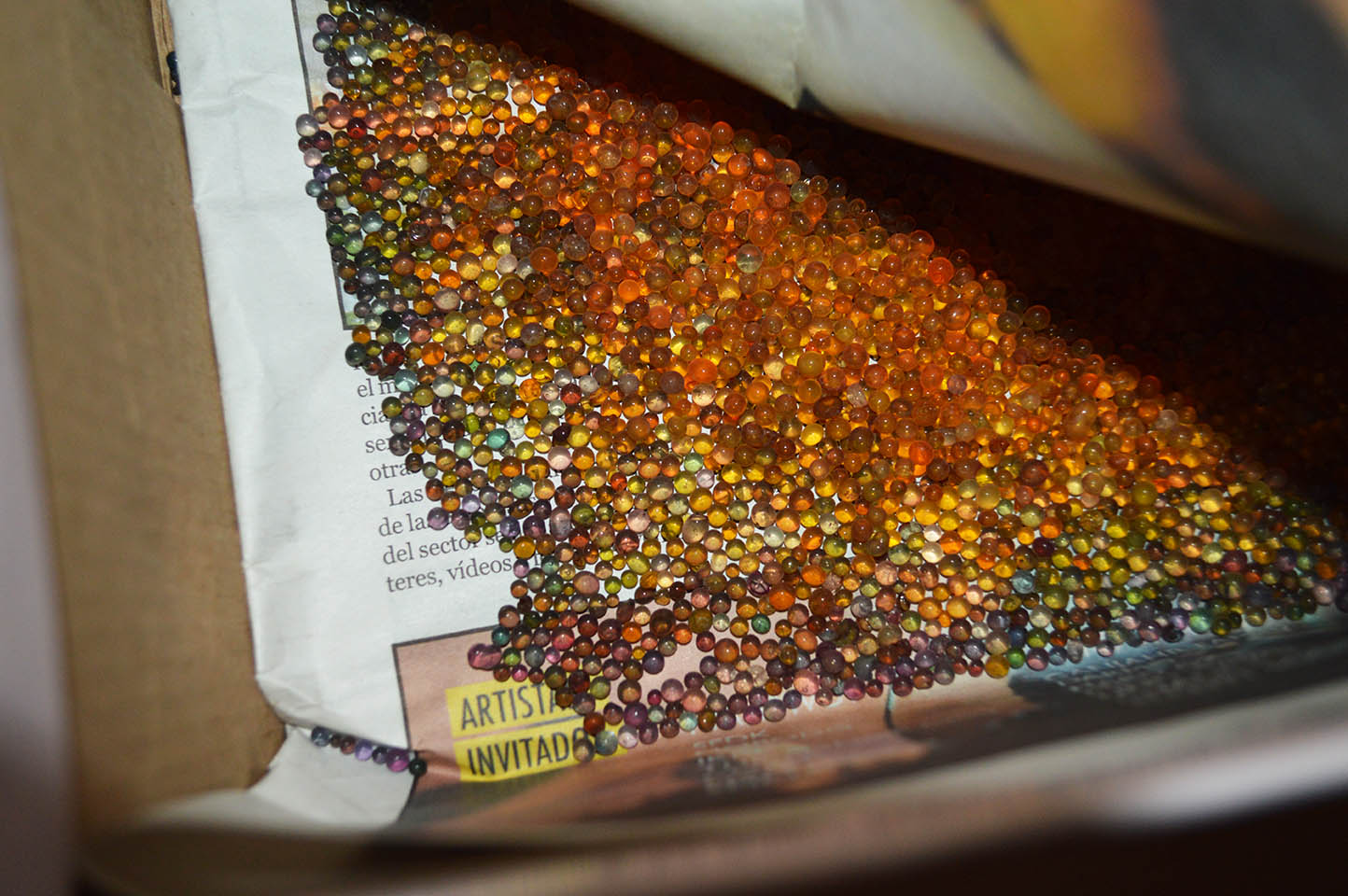
Silica gel is a porous silicon dioxide (SiO₂) desiccant that efficiently absorbs moisture from the surrounding air. The orange silica gel contains a color indicator — orange when active, dark green when saturated — allowing you to monitor the process without frequently opening the container. It is essential to use silica gel without cobalt chloride (CoCl₂), a toxic compound found in some market blue silica gels.
The procedure is as follows:
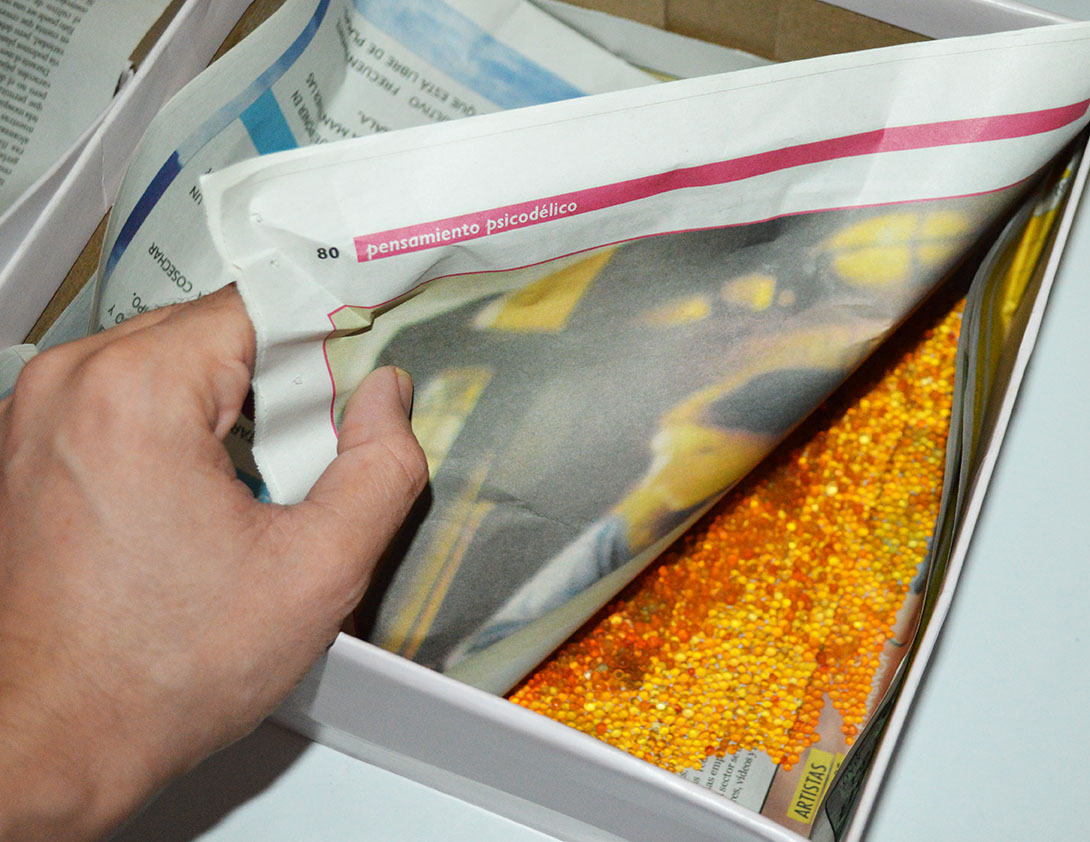
Place a sheet of newspaper at the bottom of the container. Distribute the silica gel over the paper. Cover the gel with two additional sheets of newspaper — this middle layer is important: the specimens should not come into direct contact with the gel, which could adhere to the material or damage the mushroom's surface. Place the pre-dried specimens on the top newspaper sheets.
 |
 |
 |
 |
 |
 |
 |
 |
Close the container and leave it unopened for at least 48 hours. Frequently opening the container introduces ambient moisture and slows the process. After 48 hours, open and check the color of the silica gel: it will progress from orange to dark green as it absorbs moisture. The process is complete when the gel is completely dark or when the specimens have the described consistency.
 |
 |
 |
Optimal Drying Point — the "Cookie" Criteria
In applied mycology for the cultivation and preservation, the reference drying point for Psilocybe cubensis specimens is colloquially referred to as "cookie" drying: the mushroom is correctly dried when, upon gently bending it, it fractures cleanly and dry — with no residual flexibility — and shows a completely dehydrated interior. If the specimen bends without breaking, it still contains residual moisture that will compromise its long-term preservation.
In regions with high ambient humidity, reaching this drying point with natural methods can be difficult or impossible. Silica gel consistently solves this problem, regardless of environmental conditions.
 |
 |
Regenerating Silica Gel
Saturated silica gel can be regenerated by heating in a conventional oven between 120 and 180°C until it regains its original orange color — never in a microwave, as heating is not uniform and may damage the material. With successive regenerations, the gel gradually loses its absorption capacity; when it no longer completely regains its orange color after baking, it’s time to replace it.

Preserving Dry Material
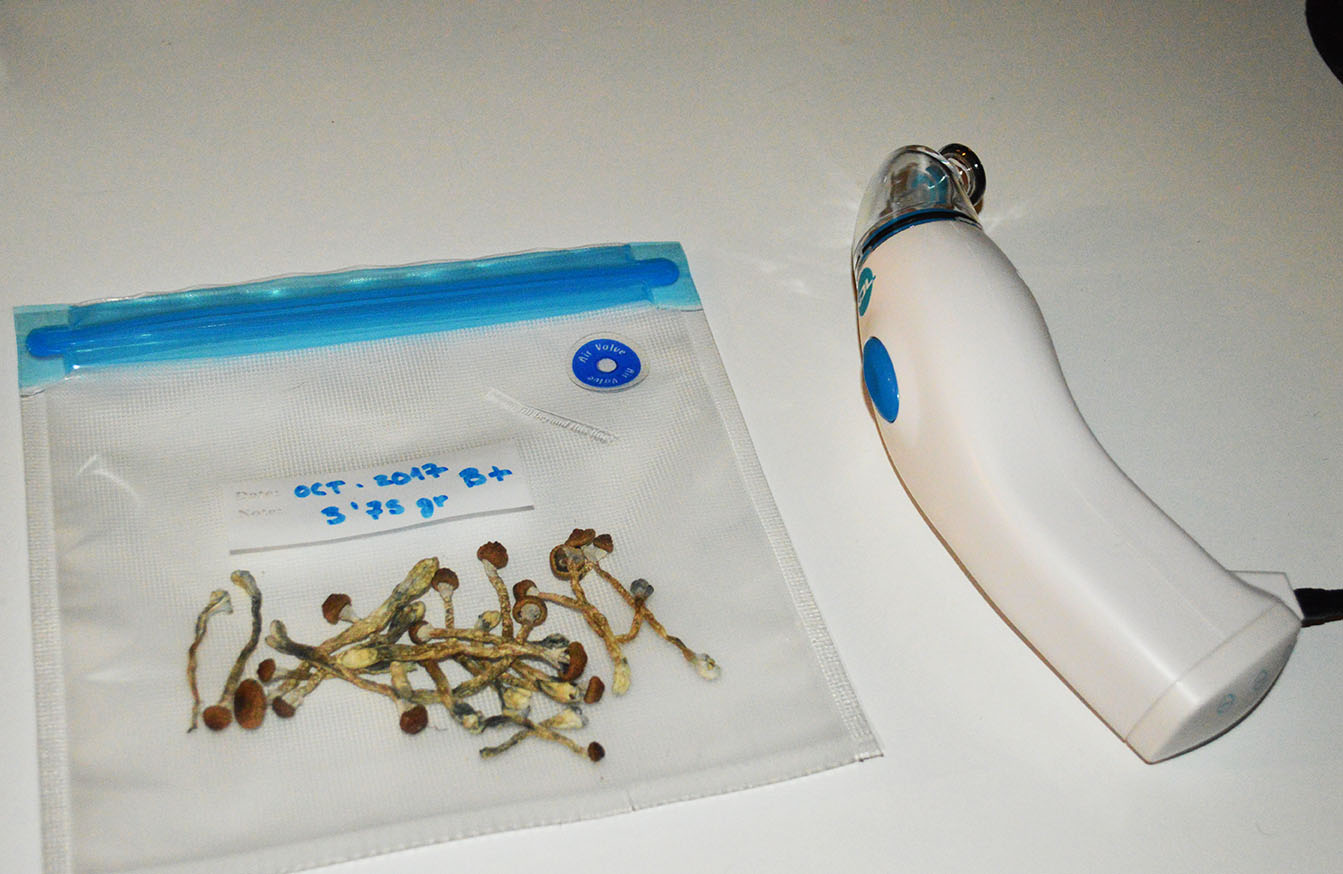
Once the optimal drying point is reached, specimens must be kept protected from ambient moisture. The two most effective options are vacuum packaging — using a vacuum sealer — or storing in a hermetically sealed glass jar with silica gel inside. Both methods prevent the reabsorption of ambient moisture that would degrade long-term preservation. In environments with high ambient humidity, vacuum packaging is the most robust option.
 |
 |
 |
 |
Legal Situation
The regulation of Psilocybe cubensis and its active compounds varies by jurisdiction. It is the buyer's responsibility to verify the applicable regulations in their place of residence. Edabea products are marketed exclusively as botanical collection material and mycological research.
Article by Germán Carrera. Reviewed and updated by the Edabea team. Last updated: April 2026.
Share this content