Bongs


Buy Bongs — Glass, Acrylic, and Ceramic Bongs at Edabea

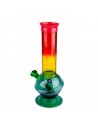
At Edabea, you will find a selection of smoking bongs organized by material and type, with models ranging from compact 10 cm formats to 40 cm pieces, in glass, acrylic, and ceramic. The catalog is divided into four subcategories: glass bongs, acrylic bongs, ceramic bongs, and bong accessories. If you want to delve deeper into how they work and the available types, you can check our article on what a bong is.


What is a Bong and How Does it Work

A bong is a water filtration device for smoking, composed of a base or water chamber, a vertical tube, a downstem, and a bowl where the material is placed. When inhaling from the mouthpiece, the smoke passes through the water before reaching the inhalation channel, reducing its temperature and partially filtering solid particles suspended in the smoke.

The main components of a bong and their technical functions are as follows:

Component Function Common Variants
Base / Water Chamber Holds the water through which the smoke passes; determines the stability of the piece Round base, tubular base, hexagonal base
Main Tube Channel through which the filtered smoke rises to the mouthpiece Straight, curved, with kick hole
Downstem Tube that introduces the smoke below the water level Fixed, detachable, diffuser (with slits for better filtration)
Bowl Container where the material to be burned is placed Slide, fixed, with 14.5 mm or 18.8 mm joint
Kick Hole / Carburetor Side hole that allows air regulation and completes the draw Present in some models; absent in others that use a sliding bowl

The most common standard joint size in glass bongs is 14.5 mm, although some larger models use 18.8 mm joints. This data is relevant for accessory and replacement compatibility.


Types of Bongs by Material — Technical Comparison

Glass Bongs

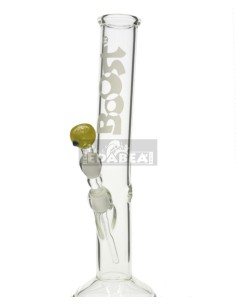
The glass bongs are the most common choice in this category due to their chemical neutrality — glass does not impart any flavor to the smoke — and the visibility of the water and smoke during filtration, which allows you to easily control the water level and the condition of the piece. They are more fragile than acrylic and require more care in handling and cleaning.

The glass references available at Edabea include models of 10 cm (Micro Glass Bong with detachable diffuser and kick hole), 17 cm (Colored Glass Bong with transport case), 26 cm (Multi Leaf Hangover with 14.5 mm diffuser downstem and curved neck), 35 cm (Free Fall Boost, extra thick glass, 14.5 mm joint, 45 mm diameter) and 40 cm (Multi Leaf, 18.8 mm diffuser downstem, sliding bowl, and kick hole).

Acrylic Bongs

The acrylic bongs are made of acrylic plastic, which makes them significantly more resistant to impacts than glass. They are the most practical option for more intensive use or in environments where glass fragility is a disadvantage. Acrylic may retain slightly more residual flavor with prolonged use if not cleaned regularly, so frequent maintenance is more important than with glass.

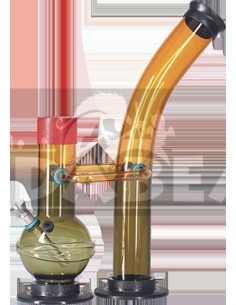
The available acrylic references include the 32 cm Duck (4 mm thick, 45 mm tube diameter, assorted colors), the 30 cm Skull (original design, assorted colors), the 31 cm Double (double chamber), and the 30.5 cm Gas Mask (combined format with adjustable mask). Also available in compact format is the 18 cm acrylic bong with rubber mouthpiece and fluorescent effect.

Ceramic Bongs

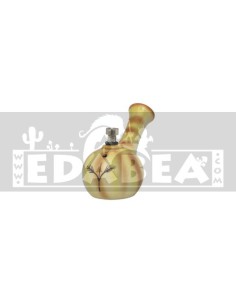
The ceramic bongs are pieces with a distinct aesthetic finish compared to glass and acrylic, often featuring more elaborate or decorative designs. Ceramic is a material with low thermal conductivity, meaning the piece does not heat up as quickly as glass during use. They are heavier than acrylic and more resistant to impacts than thin glass, although less so than acrylic.

The available ceramic references include the 17 cm Death (decorative figure holding the bowl), the 22 cm Cobra (cobra shape with 5 mm thickness), the 25 cm Mage (decorative design with character), and compact models of 12 cm and 13 cm in simple format.


How to Choose a Bong Based on Format

The main factors to consider when choosing a bong are the material, height, and presence of a diffuser:

By material: Glass is preferable when flavor neutrality and filtration visibility are prioritized; acrylic when resistance and price are prioritized; ceramic when design and weight are prioritized.

By height: Shorter models (10–18 cm) are more compact and easier to handle; medium height models (22–30 cm) offer a balance between size and filtration; taller models (35–40 cm) provide greater chamber volume and longer smoke travel through the water.

By type of downstem: Diffuser downstems — with slits or perforations at the lower end — increase the surface contact between smoke and water, improving filtration. Detachable models facilitate cleaning and replacement in case of breakage.


Accessories and Maintenance

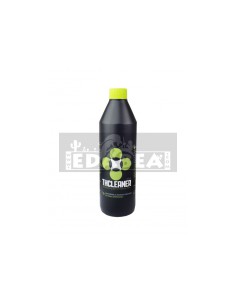
In the bong accessories section, you will find pipe filters (flat, concave, and conical in various diameters: 12.5 mm, 15 mm, 16.5 mm, and 20 mm), specific cleaning solutions like THCleaner (compatible with glass, metal, and acrylic), and bong-cleaning brushes with a 52 cm long wool head.

For basic maintenance, it is recommended to change the water after each use and to perform a more thorough cleaning periodically, especially in the downstem and bowl, where most of the residue accumulates. Glass bongs can be cleaned with isopropyl alcohol; acrylics require specific products that do not harm the plastic.


Frequently Asked Questions About Bongs

What is the difference between a glass bong and an acrylic one?

The main difference is the material and its physical properties. Glass is chemically neutral — it does not impart flavor to the smoke — and allows you to see the water and smoke during filtration, but it is more fragile under impact. Acrylic is significantly more resistant to impacts and generally more economical, but it may retain slightly more residual flavor with use if not cleaned frequently. For use in which fragility is a concern, acrylic is more practical; if the filtration experience and flavor neutrality are prioritized, glass is the usual option.

What does it mean for a bong to have a diffuser?

A diffuser is a downstem with slits or perforations at the submerged end. By dividing the flow of smoke into multiple smaller bubbles, it increases the surface contact between smoke and water, which improves filtration and reduces smoke temperature more efficiently than a non-diffuser downstem. Models with a detachable diffuser downstem also have the advantage of being cleanable separately and replaceable in case of breakage.

What is the kick hole and what is it used for?

The kick hole or carburetor is a small side hole on the bong's tube that allows air regulation during inhalation. By covering the kick hole while burning the material, smoke accumulates in the chamber; when released, air enters that drags the accumulated smoke towards the mouthpiece more quickly. It is a functional alternative to the sliding bowl system, which achieves the same effect by removing the bowl at the end of the draw.

What is the difference between a 14.5 mm and an 18.8 mm joint?

These are the two most common standard joint diameters in glass bongs. The 14.5 mm joint is the most common on medium-sized models, while the 18.8 mm joint is found on larger models. The joint size determines compatibility with bowls, downstems, and other accessories: a 14.5 mm accessory will not fit an 18.8 mm joint and vice versa. Before buying a replacement accessory, it is important to check the joint diameter of your bong.

How do you properly clean a bong?

The most effective method for glass bongs is using isopropyl alcohol (90% or higher) combined with coarse salt as a mild abrasive: the mixture is introduced, and the mouthpiece and downstem are plugged, then shaken to dissolve resin residues. For acrylic bongs, it is recommended to use specific cleaning solutions compatible with plastic — such as THCleaner available in our accessory section — as isopropyl alcohol can damage acrylic with repeated use. In all cases, changing the water after each use significantly extends the time between deep cleanings.

Can I find replacements for my bong?

Yes. In the bong accessories section, you will find filters of various types and diameters (flat, concave, and conical in 12.5 mm, 15 mm, 16.5 mm, and 20 mm), cleaning solutions, and specific brushes for maintenance. For replacement bowls or downstems, check the availability of references compatible with your bong's joint diameter (14.5 mm or 18.8 mm).


Selection crafted by the Edabea team. Last updated: April 2026. For inquiries about availability or features of a specific model, contact contacto@edabea.com.

IMPORTANT ↓

edabeanatura_200x246_ES.jpg

ES_cerrado.jpg

Feedbacks

General rating
4.8 / 5
Based on 7436 feedbacks
Orders:
4.8
Products:
4.7

Category : Bongs

5 / 5

Based on 1 feedback(s)