Shopping Cart
There are no more items in your cart
What is Psilocybin and What is it Used For?
Categories :
Mushrooms
Psilocybin: Composition, Mechanism of Action, Documented Effects, and Clinical Research
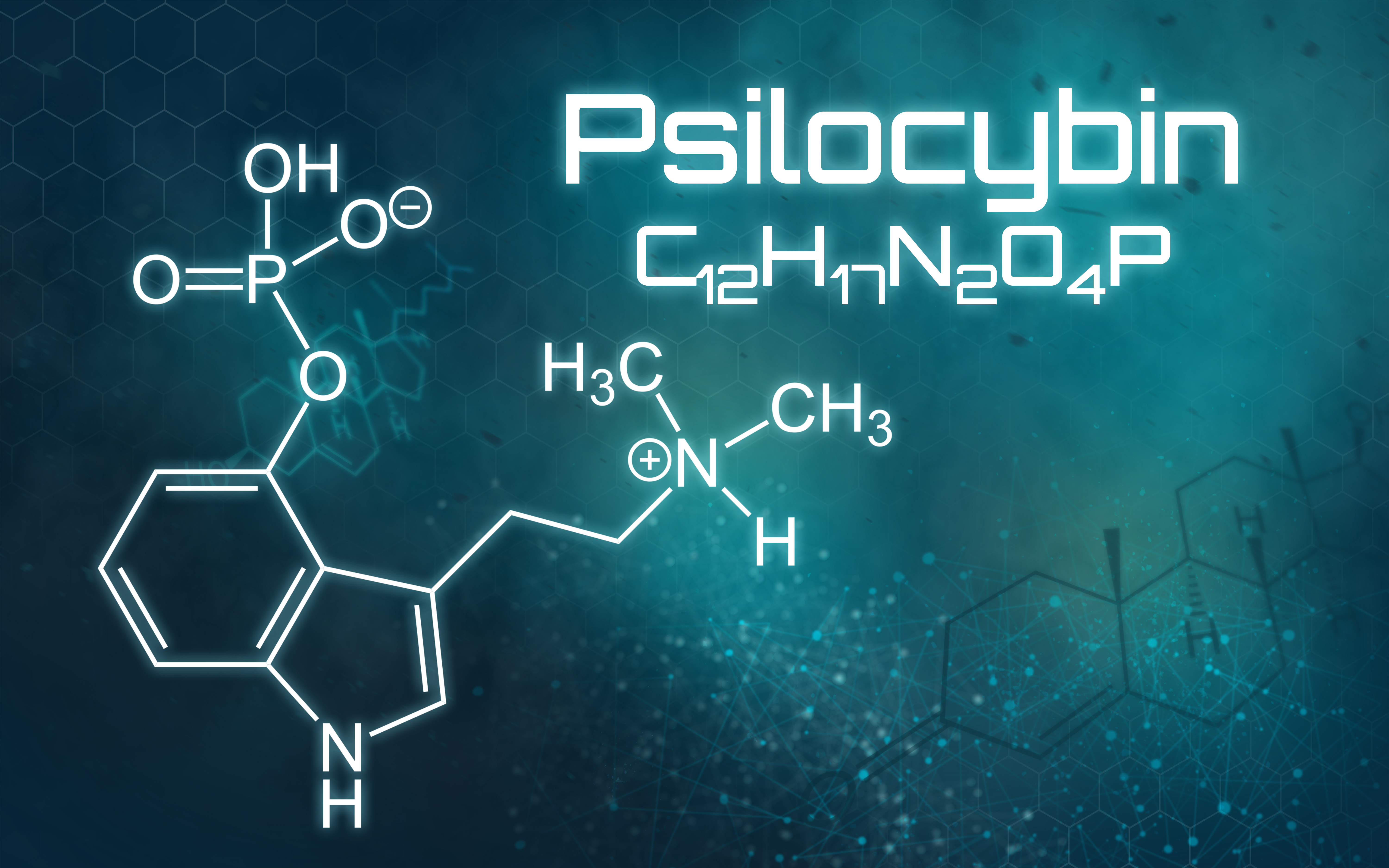
Psilocybin (4-phosphoryloxy-N,N-dimethyltryptamine, C12H17N2O4P) is an indole alkaloid from the tryptamine family present in various species of mushrooms from the genus Psilocybe and related genera. It is the reference compound for characterizing psilocybin mushrooms and is the most researched natural psychedelic in contemporary clinical renaissance. When ingested, psilocybin is converted to psilocin (4-hydroxy-N,N-dimethyltryptamine) through enzymatic dephosphorylation — the active compound that acts on serotoninergic 5-HT2A receptors in the central nervous system (Hofmann, A. et al., 1958. Helvetica Chimica Acta, 41(6), 1358–1374). If you want to delve deeper into the most studied species containing it, you can check our article on Psilocybe cubensis: History, Science, and Cultural Context.
History of Use and Scientific Discovery
The use of psilocybin mushrooms in ritual and ceremonial contexts in Mesoamerica predates European colonization. The Aztecs referred to these mushrooms as teonanátl — "flesh of the gods" in Nahuatl — and used them in divination and healing ceremonies. Archaeological evidence in Central America is solid and well-documented. The Tassili n'Ajjer paintings (Algeria), dated at around 9,000 years, have been cited as evidence of prehistoric use of psilocybin mushrooms, although the interpretation of these images as representations of hallucinogenic mushrooms is debated in the archaeological community — there is no scientific consensus regarding their meaning.
In the 20th century, banker and ethnomycologist R. Gordon Wasson participated in a Mazatec ceremonial evening hosted by healer María Sabina in Huautla de Jiménez (Oaxaca, Mexico) in 1955, and published the report "Seeking the Magic Mushroom" in Life magazine in 1957, generating unprecedented international interest. From that material, chemist Albert Hofmann — discoverer of LSD in 1943 — isolated and synthesized psilocybin and psilocin in 1958, establishing their chemical structure and the prodrug-active compound mechanism.
Mechanism of Action
Psilocin primarily acts as a partial agonist of the serotoninergic 5-HT2A receptors in the prefrontal cortex and other areas of the central nervous system. This is the same central mechanism shared by other classic psychedelics such as LSD, mescaline, and DMT, although their molecular structures are distinct. Activation of the 5-HT2A receptors causes a temporary disruption of the default mode network's neural activity patterns — the network associated with rumination and self-referential thinking — with a simultaneous increase in global connectivity between normally unconnected brain areas (Carhart-Harris, R.L. et al., 2012. PNAS, 109(6), 2138–2143).
Documented Pharmacological Effects
The effects of psilocybin have been documented in both survey studies and controlled clinical trials. Individual variability is significant and depends on dosage, prior psychological state, environment, and individual genetic factors. Documented effects include:
Perceptual Effects: visual hallucinations — geometric patterns, color intensification, distortion of shapes — synesthesia and alterations in time perception. These effects are dose-dependent and are a direct consequence of 5-HT2A agonism (Griffiths, R.R. et al., 2006. Psychopharmacology, 187(3), 268–283).
Cognitive and Emotional Effects: disturbances in thought, sensations of ego dissolution, intense introspective states, and in some clinical trial participants, mystical-type experiences with a feeling of unity. Anxiety and paranoia are also documented as adverse effects, especially at high doses or in uncontrolled environments.
Physiological Effects: moderate increase in heart rate and blood pressure, mydriasis, and nausea during the onset phase. Unlike opioids, psilocybin does not produce respiratory depression.
Duration: effects after oral ingestion begin 20–40 minutes post-ingestion, peak between 2 and 3 hours, and last between 4 and 6 hours in total.
Documented Risks: episodes of acute anxiety, and in individuals with genetic predisposition or a history of psychosis, the possibility of triggering psychotic episodes. HPPD (Hallucinogen Persisting Perception Disorder — persistent visual flashbacks) is documented though infrequent. Psilocybin does not produce physical dependence or withdrawal syndrome (Nichols, D.E., 2016. Pharmacological Reviews, 68(2), 264–355).
If you'd like to learn more about the differences between available formats, you can check the analysis on truffles vs magic mushrooms.
Psilocybin Concentration by Species
The concentration of psilocybin varies significantly among species, strains, cultivation conditions, and maturity status of the carpophore. The species with the highest documented content are:
Psilocybe azurescens — one of the species with the highest documented concentration of psilocybin, with values of up to 1.8% dry weight in some analyses.
Psilocybe cyanescens — documented concentration of up to 1.5% dry weight. Mainly distributed in Europe and North America.
Psilocybe cubensis — the most widely cultivated and studied species, with varying concentrations between 0.37% and 1.30% dry weight depending on the strain and cultivation conditions (Stamets, P., 1996. Psilocybin Mushrooms of the World. Ten Speed Press).

Contemporary Clinical Research
The resurgence of scientific research with psilocybin since 2006 has generated a significant bibliographic body. The most relevant trials published to date include studies from Johns Hopkins University, Imperial College London, and the University of Basel in the following indications:
Treatment-Resistant Depression: Carhart-Harris et al. (2016, 2021) and Davis et al. (2021) have published results from Phase I and II trials with significant reductions in depressive symptoms after one or two sessions of psilocybin combined with psychotherapy.
End-of-Life Anxiety: Grob et al. (2011) and Ross et al. (2016) documented reduced anxiety in patients with advanced-stage cancer.
Substance Use Disorders: trials with psilocybin for alcohol and tobacco use disorders have shown promising preliminary results.
Neuroplasticity: preclinical studies document that psilocybin may promote the growth of dendritic spines and synaptic reorganization, a potentially relevant mechanism for its antidepressant effect (Ly, C. et al., 2018. Cell Reports, 23(11), 3170–3182).
The FDA granted Breakthrough Therapy Designation to psilocybin for treatment-resistant depression in 2018. Research is in phases I and II — without approved therapeutic indications for widespread use outside of controlled research contexts.
Legal Status
Psilocybin is classified as a controlled substance in most international legal frameworks. The status of mushrooms containing it varies by jurisdiction. It is the buyer's responsibility to verify applicable regulations in their place of residence.
FAQ about Psilocybin
Is psilocybin the same as magic truffles?
No — psilocybin is the active compound, while magic truffles are sclerotia (subterranean storage tissue) of species such as Psilocybe tampanensis or Psilocybe mexicana that contain psilocybin. You can read more in our article on magic truffles.
What is the difference between truffles and hallucinogenic mushrooms?
Although both contain psilocybin, they differ in their growth form (subterranean vs aerial), morphological appearance, psilocybin concentration, and in some countries, their legal status. More details in our article about truffles vs magic mushrooms.
How long do the effects of psilocybin last?
Effects after oral ingestion begin 20 to 40 minutes after ingestion, reach their peak between 2 and 3 hours, and last between 4 and 6 hours in total. Individual variability is significant and depends on dosage, physiological state, and other factors.
Is psilocybin legal?
Psilocybin is classified as a controlled substance in most countries. The legal status varies by jurisdiction and may change. It is the individual’s responsibility to verify the applicable regulations before making any decision.
About this Content
Article prepared by the specialized team of Edabea Natura. The pharmacological information is based on the cited bibliographic sources. It does not constitute medical recommendation. Last update: April 2026.
Bibliographic References
- Carhart-Harris, R.L. et al. (2012). Neural correlates of the psychedelic state. PNAS, 109(6), 2138–2143.
- Griffiths, R.R. et al. (2006). Psilocybin can occasion mystical-type experiences. Psychopharmacology, 187(3), 268–283.
- Hofmann, A. et al. (1958). Psilocybin und Psilocin. Helvetica Chimica Acta, 41(6), 1358–1374.
- Ly, C. et al. (2018). Psychedelics promote structural and functional neural plasticity. Cell Reports, 23(11), 3170–3182.
- Nichols, D.E. (2016). Psychedelics. Pharmacological Reviews, 68(2), 264–355.
- Stamets, P. (1996). Psilocybin Mushrooms of the World. Ten Speed Press.
Share this content