Salvia divinorum
Vaponic Vaporizer
Buy Salvia divinorum — Leaves, extracts, and packs
Salvia divinorum Epling & Játiva is a perennial herbaceous plant from the Lamiaceae family, endemic to a very limited geographical area in the Sierra Mazateca of Oaxaca (Mexico), where it grows in humid mountain forests at altitudes between 300 and 1,800 meters above sea level. It is botanically unique within the Salvia genus due to the presence of salvinorin A — a neoclerodane diterpenoid with no nitrogen in its structure, considered the only known natural psychoactive compound of plant origin with selective agonist activity on kappa-opioid receptors (Roth, B.L. et al., 2002. PNAS, 99(18), 11934–11939). At Edabea, you’ll find all available formats: dried leaves, standardized extracts, and combined packs.
Botanical and Phytochemical Characterization
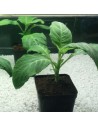
Salvia divinorum was formally described by Carl Epling and Carlos D. Játiva in 1962, based on material collected by R. Gordon Wasson and Albert Hofmann in Oaxaca (Valdés, L.J. et al., 1994. Journal of Ethnopharmacology, 43(3), 171–179). It belongs to the Lamiaceae family — the same as common sage (Salvia officinalis), mint, and rosemary — although its phytochemical profile clearly distinguishes it from the rest of the genus. It is a plant with large leaves, hollow square stems, and white flowers with a purple calyx, preferentially growing in areas with high humidity and indirect light.
The main secondary metabolite of ethnobotanical interest is salvinorin A (C21H28O1), a neoclerodane diterpenoid first isolated and identified by Valdés, Díaz & Paul in 1984 (Valdes, L.J. et al., 1984. Journal of Organic Chemistry, 49(24), 4716–4720). Salvinorin A contains no nitrogen in its structure, which sets it apart from nearly all known natural psychoactive compounds — alkaloids such as psilocybin, DMT, or mescaline all contain nitrogen. It acts as a potent and selective agonist of kappa-opioid receptors (KOR) with no activity on mu-opioid receptors, defining a unique action mechanism within the phytochemistry of natural neuroactive compounds (Roth, B.L. et al., 2002, op. cit.).
Salvinorin A is concentrated mainly in the capitate trichomes on the leaf surface — small secretory glands located on the underside of the leaf — with documented concentrations ranging from 0.89 to 3.87 mg per gram of dried leaf depending on the origin and cultivation conditions of the material (Valdés, L.J. et al., 1994, op. cit.). This natural variability in concentration is relevant for interpreting the scales of standardized extracts.
Etnobotanical Context
Salvia divinorum is traditionally known in Mazatec culture as ska María Pastora or shepherd's herb. Mazatec healers — chjota chjine (“people who know”) — use it in nighttime diagnostic and divination sessions known as veladas, where the leaves are used either chewed or as an infusion in a structured ritual context (Valdés, L.J. et al., 1994, op. cit.).
Ethnobotanist R. Gordon Wasson documented its ceremonial use in Western literature for the first time in 1962, noting that the Mazatecs consider it an auxiliary plant compared to the primary use of fungi from the Psilocybe genus in their ritual traditions. The species was formally described that same year by Epling and Játiva. The isolation of salvinorin A as the main active metabolite was performed by Leander J. Valdés III and collaborators in 1984 (Valdes et al., 1984, op. cit.), and its activity on kappa-opioid receptors was pharmacologically characterized by Roth and collaborators in 2002 (Roth et al., 2002, op. cit.). The complete ethnopharmacological documentation of the species was systematized by Valdés and collaborators in 1994 (Valdés et al., 1994, op. cit.).
Available Formats at Edabea
Dried Leaves of Salvia divinorum
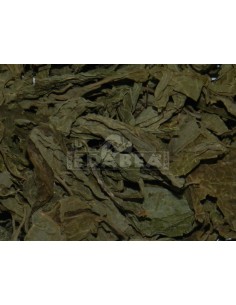
The dried leaves maintain the plant's original structure after the drying process, representing the closest presentation to the original botanical material used in the Mazatec ethnobotanical context. The concentration of salvinorin A varies depending on the source of the material and drying conditions. Available in 10 g format. For detailed information, refer to the Salvia divinorum leaves category.
Standardized Extracts of Salvia divinorum
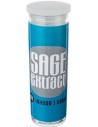
The extracts are presentations where the concentration of salvinorin A has been increased compared to the base plant material through specialized extraction processes. They are identified by a relative numerical scale — 5X, 10X, 20X, 30X, 40X, and 80X — indicating the concentration factor relative to the standard leaf reference. The approximate concentrations of salvinorin A per gram in each extract are as follows:
| Extract | Salvinorin A (approx.) | Format | Details |
|---|---|---|---|
| 5X | 12.5 mg/g | 1 g | View details |
| 10X | 25 mg/g | 1 g | View details |
| 20X | 50 mg/g | 1 g | View details |
| 30X | 75 mg/g | 0.5 g | View details |
| 40X | 100 mg/g | 0.5 g | View details |
| 80X | 288 mg/g | 0.5 g | View details |
For detailed information on each extract, refer to the Salvia divinorum extracts category.
Combined Packs
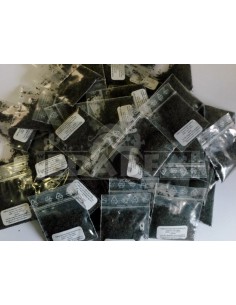
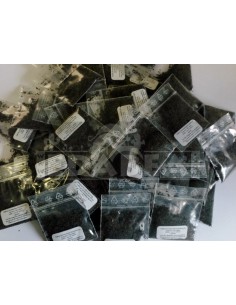
The packs gather different concentrations or formats within the same reference, organized to cover various ranges of the catalog. Available in the Salvia divinorum packs category.
Conservation
Salvinorin A is known to have documented photosensitivity — its stability degrades when exposed to prolonged light, especially in high-concentration extracts (Valdés, L.J. et al., 1994, op. cit.). Both leaves and extracts should be stored in a cool, dry place protected from direct light, preferably in opaque airtight containers. Proper storage is especially important for higher concentration extracts (30X, 40X, 80X), where the proportion of salvinorin A per gram is higher.
Legal Situation
Salvinorin A is included in lists of regulated substances in various jurisdictions. The legal situation of Salvia divinorum and its derivatives varies by country and may change over time. It is the buyer's responsibility to verify the current regulations in their place of residence before purchasing any products in this category. All products are sold exclusively as botanical collection materials and ethnobotanical research.
Frequently Asked Questions about Salvia divinorum
What is salvinorin A and why is it phytochemically unique?
Salvinorin A (C21H28O1) is the main secondary metabolite of Salvia divinorum, a neoclerodane diterpenoid first isolated by Valdés, Díaz & Paul in 1984 (Valdes et al., 1984, op. cit.). Its phytochemical uniqueness lies in two characteristics: it is one of the few natural psychoactive compounds without nitrogen in its structure — unlike alkaloids such as psilocybin, DMT, or mescaline — and it is the only known natural psychoactive compound of plant origin with potent selective agonist activity on kappa-opioid receptors and no activity on mu-opioid receptors (Roth et al., 2002, op. cit.). These characteristics have made it a subject of study in pharmacology and neuroscience since its pharmacological characterization in 2002.
What is the difference between dried leaves and extracts?
Dried leaves retain the natural concentration of salvinorin A from the plant material after the drying process, with documented variability between 0.89 and 3.87 mg/g depending on origin and cultivation conditions (Valdés et al., 1994, op. cit.). Extracts are presentations where this concentration has been increased through specialized extraction processes: a 10X extract contains approximately 25 mg/g of salvinorin A, compared to the 2.5 mg/g reference for the standard leaf. The numerical scale indicates the relative concentration factor, not an absolute measure of quality.
Why is the scale of extracts not linear at 80X?
The 5X–40X scale maintains an approximately linear progression (12.5 / 25 / 50 / 75 / 100 mg/g). The 80X extract presents 288 mg/g, a disproportionately high concentration compared to what would be expected from a strictly linear progression (which would yield 200 mg/g). This reflects that the extraction process for the 80X uses differentiated methodology and a higher ratio of plant material per gram of extract, achieving a concentration of salvinorin A close to the viable technical limit for this type of presentation.
Why is salvinorin A photosensitive?
Salvinorin A is a diterpenoid with a lactonic structure susceptible to photochemical degradation when exposed to ultraviolet radiation and high-energy visible light. Photodegradation can alter the molecular integrity of the compound, reducing its effective concentration in stored material. For this reason, both leaves and extracts are recommended to be stored in opaque or airtight containers, away from direct light and heat, a condition especially relevant in higher concentration extracts (Valdés et al., 1994, op. cit.).
What is the ethnobotanical context of Salvia divinorum?
Salvia divinorum is known in the Mazatec tradition of Oaxaca as ska María Pastora or shepherd's herb. Its ritual use is integrated into the practice of Mazatec healers (chjota chjine) in nighttime sessions known as veladas, where the plant is used within a structured ceremonial context for diagnostic and divination purposes. The first academic record of this use was made by R. Gordon Wasson in 1962, and the systematic ethnopharmacological documentation of the species was completed by Valdés and collaborators in 1994 (Valdés et al., 1994, op. cit.). For more detailed information about its history and cultural context, you can refer to our article All about Salvia divinorum and content about what salvinorin A is.
This ficha was prepared by the specialized team at Edabea Natura, with over 15 years of experience in the selection and commercialization of ethnobotanical materials. The phytochemical and ethnobotanical information is based on the cited bibliographic sources and direct knowledge of the material from each batch. Last update: April 2026. For inquiries about availability or characteristics of the current batch, contact at contacto@edabea.com.
Bibliographical References
- Roth, B.L. et al. (2002). Salvinorin A: a potent naturally occurring nonnitrogenous kappa opioid selective agonist. PNAS, 99(18), 11934–11939.
- Valdes, L.J. et al. (1984). Divinorin A, a psychotropic terpenoid. Journal of Organic Chemistry, 49(24), 4716–4720.
- Valdés, L.J. et al. (1994). Ethnopharmacology of ska María Pastora. Journal of Ethnopharmacology, 43(3), 171–179.
- Wasson, R.G. (1962). A new Mexican psychotropic drug from the Mint family. Botanical Museum Leaflets, Harvard University, 20(3), 77–84.
Feedbacks
Category : Salvia divinorum
Based on 33 feedback(s) 33