Ayahuasca
Palo Santo
Mai Joshin Snuff
Ayahuasca is a ceremonial Amazonian preparation documented among over 70 indigenous peoples of the Amazon basin — Shipibo-Conibo, Shawi, Huni Kuin, Siona, Cofán, and others — with a historical trajectory that predates European contact by several centuries. In 2008, the Peruvian state declared it Cultural Heritage of the Nation. Edabea has specialized in ethnobotany for over 15 years, and in this category, you will find botanical materials and extracts related to this tradition: lianas of Banisteriopsis caapi, admixture plants, sources of beta-carbolines, and concentrated extracts, all with verified traceability of origin and focused on specialized ethnobotanical research.
Ayahuasca Plants and Ethnobotanical Extracts — Edabea Catalog
The catalog is organized into four groups based on their role in traditional preparation:
Banisteriopsis caapi — the liana
The ayahuasca liana in its various forms. Source of beta-carboline alkaloids (harmine, harmaline, tetrahydroharmine) with documented MAOI activity in the scientific literature (Callaway et al., 1999; McKenna et al., 1984).
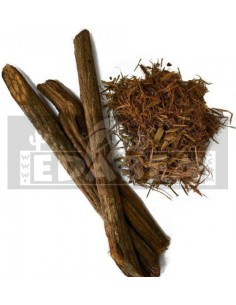
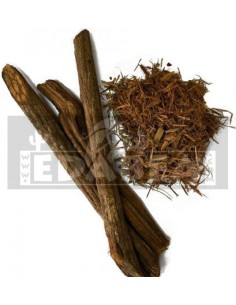
- Banisteriopsis caapi black liana — crushed stem, 100 g. The most widely referenced variety in the ethnobotanical market.
- Banisteriopsis caapi yellow liana — crushed stem, 100 g. A variety with characteristic yellowish internal coloration.
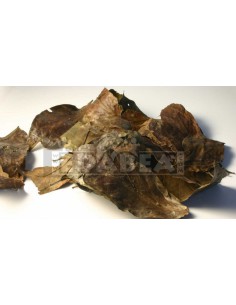
- Banisteriopsis caapi dried leaves — 100 g. The foliar part of the liana, with a phytochemical profile distinct from that of the stem (Callaway, 2005).
- Banisteriopsis caapi extract 15X — 5 g. Concentrated stem extract.
Banisteriopsis muricata — red liana
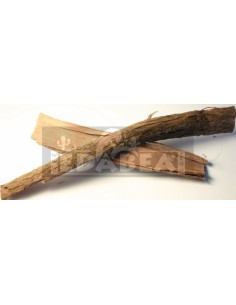
- Banisteriopsis muricata red liana — crushed stem, 100 g. A species of the same genus mentioned in Amazonian ethnobotanical sources as Schultes & Hofmann, Plants of the Gods (1979), with its own alkaloidal profile.
Chacruna, chaliponga, and Mimosa hostilis — admixture plants
- Chacruna (Psychotria viridis) — dried leaves, 25 g. The most commonly used admixture component in western Amazonian tradition, with documented presence of DMT (McKenna et al., 1984).
- Chaliponga (Diplopterys cabrerana) — dried leaves, 20 g. Frequent in the traditions of Colombian and Ecuadorian Amazon (Schultes, 1972).
- Mimosa hostilis (Mimosa tenuiflora) — root bark powder. A species with documented tryptamines, used in analog ayahuasca preparations (Ott, 1994).
Peganum harmala — Syrian rue and extracts
- Peganum harmala seeds — starting at 10 g. Plant material in natural presentation.
- Peganum harmala extract 10X — 1 g. Concentrated seed extract.
- Harmala freebase — 1 g. Harmala alkaloids in freebase form.
- Harmala HCl — 1 g. Harmala alkaloids in hydrochloride form.
The legal status of ayahuasca components varies significantly depending on the jurisdiction and specific product composition. Some components are classified as controlled substances in numerous jurisdictions. It is the buyer's responsibility to verify the applicable regulations in their residence. All products are marketed exclusively as botanical collection material and ethnobotanical research.
What do these plants contain and why are they combined
The traditional preparation of ayahuasca combines two main components with complementary phytochemical functions. The liana — Banisteriopsis caapi in its various forms — provides beta-carboline alkaloids with documented MAOI activity in the scientific literature (Callaway et al., 1999). The admixture plant — usually Psychotria viridis or Diplopterys cabrerana — provides DMT (N,N-dimethyltryptamine), a tryptamine alkaloid whose presence in both species is well characterized in phytochemical literature (McKenna et al., 1984).
The Amazonian shamanic tradition recognizes and names different varieties of Banisteriopsis caapi with documented morphological differences. The black and yellow lianas are varieties of the same species with differences in the internal coloration of the stem and slightly different phytochemical profiles. The red liana corresponds to Banisteriopsis muricata, a different species of the same genus with its own alkaloidal profile (Schultes & Hofmann, 1979).
Analog ayahuasca — what it is and which plants are used
Analog ayahuasca — also called anahuasca, a term coined by ethnobotanist Jonathan Ott in Pharmacophilia (1994) — refers to preparations that replicate the phytochemical profile of traditional Amazonian ayahuasca using plants from other geographic origins. The most documented combination uses Peganum harmala (Syrian rue) as an alternative source of MAOI beta-carbolines, and Mimosa hostilis (Mimosa tenuiflora) as an alternative source of DMT (Ott, 1994).
Peganum harmala contains harmine, harmaline, and tetrahydroharmine — the same beta-carboline profile as Banisteriopsis caapi — and has been historically used in traditional medicine of the Middle East and Central Asia (Herraiz & Chaparro, 2006). Edabea offers four presentations: raw seeds, extract 10X, freebase, and HCl, covering the full spectrum from plant material to isolated alkaloid.
Ethnobotanical context
The ceremonial use of ayahuasca has been documented in ethnobotanical literature since the earliest descriptions by European missionaries in the 18th century, although its use among Amazonian peoples is considerably older. The ethnobotanist Richard Evans Schultes — considered the father of modern ethnobotany — dedicated decades to studying these plants in the Amazon starting from the 1940s; his works, collected in Plants of the Gods (1979, with Albert Hofmann) and Vine of the Soul (1992), remain fundamental references in the field. The ethnobotanist Luis Eduardo Luna later developed the concept of vegetalismo to describe the system of shamanic knowledge associated with the use of master plants (Luna, 1986).
The preparation and administration of ayahuasca in its original context are carried out by Amazonian curanderos or vegetalistas — specialists with years of training in the knowledge of plants and their combinations — within a specific ceremonial framework transmitted orally over generations. In 2008, the National Culture Institute of Peru declared the knowledge and traditional uses of ayahuasca as Cultural Heritage of the Nation, recognizing its historical and cultural value and its relevance to the indigenous Amazonian peoples of the country.
To delve deeper into the historical, botanical, and cultural context, you can consult our specialized ayahuasca blog, where we document the species, their registered ethnobotanical uses, and available scientific research.
Frequently Asked Questions About Ayahuasca Plants
What guarantees does Edabea offer about its botanical materials?
Edabea has been specializing in ethnobotany for over 15 years, being one of the most experienced stores in the sector in Spain. All botanical materials in the catalog are selected with verified traceability criteria: documented geographic origin, direct selection from specialized suppliers, and quality control upon receipt. The materials are kept in optimal humidity and temperature conditions to preserve phytochemical integrity. This experience and methodology allow us to offer reference materials for researchers, botanists, and specialized collectors.
What is the difference between black liana, yellow liana, and red liana?
The black liana and yellow liana are varieties of Banisteriopsis caapi recognized by Amazonian shamans themselves, with morphological differences in the internal coloration of the stem and slightly different phytochemical profiles documented in the literature (Callaway, 2005). The distinction between varieties of B. caapi does not have a universally accepted formal botanical taxonomy — the denominations come from the shamanic classification system, which distinguishes plants by organoleptic, morphological, and ceremonial use criteria. The red liana corresponds to Banisteriopsis muricata, a botanically distinct species of the same genus with its own profile of beta-carboline alkaloids (Schultes & Hofmann, 1979).
What is analog ayahuasca?
Analog ayahuasca — also called anahuasca — is a preparation that replicates the phytochemical profile of traditional Amazonian ayahuasca using plants from other geographic origins. The most documented combinations substitute Banisteriopsis caapi with Peganum harmala as a source of MAOI beta-carbolines, and Psychotria viridis with Mimosa hostilis as a source of DMT. The term was coined by ethnobotanist Jonathan Ott in Pharmacophilia (1994) and is commonly used in ethnobotanical literature and comparative psychopharmacology studies.
What is the difference between chacruna and chaliponga?
Both are admixture plants with documented tryptamines, but they are botanically distinct species. Chacruna (Psychotria viridis) belongs to the Rubiaceae family and is the most widely used admixture component in the traditions of western Amazon — primarily Peru and Ecuador (Luna & Amaringo, 1991). Chaliponga (Diplopterys cabrerana) belongs to the Malpighiaceae family and is more common in the traditions of Colombian and Ecuadorian Amazon (Schultes, 1972). They have distinct tryptamine profiles: chaliponga also contains 5-MeO-DMT in addition to DMT, which differentiates it phytochemically from chacruna.
What is the difference between harmala freebase and harmala HCl?
They are two distinct chemical forms of the same harmala alkaloids. The freebase is the unsalted form of the alkaloids — less soluble in water, more soluble in organic solvents. The HCl (hydrochloride) is the salted form with hydrochloric acid — more soluble in water. They are the same active compound in two presentations with different solubility properties, which affects their behavior in different media and their interest for analytical or phytochemical research (Herraiz & Chaparro, 2006).
Why did the Peruvian state declare ayahuasca as Cultural Heritage?
In 2008, the National Culture Institute of Peru declared the knowledge and traditional uses of ayahuasca as Cultural Heritage of the Nation, recognizing its historical value, cultural significance, and relevance to indigenous Amazonian peoples. The declaration specifically refers to the associated shamanic knowledge — the ceremonial preparation, ritual use, and oral transmission of knowledge — not just to the plants themselves. It is one of the few cultural heritage declarations centered on ethnobotanical knowledge rather than on a material object or site, and it has influenced international debates about the protection of indigenous traditional knowledge.
What is the difference between dried leaves and crushed stem of Banisteriopsis caapi?
They are morphologically distinct parts of the same plant with different phytochemical profiles. The crushed woody stem is the most commonly used material in traditional Amazonian preparation and concentrates a higher presence of beta-carboline alkaloids according to the available literature (Callaway et al., 1999). Dried leaves have their own phytochemical profile — with variations in the relative proportion of harmine, harmaline, and tetrahydroharmine compared to the stem — and are specifically of interest for comparative phytochemical research between parts of the plant (Callaway, 2005).
About this content
This information has been prepared and reviewed by the specialized team at Edabea Natura, with over 15 years of experience in ethnobotany and the marketing of botanical materials. The content is exclusively informational, botanical, and documentary, and is periodically updated based on available scientific literature. For specialized inquiries, you can contact our team directly at contacto@edabea.com.
Bibliographic References
Callaway, J.C. (2005). Various alkaloid profiles in decoctions of Banisteriopsis caapi. Journal of Psychoactive Drugs, 37(2), 151–155. — Callaway, J.C. et al. (1999). Pharmacokinetics of hoasca alkaloids in healthy humans. Journal of Ethnopharmacology, 65(3), 243–256. — Herraiz, T. & Chaparro, C. (2006). Human monoamine oxidase enzyme inhibition by coffee and β-carbolines norharman and harman. Life Sciences, 78(8), 795–802. — Luna, L.E. (1986). Vegetalismo: Shamanism among the Mestizo Population of the Peruvian Amazon. Stockholm: Almqvist & Wiksell. — Luna, L.E. & Amaringo, P. (1991). Ayahuasca Visions: The Religious Iconography of a Peruvian Shaman. Berkeley: North Atlantic Books. — McKenna, D.J., Towers, G.H.N. & Abbott, F. (1984). Monoamine oxidase inhibitors in South American hallucinogenic plants. Journal of Ethnopharmacology, 10(2), 195–223. — Ott, J. (1994). Ayahuasca Analogues: Pangæan Entheogens. Kennewick: Natural Products. — Schultes, R.E. (1972). An overview of hallucinogens in the Western Hemisphere. In P.T. Furst (Ed.), Flesh of the Gods. New York: Praeger. — Schultes, R.E. & Hofmann, A. (1979). Plants of the Gods: Origins of Hallucinogenic Use. New York: McGraw-Hill.
Feedbacks
Category : Ayahuasca
Based on 161 feedback(s) 161