

Shopping Cart
There are no more items in your cart
The Global Meeting of Psychedelics
Categories :
General
Screenshot from the Psychedelic Science 2017 presentation
Psychedelic Science 2017
Psychedelic Science 2017 has been a vital gathering for those who, after attending the latest scientific advances in psychedelic substances, wanted to understand the current state of the issue. The event, which condensed three days of presentations from its speakers, also aimed to analyze the challenges faced by the subject in the future.
Psychedelic Science 2017 took place last April, from the 19th to the 24th, in Oakland, California. This is the third time this meeting has occurred, following the events held in 2010 and 2013. This year, 2017, the meeting dedicated three full days to conferences, accompanied by a market and other recreational activities that extended the duration of the event to six days.
-------------------
----------------
The Organizers
The preparation for this gathering was handled by MAPS (Multidisciplinary Association for Psychedelic Studies) in collaboration with The Beckley Foundation. The former is a non-profit educational organization founded by Rick Doblin over thirty years ago. MAPS is dedicated, as stated on its website, to “developing medical, legal, and cultural contexts for people to benefit from the prudent use of psychedelics and marijuana.”
Meanwhile, Beckley Foundation is a UK-based NGO led by Amanda Fielding, whose purpose is to “develop pioneering research into psychedelics and drive drug policy reform based on evidence.”

Screenshot from the presentation of Psychedelic Science 2017. Total attendance: over 2800 people
The Presentation
At the opening of these conferences, we were able to attend to a statement of intentions from the representatives of the aforementioned organizations. Thus, Amanda Fielding, whose presentation took place after Rick Doblin's talk, contextualized the need for such a significant gathering in this way: “Perhaps we are reaching a new stage, where society is progressively realizing the potential benefits of these compounds (psychedelics) and their value in treating various untreatable psychological conditions (… ) such as depression, anxiety, and addictions.” She added, “Occasions like this, here today, are opportunities to enhance our connectivity and find new pathways forward, in order to break the taboo and better regulate psychedelics to minimize harm and optimize benefits.”
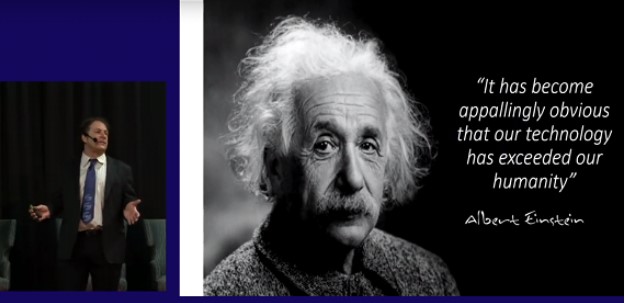
Screenshot from Rick Doblin's presentation at Psychedelic Science 2017
In recent years, science has been giving a lesson to society. The research conducted on psychedelics published in the last few decades clearly demonstrates the futility of deeply rooted societal prejudices. As Rick Doblin remarked in his presentation, many psychedelics could be a solution for some of the major health problems in society.
The founder of MAPS established a direct relationship between certain psychedelics and the diseases that can be considered, based on scientific evidence, manageable or from which patients can experience an improvement:
-
Depression: Ayahuasca, psilocybin, and ketamine.
-
Post-Traumatic Stress Disorder (PTSD): MDMA and ayahuasca.
-
Obsessive-Compulsive Disorder (OCD): Psilocybin.
-
Substance Abuse: Ibogaine, ayahuasca, psilocybin, and MDMA.
-
Social Anxiety: MDMA.
-
End-of-Life Distress: Psilocybin, MDMA, and LSD.
Rick Doblin emphasized the positive outcomes achieved in assisted psychotherapy treatments combined with MDMA for PTSD in war veterans, as an example of alternative therapies that may offer solutions or relief for difficult-to-treat psychological conditions.
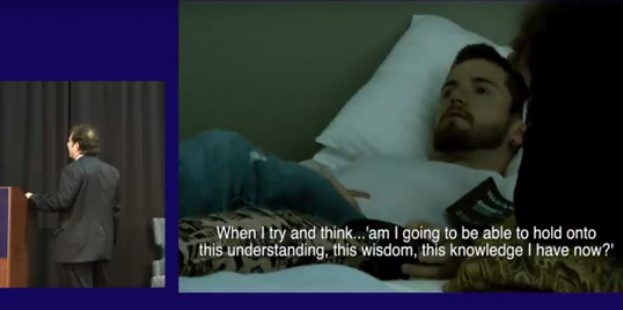
Screenshot from Rick Doblin's presentation explaining the combined treatments of assisted psychotherapy and psychedelics at Psychedelic Science 2017.
The Objectives
Psychedelic Science 2017 has the main objective of sharing knowledge about psychedelic substances and creating synergies among attendees to clarify various aspects, such as methods, dosages… as well as discussing the challenges faced in areas like scientific research, drug policy, and risk reduction, among others.
The spirit of the gathering is open and dialogical, aiming to accommodate all disciplines, including other substances that were previously not represented here (such as peyote), as well as indigenous cultures that have millennia-old wisdom in this field.
As Beatrice Labate aptly summarizes, “we try to reclaim the M in MAPS, making it more multidisciplinary, and we are including other disciplines, especially anthropology” and “we strive to be more inclusive, which is why we include indigenous voices.”
During the event, hot topics in society were also discussed, such as the economic benefits of reforms in psychedelic policy or the importance of empathy and connectivity (generated by these substances) to create a more united society in mysticism, as a more appropriate perspective against rigid fundamentalism.
In any case, gatherings like this are vital for advancing towards a healthier society, not only physically but also, which is more important, psychologically or spiritually.
Article by Nina Slick
Share this content