
Shopping Cart
There are no more items in your cart

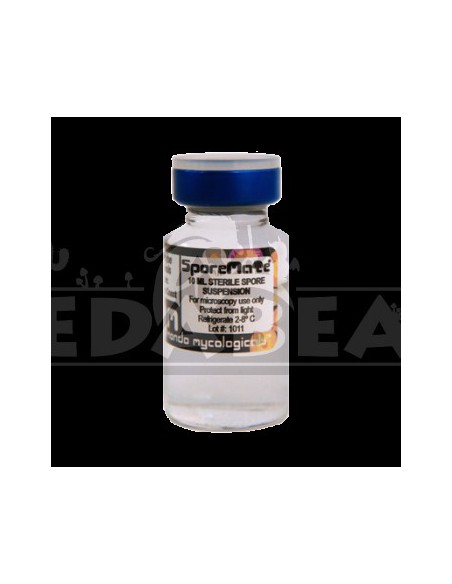

Fiji 10 ml.
Last items in stock
€14.50
Tax included
Fiji Spore Vial 10 ml. Psilocybe cubensis var. Fiji. Spores in sterile aqueous solution, 10 ml vial with sterile syringe. A strain of Pacific origin, from the Fiji archipelago in Melanesia. One of the few varieties in the catalog with documented origins in the South Pacific, a region where the distribution of P. cubensis is less characterized than in America or Southeast Asia. Robust fruiting bodies, with better yields on enriched substrates or pasteurized manure. Material for collection and mycological research.
Ratings and comments from our customers
Fiji Spore Vial
The Fiji spore vial contains a sterile aqueous suspension of Psilocybe cubensis var. Fiji in a 10 ml vial with an included sterile syringe. The name refers to the Fiji archipelago in the South Pacific, the geographic origin of the strain and one of the less represented biogeographic contexts in the catalog of P. cubensis varieties available in Europe.
Geographic Origin: The Fiji Archipelago
Fiji is an archipelago of Melanesia made up of more than 330 volcanic islands and islets located in the South Pacific, approximately 2,000 kilometers north of New Zealand. The climate is tropical maritime, with temperatures between 22 and 30 °C throughout the year, high humidity, and regular rainfall, especially on the eastern coasts of the main islands. These conditions are compatible with the documented habitat of Psilocybe cubensis, a pantropical species associated with soils rich in organic matter from livestock farming.
The presence of P. cubensis in the Pacific is less documented in the scientific literature than its distribution in Central and South America or mainland Southeast Asia, making Pacific-origin varieties like Fiji references of specific biogeographical interest. The distribution of the species on Pacific islands is partly the result of the historical expansion of cattle and horse farming, which created the necessary substrate conditions for its establishment in territories that previously lacked documentation.
Documented Morphological Characteristics
- Robust fruiting bodies with especially good yield on nutrient-rich substrates. The behavior of the strain is documented as sensitive to substrate quality, with marked differences in yield between enriched substrates and poorer ones.
- Optimal response to pasteurized manure and enriched substrates, indicating an adaptation to soils with high concentrations of animal organic matter consistent with its origin in a tropical farming environment.
- General morphology of P. cubensis standard: convex to flattened cap at maturity, caramel to golden-brown coloration, gills darkening with maturity.
Vial Characteristics
The vial contains spores of Psilocybe cubensis var. Fiji in sterile aqueous suspension (10 ml) with an included sterile syringe. Elongated spores with thick purple-brown walls are visible from 400x magnification.
To consult the complete catalog of available varieties, visit the Edabea spore section.
Conservation
Store in the fridge between 2 °C and 8 °C, protected from direct light. Do not freeze. Under proper conditions, the spores maintain their viability for months. Avoid sudden temperature changes between uses.
Legal Status
The legal status of Psilocybe cubensis spores varies by jurisdiction. In many countries, spores, which do not contain psilocybin or psilocin, are not subject to the same regulation as mycelium or fruiting bodies. It is the buyer's responsibility to verify applicable regulations in their residence before placing an order. This product is sold exclusively as material for mycological collection and research.
Frequently Asked Questions
How did Psilocybe cubensis arrive in the Pacific archipelagos?
Psilocybe cubensis is a coprophilic species, meaning it grows preferentially in soils rich in bovine and equine manure. Its distribution on Pacific islands, including Fiji, is closely related to the historical expansion of livestock farming in the 19th and 20th centuries: the introduction of cattle in island territories created the necessary substrate conditions for the establishment of the species in ecosystems where it had no previous documented presence. This pattern of dispersal linked to human activity is one of the factors explaining the current global distribution of the species.
Why does Fiji respond better to enriched substrates than other varieties?
Substrate sensitivity varies among P. cubensis varieties due to differences in the nutritional requirements of each strain. The Fiji variety is documented to show more marked differences in yield based on the nutritional quality of the substrate, with better morphological expression in rich substrates like pasteurized manure or enriched mixes. This characteristic distinguishes it from more tolerant varieties to poor substrates like BRF (brown rice flour with vermiculite).
How does the Fiji variety differ from other varieties in the catalog originating from tropical islands?
The Fiji shares tropical island origins with Ban Hua Thai (Koh Samui, Thailand) and, in a certain geographic sense, with PES Hawaiian (distributed from Hawaii). All three hail from environments with tropical maritime climates with high humidity. The Fiji is the only one of the three with origins in the South Pacific and the one with the most documented dependence on substrate quality for optimal yield.
Do the spores contain psilocybin?
No. Spores of Psilocybe cubensis do not contain psilocybin or psilocin. These compounds are synthesized during the development of mycelium and fruiting bodies, not in the latent spores. This distinction is relevant in many jurisdictions where regulation affects active mycelium and fruiting bodies but not spores.
This sheet was prepared by the specialized team at Edabea Natura. Information based on reference mycological bibliography. Last update: May 2026.
1 Item
Tap to zoom
