Shopping Cart
There are no more items in your cart

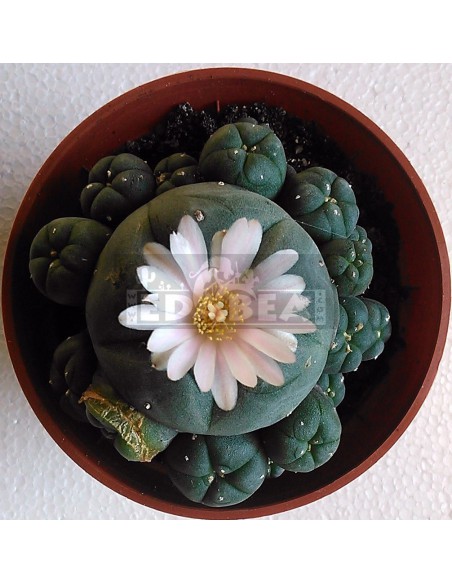
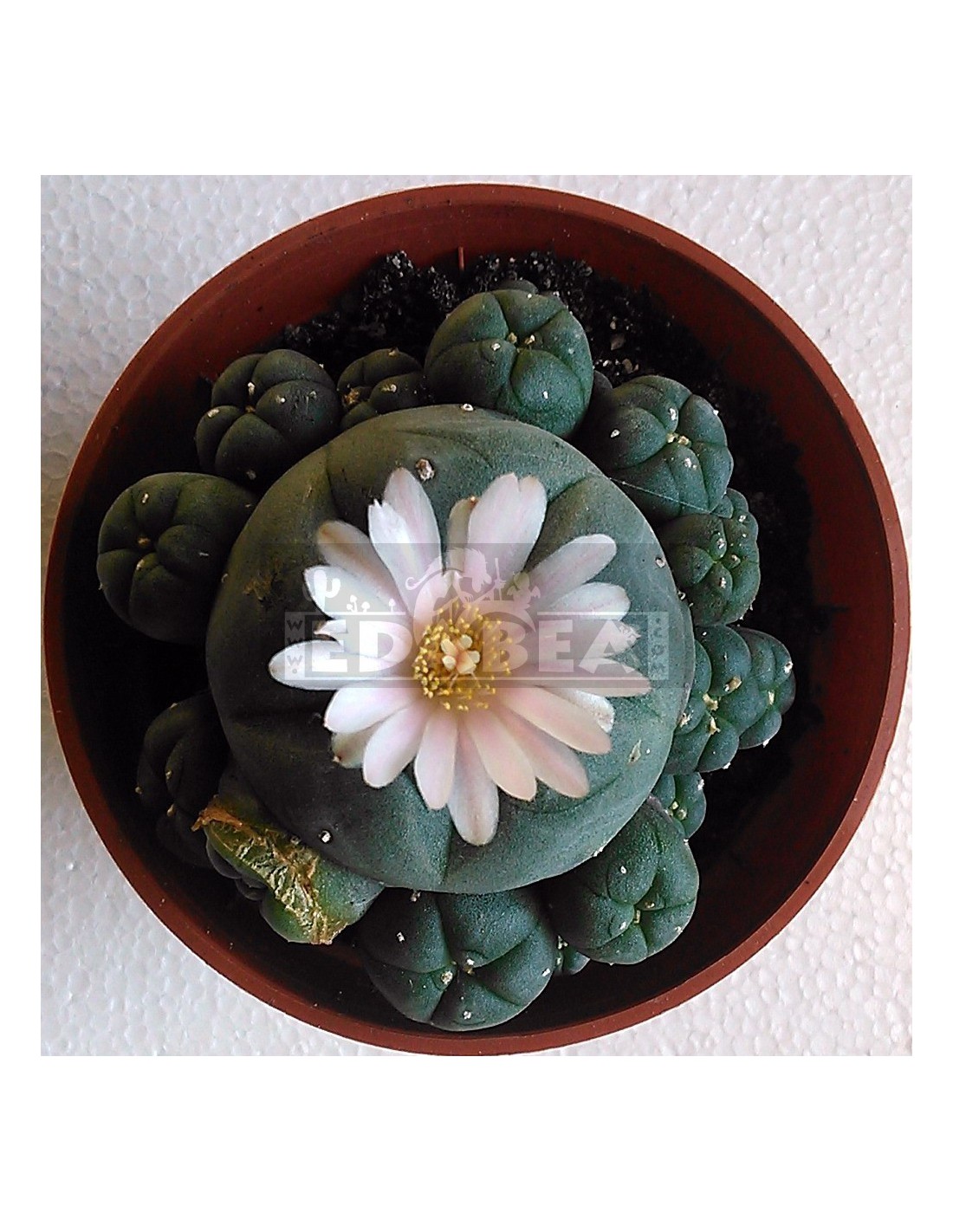
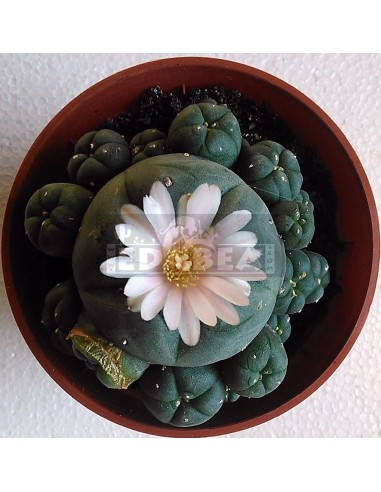
Peyote cactus multi-head
Out-of-Stock
€33.50
Tax included
Beautiful specimen of multi-head Peyote cactus v.caespitosa.
Peyote, Lophophora Williamsii
Lophophora Williamsii, the peyote cactus, is the most well-known mescaline cactus. Mescaline is a psychoactive substance that causes psychedelic hallucinations. Peyote has the highest content of mescaline and the strongest effect of all psychedelic cacti. Native to Mexico and southern Texas, it is the slowest growing cactus in the world. Mature Peyote cactus contains more mescaline than young specimens of the same size, but even in small cacti, the bitter smell and taste of mescaline is evident. The highest concentration of mescaline is found in the outer part (epidermis).
In addition to mescaline, Peyote contains over 50 different types of alkaloids and active substances.
The alkaloid Mescaline (chemical name 3, 4,5-Trimethoxybenzeneethanamine) occurs naturally, almost exclusively in cacti. Lophophora Williamsii is green to bluish-green/gray.
Typically, Peyote is a small-sized cactus. Cacti that are grown in full sun, with little water and low fertilizer, are stronger and have more mescaline. They can easily withstand temperatures as low as -8 degrees in winter and high temperatures in summer.
Peyote has no spines, but groups of white hairs where seeds form. The root of the peyote is white, large, and thick, with a diameter that can be equal to that of the Peyote itself. From this main root, small lateral roots grow. The root contains little or no mescaline and is not consumed.
If the root stays in the ground, it can continue to grow and form new shoots. The flowers are pale pink to white. The flowers grow in the center of the plant, sometimes with several flowers at once. The formation of the flower means that the plant is growing well. From March to early October, the plant can bloom every three weeks.
Indigenous tribes in Mexico harvest peyote cacti from the wild. Dried peyote buttons are used as medicine in religious ceremonies. Participants consume several peyote buttons, guided by a shaman.
Indians eat Peyote on an empty stomach. They chew slices of Peyote for a long time, allowing the mescaline to be absorbed through the oral mucosa. Sometimes they prepare it as an infusion. The cactus is cut into small pieces and boiled for half an hour. After this time, it can be drunk. The tea is also held in the mouth for a while before swallowing. Side effects often occur after the first hour of ingestion, such as nausea, abdominal cramps, and sweating, but these effects disappear when the trip begins. It is difficult to determine how much to eat because the mescaline content can vary greatly depending on the cactus. A medium dose is from 12-30 grams. One can eat half the dose and wait 60-90 minutes before consuming the rest. The effect can last from 6-12 hours. From 50-60 grams is usually sufficient for most if someone wants to achieve a very strong effect that can last up to 18 hours.
Cacti need much less water than other plants. During the growing season (July, August), you can water it once or twice a month at most. From October to late April, they hardly need watering.
All columnar Trichocereus cacti can be ingested both as an infusion and by chewing their flesh. You will find a detailed description below in the paragraph about Trichocereus Pachanoi. It is advisable to have a sober person in the group and to take the cactus in a place where one feels safe and protected. The Indians enjoy its effect well-informed. According to their philosophy, it is not a game and they consider it one of the most important spiritual experiences in their life. There is much information about this on the internet.
In general, this type of cactus needs a lot of sunlight, but not always directly. They need little water, almost none in winter. Specific cactus soil that you can obtain at any garden center is recommended. It is worth seeking information, but the experience that practice gives us is the best.
SHIPPING RESTRICTIONS
Unfortunately, we cannot ship this product to the following countries:
Finland, Portugal, Switzerland, Norway, France, Russia, Estonia, Turkey, Hungary, Mexico, Brazil, and Canada.
For the rest of the countries, please consult current legislation, as there may have been changes of which we are not aware.
Tap to zoom