Shopping Cart
There are no more items in your cart



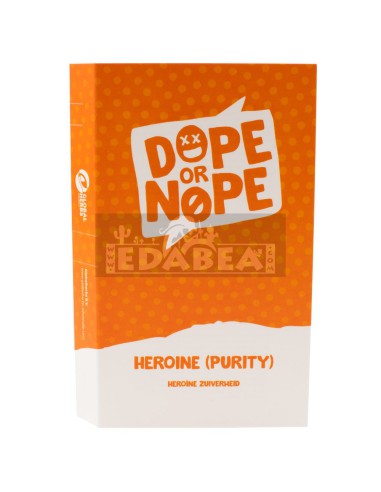
Heroine Purity Test - Dope or Nope
Last items in stock
€9.60
Tax included
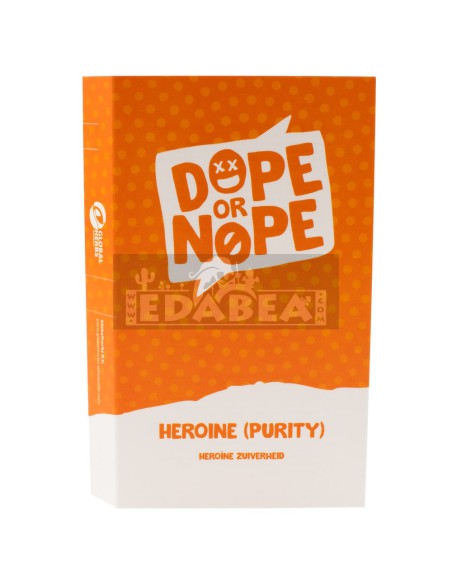
Heroine Purity Test Dope or Nope — semi-quantitative colorimetric reagent to determine the approximate purity of a heroin sample. No hazardous liquid reagents. Results in seconds. Includes reference color chart. 1 test per unit.
Ratings and comments from our customers
Heroine Purity Test Dope or Nope — product information
The Heroine Purity Test Dope or Nope is a semi-quantitative colorimetric reagent designed to provide a quick estimate of the purity level of a heroin sample. Unlike identification tests — which only detect the presence or absence of a substance — this test offers an estimate of the purity percentage of the sample by comparing the resulting color with an included reference chart.
Also available in our drug tests section in other formats and for other substances.
How a colorimetric reagent works
Colorimetric purity tests work by a chemical reaction between the reagent included in the test and the compounds present in the sample. In the case of heroin — diacetylmorphine — the reagent reacts, producing a color change whose intensity is proportional to the concentration of the compound in the sample. The result is interpreted by comparing the obtained color with the reference chart included in the test, which shows the correlation between color and approximate purity range.
It is important to understand that this is a semi-quantitative test — it provides an indicative estimation of the purity, not a precise analytical value. For exact quantitative analysis, laboratory techniques like HPLC or GC-MS are required.
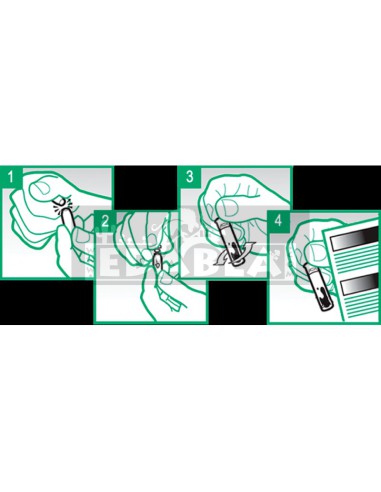
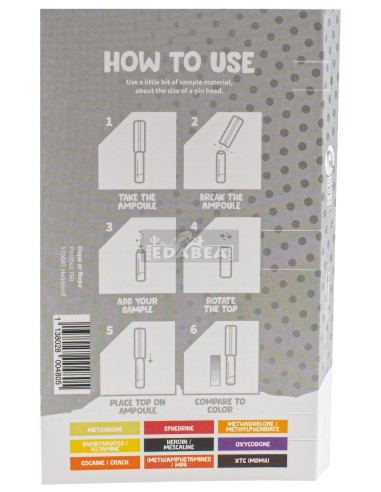
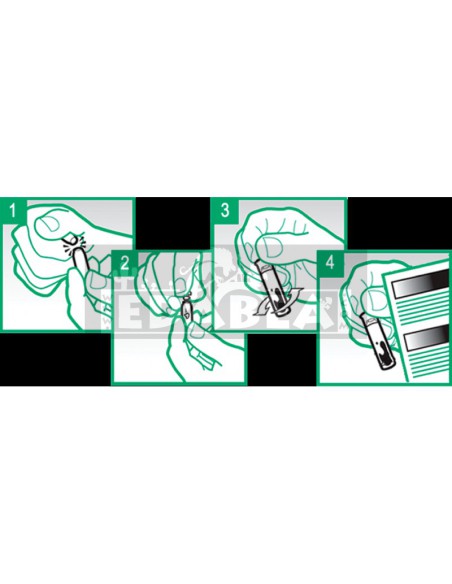
How to use
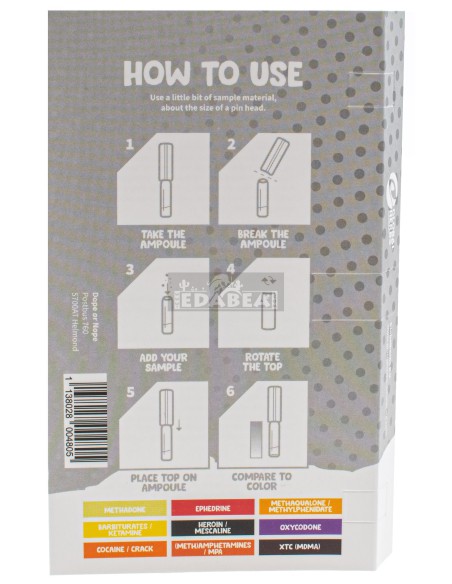
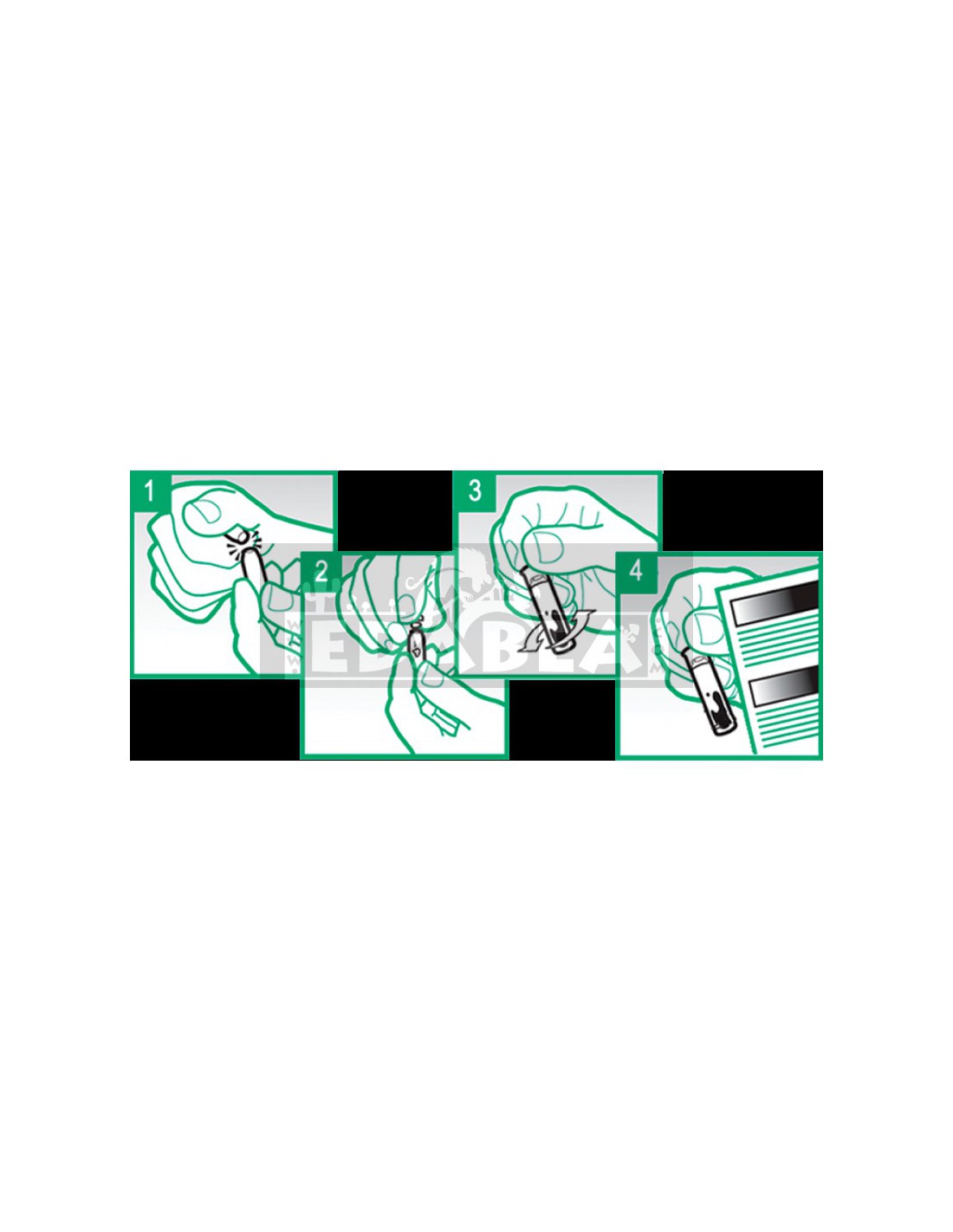
- Weigh exactly 20 milligrams of the sample with a precision scale — the exact amount is critical to obtain a reliable result.
- Open the test and add the 20 mg of sample to the reagent.
- Let react for the time indicated in the instructions.
- Compare the resulting color with the included reference chart.
- Dispose of the test after use — it is for single use only.
Context of use — risk reduction
Purity tests are risk reduction tools — a documented public health approach that aims to minimize harms associated with drug use without requiring abstinence as a prior condition. Heroin circulating on the black market shows huge purity variations — from samples with less than 5% diacetylmorphine to those with concentrations above 70% — and often contains adulterants that may be more dangerous than heroin itself. Knowing the approximate purity of a sample is relevant information for individual risk management.
Risk reduction organizations like Energy Control in Spain or DanceSafe in the USA promote the use of identification and purity tests as part of their intervention programs. The EMCDDA (European Monitoring Centre for Drugs and Drug Addiction) documents the use of colorimetric reagents as a harm reduction tool in multiple European countries.
Limitations of the test
This test provides an indicative estimation of heroin purity — it does not identify specific adulterants. To detect specific adulterants such as fentanyl, levamisole, or xylazine, specific tests for each compound are required. The result should always be interpreted as an estimation, not a definitive analysis.
Storage
Store in a cool, dry place, protected from direct light and extreme temperatures. Check the expiration date before use — an expired reagent may yield incorrect results.
Frequently asked questions
What is the difference between an identification test and a purity test?
An identification test detects the presence or absence of a substance in a sample — positive or negative result. A purity test goes a step further: it estimates the approximate percentage of that substance in the sample. This heroin test Dope or Nope is a semi-quantitative purity test — it provides an estimation of the purity level, not just the presence of heroin.
Why is the 20 milligrams of sample so precise?
The colorimetric reaction is calibrated for a specific amount of sample — 20 mg. If more or less is added, the intensity of the resulting color will not correspond to the reference chart, and the result will be incorrect. To weigh 20 mg precisely, a precision scale with a resolution of 0.001 g (milligrams) is essential.
Does this test detect fentanyl or other synthetic opioids?
No — this test is specifically designed to estimate the purity of heroin (diacetylmorphine). It does not detect fentanyl, carfentanil, or other synthetic opioids that may be present as adulterants. A specific test is required to detect fentanyl. In the drugs tests catalog by Edabea, you will also find the opioid purity test.
What is risk reduction?
Risk reduction is a public health approach that aims to minimize harms associated with drug use without requiring abstinence as a prior condition. It includes practices such as using sterile equipment, information about adulterants, and the use of identification and purity tests. It is supported by WHO and documented by EMCDDA as an effective public health strategy in the context of drug use.
GHW
3 Items
Tap to zoom