
Shopping Cart
There are no more items in your cart


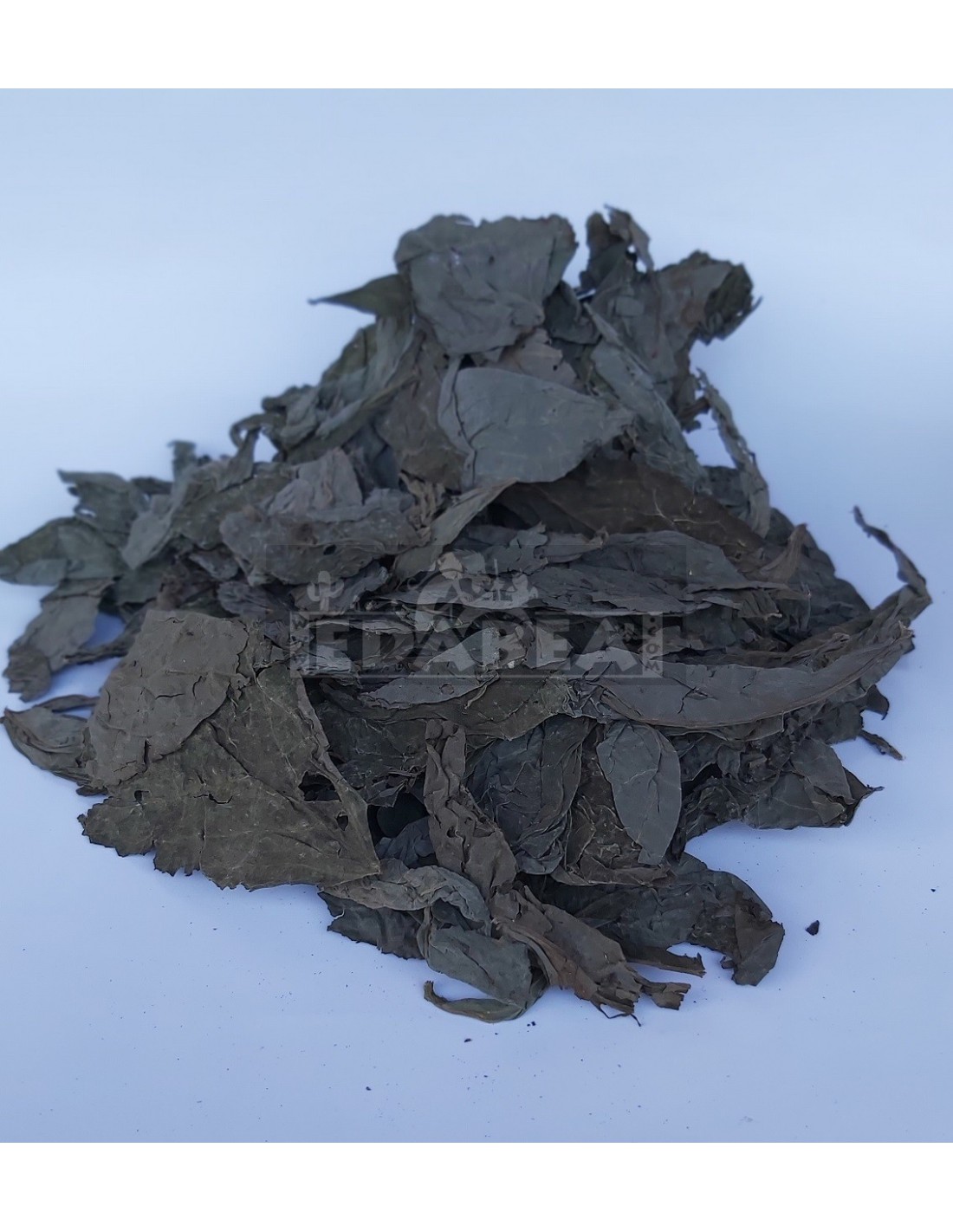

Dried Sage Leaves
available
€6.00
Tax included
Salvia divinorum (known as ska María, shepherd's herb) — dried leaves available in packs of 10 g and 100 g. A perennial herb native to the Sierra Mazateca in Oaxaca, Mexico, used by Mazatec healers in ceremonial and divinatory contexts. Its active compound, salvinorin A, is one of the most studied natural compounds in modern neuroscientific literature. Botanical collection material and ethnobotanical research.
What is Salvia divinorum
Salvia divinorum, known in Mazatec tradition as ska María Pastora, ska pastora, or shepherd's herb, is a perennial herb belonging to the Lamiaceae family — the same family as common sage (Salvia officinalis), mint, and rosemary. It originates from a very limited geographical area within the Sierra Mazateca in the state of Oaxaca, Mexico, growing in mountain wet forest areas at altitudes of 300 to 1,800 meters above sea level.
Its leaves contain salvinorin A, a neoclerodane diterpenoid documented as the most potent known non-alkaloid natural psychoactive compound to date, and one of the most studied in modern neuroscientific literature for its unique mechanism of action on kappa-opioid receptors in the central nervous system.
Botanical Description
Salvia divinorum is a plant with hollow quadrangular stems that can reach heights of 1 to 1.5 meters. It features large, opposite leaves, bright green in color with a smooth, slightly sticky texture. Its flowers are tubular, white with a purplish calyx, grouped in terminal clusters — morphologically similar to other sages but predominantly white in color, visually distinguishing it from other species in the genus.
This plant rarely produces viable seeds in cultivation — reproduction occurs almost exclusively through cuttings, which explains why all cultivated Salvia divinorum outside its natural distribution area descends from a very limited number of original specimens brought from Mexico to various parts of the world.
History and Ethnobotanical Context
Salvia divinorum is one of the plants with the least natural geographical distribution in the entire Edabea catalog — endemic to a very restricted area of the Sierra Mazateca in Oaxaca — and at the same time one of the most documented in modern ethnobotanical literature.
Historically, its use has been restricted to the Mazatec, an indigenous people of Oaxaca whose healing tradition is one of the most documented in Mesoamerica. The curanderos or chjota chjine ("people who know") Mazatecs use the plant in nocturnal diagnostic and divination sessions known as veladas, where the leaves are ingested chewed or brewed to induce visionary states for therapeutic and spiritual purposes.
The ethnobotanist R. Gordon Wasson — the same researcher who documented the use of Ololiuhqui and Mazatec psilocybin mushrooms — first described the ceremonial use of Salvia divinorum in publications in 1962, based on his expeditions to the Sierra Mazateca alongside the healer María Sabina. The botanist Carl Epling formally described the species in 1962, and chemist Daniel Siebert isolated and identified salvinorin A as the active principle in 1994.
The plant is of increasing interest in modern neuroscientific research due to the unique action mechanism of salvinorin A, which acts on kappa-opioid receptors — a mechanism distinct from any other known psychoactive compound — and has motivated its study in the context of pain, addiction, and altered states of consciousness research.
Format and Presentation
Dried leaves of Salvia divinorum are available in packs of 10 g and 100 g, selected and packaged to preserve their quality.
Conservation
Store in a cool, dry place protected from direct light, in a well-closed container. Dried leaves maintain their characteristics under proper storage conditions for an extended period.
Legal Aspects
The legal status of Salvia divinorum varies by country. In Spain, salvinorin A has been included in the list of controlled substances since 2009. The plant and its leaves are in a legal gray area that may vary depending on the jurisdiction and declared use. It is the buyer's responsibility to inform themselves about the applicable regulations in their place of residence before making any order.
This product is marketed exclusively as botanical collection material and ethnobotanical research.
Frequently Asked Questions
What does ska María Pastora mean?
Ska means "leaf" in Mazatec. The full name — ska María Pastora — translates as "leaf of María Pastora," referring to the Virgin Mary in her shepherdess invocation, reflecting the syncretism between pre-Columbian Mazatec religious traditions and colonial Catholicism. It is one of the most documented examples of religious syncretism in Mesoamerican ethnobotany.
What is salvinorin A?
Salvinorin A is a neoclerodane diterpenoid — a terpene compound, non-alkaloid — present in the leaves of Salvia divinorum. It is the only known natural psychoactive compound that primarily acts on kappa-opioid receptors in the central nervous system, a mechanism completely different from that of LSD, psilocybin, or DMT. It has been the subject of numerous scientific publications in neuroscience and pharmacology since its isolation in 1994.
Why does Salvia divinorum rarely produce viable seeds?
The plant has a floral morphology that hinders natural cross-pollination outside its original habitat. In cultivation, reproduction occurs almost exclusively by cuttings. It is speculated in botanical literature that Salvia divinorum may be a stabilized hybrid or cultivar developed by the Mazatecs themselves over centuries of selective cultivation, which would explain its extremely limited natural distribution area and its dependence on vegetative reproduction.
What is the legal status of Salvia divinorum in Spain?
Salvinorin A has been included in the list of controlled substances in Spain since 2009. The status of the plant and its leaves is complex and may vary depending on the jurisdiction and declared use. It is recommended to verify the current local regulations before purchasing.
BA-GHW
167 Items
Score:
5
Pedro Barros
-
Salvia is a true lady. Always at her best :P
Tap to zoom
