Shopping Cart
There are no more items in your cart
What is Rapé and what is it used for? | EDABEA
Categories :
General
Rapé (pronounced ha-PAY) is an Amazonian powder preparation made from tobacco (Nicotiana rustica or Nicotiana tabacum) combined with plant ashes and other botanical materials according to the tradition of each tribe. Its use is documented among indigenous peoples of Brazil, Colombia, Peru and Venezuela in ceremonial and medicinal contexts. At Edabea we offer a selection of 11 rapé varieties produced by indigenous communities or under authentic ethnobotanical criteria, along with kuripe and tepi for traditional administration.
Looking to buy Amazonian rapé?
Edabea offers 11 rapé varieties — Mapacho, Caapi, Kanna, Guayusa, Guarumo and more — along with kuripe and tepi for traditional administration.
View rapé catalog →What is rapé — botany and composition
Amazonian rapé differs from European snuff primarily in its botanical base: instead of Nicotiana tabacum, the variety cultivated in Europe since the 16th century, Amazonian rapé is made with Nicotiana rustica — known as mapacho — a species with significantly higher nicotine concentration and a more complex alkaloid profile than the commercial variety. Mapacho is considered sacred in multiple Amazonian indigenous traditions and is the central component of almost all ceremonial rapé varieties.
Beyond the tobacco base, each variety incorporates ashes from specific plants — obtained through controlled combustion of bark, leaves or wood — and sometimes powders from other medicinal or aromatic plants. The ash serves both a chemical function (modifying pH, affecting nicotine bioavailability) and a symbolic one within each indigenous knowledge system. The plants used to produce ash vary by tradition: some varieties incorporate Banisteriopsis caapi, Ilex guayusa, Sceletium tortuosum, Piper aduncum and other ethnobotanically relevant species.
History of rapé — from the Americas to Europe
The history of rapé is inseparable from the history of tobacco. The oldest records of ritual use of inhaled tobacco powder come from the first European accounts of contact with the Americas. Friar Ramón Pané, sent by the Spanish Crown to document New World medicinal plants, recorded at the end of the 15th century a description of the ritual use of an inhaled powder called cohoba: "The physician must also purge himself as the patient does, and to purge himself he takes a certain powder called cohoba by sniffing it through his nose, which intoxicates him so much that he no longer knows what he is doing, and in this state he says many things beyond reason, affirming that he speaks with the cemís" (Pané, R., Relación acerca de las antigüedades de los indios, c. 1498).
In 1560, French ambassador Jean Nicot introduced tobacco to the court of Catherine de Medici, wife of Henry II of France, presenting it as a medicinal remedy. The queen popularized it under the names herba medicea or nicotiana — in honor of Nicot — the origin of the scientific genus name. During the 18th century, snuff became the habitual accessory of European aristocracy and the snuffbox was a luxury object and status symbol.
As Terence McKenna documented: "There is no evidence that smoking tobacco was a practice known to any of the historical civilizations of the Old World until Columbus introduced it. Less than one hundred years later, small packets of tobacco were being placed in the graves of Lapland shamans" (McKenna, T., Food of the Gods, 1993). The speed of diffusion of tobacco — in all its forms, including rapé — has no equivalent among plants introduced from the Americas.
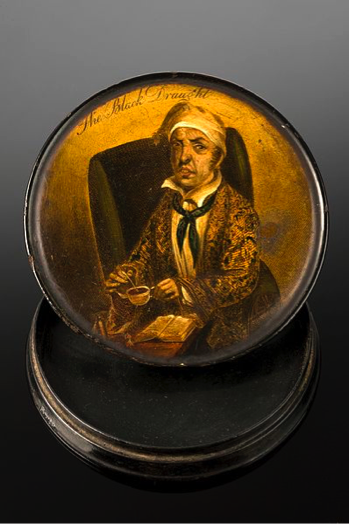
18th century rapé snuff boxes (Wellcomeimages, CC0, Wikipedia)
Amazonian tradition — plants, tribes and ceremonial context
In Amazonian indigenous traditions, rapé is not simply tobacco powder — it is a complex preparation with a specific ritual and medicinal function within each indigenous knowledge system. Peoples such as the Katukina, Yawanawá, Huni Kuin (Kaxinawá), Nukini and others from Acre in Brazil or from the Peruvian and Colombian Amazon maintain rapé preparation and use traditions transmitted orally between generations.
Rapé composition varies significantly between tribes and within the same tribe according to the ceremonial purpose. The most documented ingredients are ashes from Platycyamus regnellii bark (tsunu), Cecropia spp. (guarumo or embaúba), Theobroma spp. and various aromatic woods, combined with roasted and ground mapacho. Each combination produces a different sensory and physiological profile, valued differently within each people's knowledge system.
In some traditions, rapé is used in the context of ayahuasca ceremonies as ritual space preparation. In others, its use is independent and everyday, employed to maintain concentration during activities requiring sustained attention — hunting, collective decision-making, council meetings.
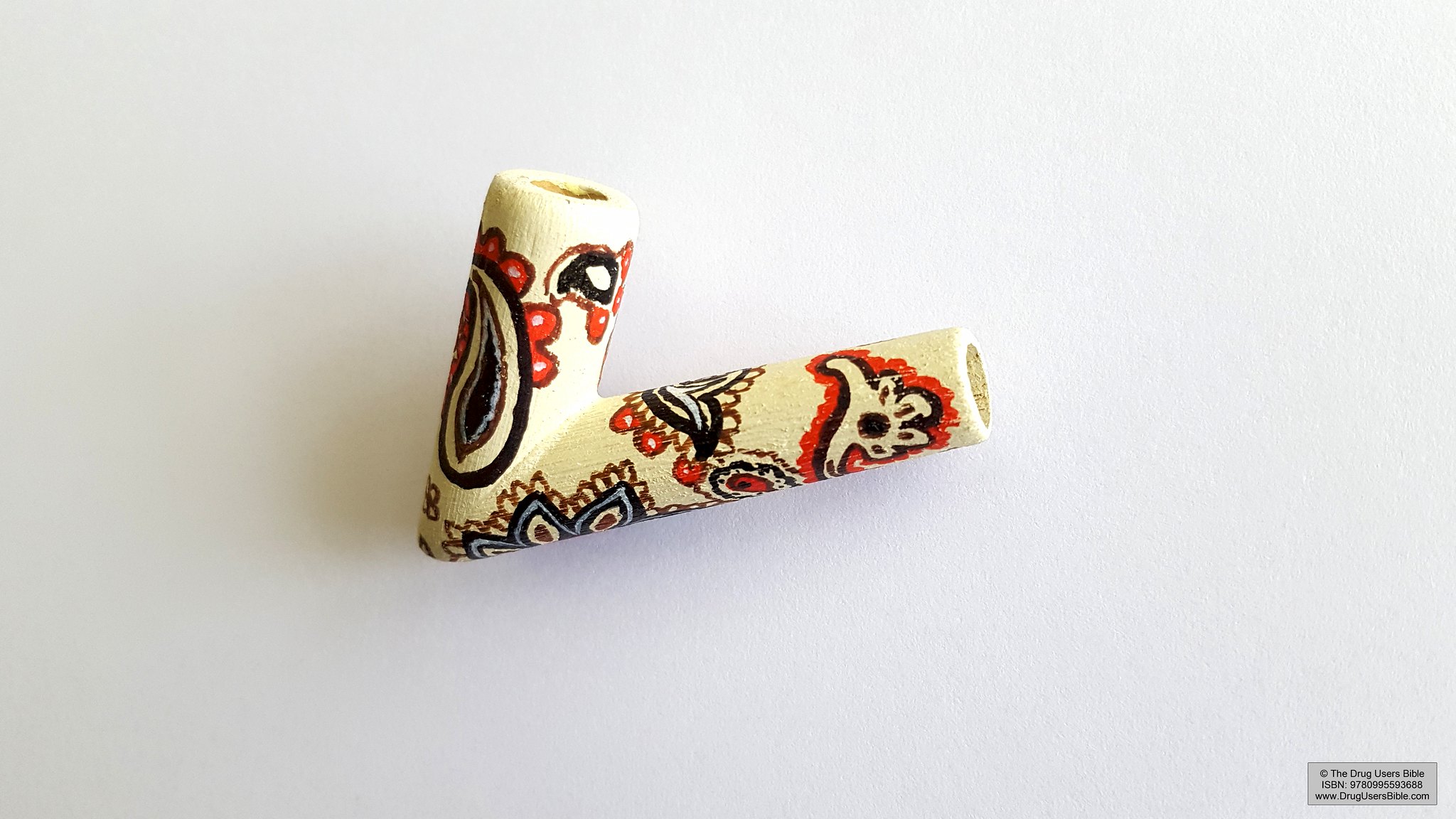
Kuripe (Dominic Milton Trott, CC BY 2.0, Flickr)
Kuripe and tepi — traditional administration tools
Amazonian rapé is administered by nasal insufflation using specific tools. The two main ones are the kuripe and the tepi:
The kuripe is a V or Y-shaped tube, usually made of bamboo, bone or wood, designed for self-administration. One end is placed in a nostril and the other in the mouth; the user exhales in a controlled manner to propel the powder.
The tepi is a longer straight tube — usually between 20 and 40 cm — designed for bilateral administration between two people. One person deposits the rapé at one end of the tube and administers it to the other through a controlled insufflation into each nostril.
Both tools are available in the Edabea catalog in various materials and finishes: view available kuripe and tepi.
Rapé varieties available at Edabea
The Edabea catalog includes 11 rapé varieties made with different plant bases and traditions of origin:
| Variety | Main plant added | View product |
|---|---|---|
| Pure Mapacho Snuff | Pure Nicotiana rustica — traditional base without additional blend | View |
| Rapé Caapi | Banisteriopsis caapi — ayahuasca vine | View |
| Kanna Snuff | Sceletium tortuosum — South African kanna | View |
| Guayusa Snuff | Ilex guayusa — Amazonian plant with caffeine and theophylline | View |
| Guarumo Snuff | Cecropia spp. — guarumo, Amazonian tree | View |
| Matico Snuff | Piper aduncum — matico, Amazonian medicinal plant | View |
| Bobinsana Snuff | Calliandra angustifolia — bobinsana, Amazonian riverside plant | View |
| Macambo Passionflower Snuff | Theobroma bicolor and Passiflora spp. | View |
| Tsunu Yawanawá Snuff | Ash of Platycyamus regnellii (tsunu) — Yawanawá tradition | View |
| Mai Joshin Snuff | Traditional Yawanawá blend | View |
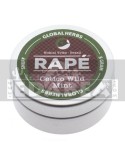
| Cético Wild Mint Nukini | Cecropia spp. with wild mint — Nukini tradition | View |
Legal status
Rapé is a tobacco-based preparation (Nicotiana rustica or Nicotiana tabacum) that does not contain controlled substances. The legal situation may vary by jurisdiction depending on the additional plants contained in each variety. It is the buyer's responsibility to verify the applicable regulations in their place of residence. Edabea products are sold exclusively as botanical collection material and ethnobotanical research material.
Frequently asked questions about rapé
What is the difference between Amazonian rapé and European snuff?
European snuff is a finely ground Nicotiana tabacum preparation, sometimes flavored, which had its peak as a luxury product in the 17th and 18th centuries. Amazonian rapé is made with Nicotiana rustica (mapacho) — a different species with higher alkaloid concentration — combined with ashes of specific plants according to the tradition of each indigenous people. The function, context of use and phytochemical composition are significantly different between the two traditions.
What is mapacho?
Nicotiana rustica, known as mapacho in the Amazon, is a tobacco species distinct from the commercial variety (Nicotiana tabacum). It has significantly higher nicotine concentration and a more complex secondary alkaloid profile. It is the base of Amazonian rapé and is considered sacred in multiple indigenous traditions across the Americas. The Pure Mapacho variety in the Edabea catalog is made exclusively from Nicotiana rustica without additional blend.
What function does the ash serve in rapé?
Bark or wood ashes — tsunu, guarumo, embaúba and others depending on the tradition — serve two functions. Chemically, ash is alkaline and raises the pH of the powder, modifying nicotine bioavailability by altering its ionization state. From an ethnobotanical perspective, each plant from which the ash is produced has a specific role within the indigenous knowledge system. The choice of plant for producing ash is part of the traditional knowledge of rapé preparation.
What is the difference between kuripe and tepi?
The kuripe is a V or Y-shaped tube for self-administration — one person can use it alone. The tepi is a longer straight tube designed for bilateral administration between two people. In indigenous traditions, administration with tepi by another person has a specific relational and ceremonial dimension that the kuripe does not reproduce. Both are available in various materials in the Edabea catalog.
What plants do the rapé varieties in the catalog contain?
The 11 available varieties incorporate plants of different origin and profile: Banisteriopsis caapi (ayahuasca vine), Sceletium tortuosum (kanna), Ilex guayusa, Piper aduncum (matico), Calliandra angustifolia (bobinsana), Cecropia spp. (guarumo), Theobroma bicolor (macambo), Passiflora spp. and tsunu ash (Platycyamus regnellii) from the Yawanawá tradition. Each variety has its own product page with a full ingredient description.
Does rapé contain controlled substances?
Rapé is a tobacco-based preparation that does not contain substances included in international controlled substance schedules. Some varieties incorporate plants such as Banisteriopsis caapi, whose legal status varies by jurisdiction. It is the buyer's responsibility to verify applicable regulations in their place of residence before placing an order.
Complete rapé catalog at Edabea
11 Amazonian rapé varieties and traditional administration tools — kuripe and tepi in various materials.
View all products →About this content
Article produced by the specialized team at Edabea Natura, with over 15 years of experience in the selection and marketing of ethnobotanical materials. Historical information is based on primary sources and cited academic bibliography. Last updated: May 2026. For inquiries about availability or current batch characteristics, contact contacto@edabea.com.
References
- Pané, R. (c. 1498). Relación acerca de las antigüedades de los indios. [Modern edition: Arrom, J.J. (ed.), Siglo XXI Editores, 1974].
- Fernández de Oviedo, G. (1535). Historia general y natural de las Indias, islas y tierra-firme del mar océano. Real Academia de la Historia, Madrid.
- McKenna, T. (1993). Food of the Gods. The Search for the Original Tree of Knowledge. Bantam Books: New York.
Share this content