Shopping Cart
There are no more items in your cart


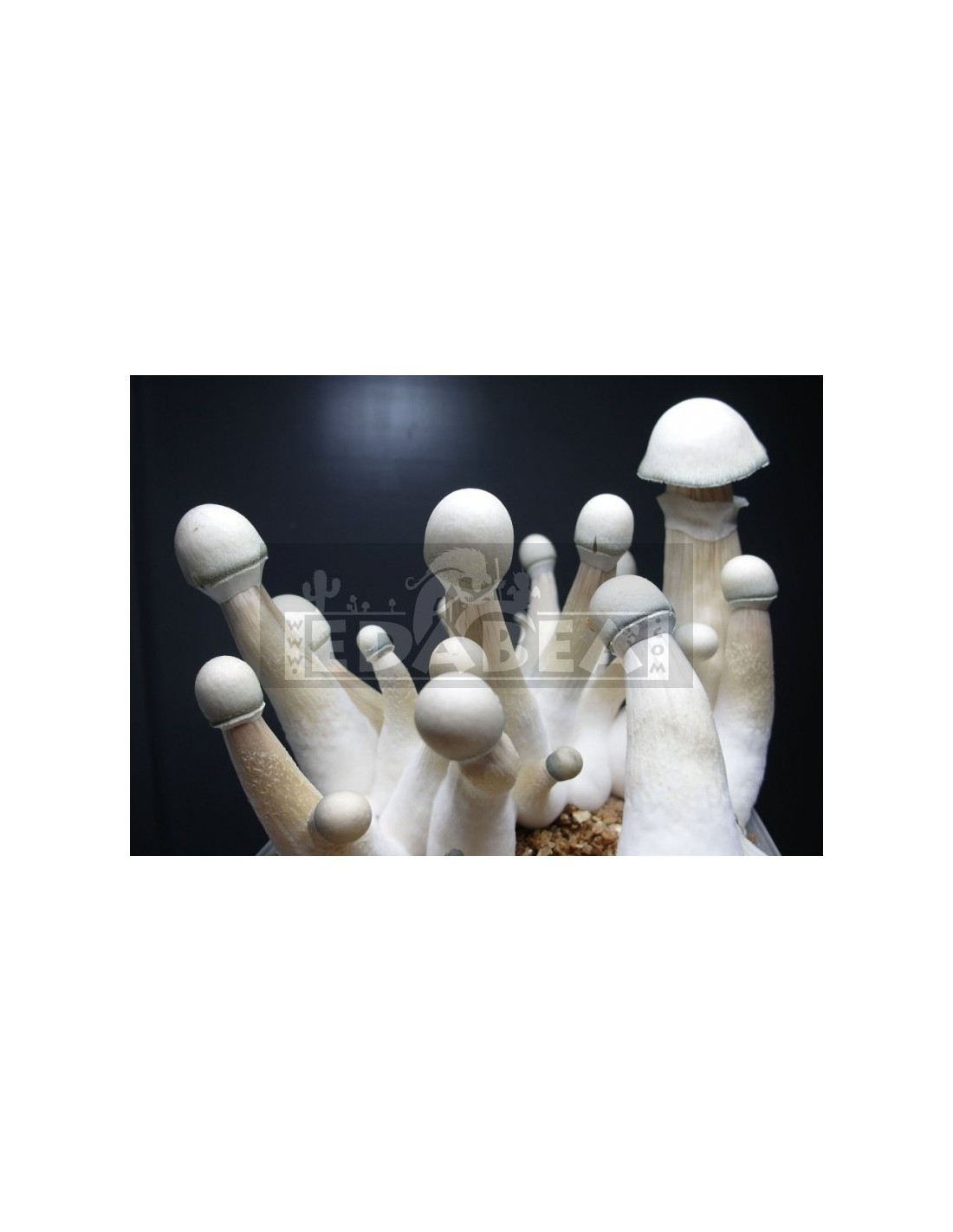
Moby Dick 10 ml.
Out-of-Stock
€14.50
Tax included
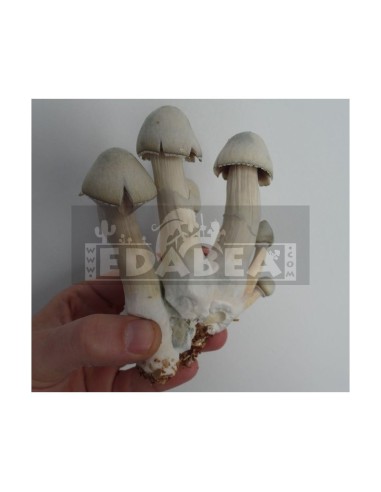
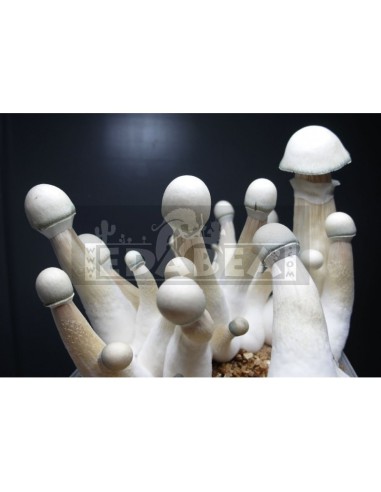
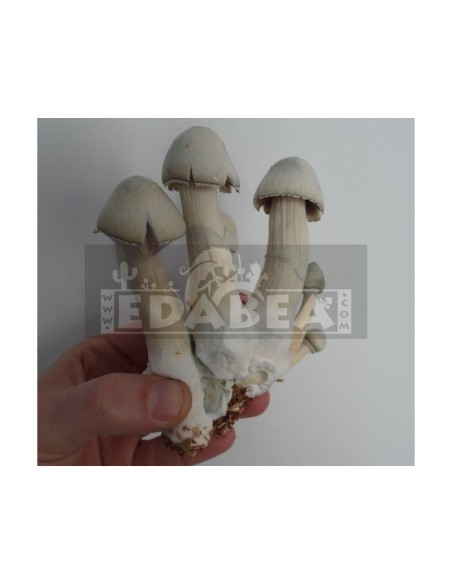
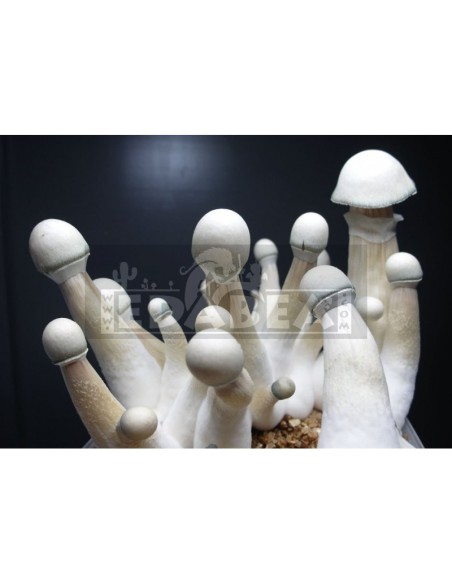
Moby Dick Spores Vial 10 ml. — Psilocybe cubensis var. Moby Dick. Spores in sterile aqueous solution, 10 ml vial with sterile syringe. Documented hybrid of the A+ and Golden Teacher varieties, characterized by complete lack of pigmentation — completely white Fruiting bodies from cap to stem, albino phenotype within P. cubensis. This absence of pigment also affects the spores, making Moby Dick a reference of particular interest for comparative microscopy among standard and albino color varieties. Collection and mycological research material.
Ratings and comments from our customers
Moby Dick Spores Vial
The Moby Dick spores vial contains a sterile aqueous suspension of spores of Psilocybe cubensis var. Moby Dick in a 10 ml vial with sterile syringe. It is the only albino variety in the Edabea catalog and one of the few of P. cubensis with that phenotype available in the European collection market. Its origin is a documented cross between the A+ and Golden Teacher varieties, two of the most historically distributed references in the spores market.
Origin — A+ × Golden Teacher Cross
The Moby Dick variety is a hybrid obtained from crossing two reference strains within P. cubensis:
- A+ — variety of uncertain origin but broad historical distribution, known for its bluish mycelium and medium-sized fruiting bodies with golden-brown caps.
- Golden Teacher — one of the most widely distributed varieties on the global collection market, characterized by its wide golden cap, regular production, and stable morphology among flushes.
The result of the cross is a phenotype that inherits the robust growth of both parent varieties but expresses a mutation that suppresses pigment production — hence the completely white coloring of the fruiting bodies. This type of phenotypic expression in fungi is referred to as albinism or leucism depending on whether it also affects the spores or only the fruiting body tissues.
Albinism in Psilocybe cubensis
The pigmentation of fruiting bodies in Psilocybe cubensis — the caramel, golden, brown, and orange tones present in most varieties — comes from melanins and other pigments synthesized during the development of the cap. Albino varieties exhibit a mutation that interrupts this synthesis, resulting in unpigmented tissues.
In the case of Moby Dick, the absence of pigment affects the entirety of the fruiting body — cap, stem, and gills present white coloration. This characteristic has direct consequences on spore printing and microscopic observation: the spores of albino or leucistic varieties of P. cubensis can show significantly different colors from the standard purple-brown spores of the species, making this variety a particularly useful contrast reference in comparative microscopy work.
Documented Morphological Characteristics
- Completely white coloring — cap, stem, and gills without pigmentation, from base to top. Visually unmistakable phenotype within the P. cubensis catalog.
- Large fruiting bodies — robust development inherited from the parent varieties, with large diameter caps and thick stems.
- Atypical spore coloration — the absence of pigment can also affect the spores, which in albino varieties show lighter colors than the standard purple-brown of the species. Of specific interest for comparative microscopy.
Vial Characteristics
The vial contains spores of Psilocybe cubensis var. Moby Dick in sterile aqueous suspension (10 ml) with an included sterile syringe. The spore coloration may differ from the standard purple-brown of the species — a characteristic of interest for comparative microscopic observation with normally pigmented varieties.
To check the complete catalog of available varieties, visit the Edabea spores section.
Storage
Store in the refrigerator between 2 °C and 8 °C, protected from direct light. Do not freeze. Under suitable conditions, spores maintain viability for months. Avoid sudden temperature changes between uses.
Legal Status
The legal status of Psilocybe cubensis spores varies by jurisdiction. In many countries, spores — which do not contain psilocybin or psilocin — are not subject to the same regulation as mycelium or fruiting bodies. It is the buyer’s responsibility to verify the applicable regulations in their place of residence before ordering. This product is marketed exclusively as collection and research material.
Frequently Asked Questions
What’s the difference between an albino and a leucistic variety?
In mycology, true albinism involves total absence of pigmentation that also affects the spores — which show white or very light coloration instead of the standard purple-brown. Leucism is a partial form of depigmentation that can affect the fruiting body but not necessarily the spores, which maintain normal coloration. In practice, the distinction between both phenotypes in collection varieties requires direct microscopic observation of the spores. Moby Dick shows complete depigmentation of the fruiting body, with spores that may potentially be lighter in color than standard varieties.
Why is an albino variety interesting for microscopy?
The coloration of the spores is one of the most used criteria for morphological identification in microscopy of Psilocybe. The spores of P. cubensis usually show dark purple-brown coloration that is clearly visible at 400x. In albino or leucistic varieties, this coloration can be significantly lighter, allowing for direct comparisons between the pigmented and depigmented phenotypes within the same species. This comparison is of interest both for morphological documentation and for studying the relationship between tissue pigmentation and spore pigmentation in the genus.
How does Moby Dick relate morphologically to its parent varieties A+ and Golden Teacher?
Moby Dick inherits the robust growth and large cap size from both parent varieties. The Golden Teacher contributes stable morphology and a wide cap; the A+ contributes growth vigor. The albino trait is the result of the expression of a mutation that interrupts pigment synthesis — not present in either of the two parent varieties, and is an emergent characteristic of the cross.
Do the spores contain psilocybin?
No. The spores of Psilocybe cubensis do not contain psilocybin or psilocin. These compounds are synthesized during the development of the mycelium and fruiting bodies, not in the spores in their dormant state. This distinction is relevant in many jurisdictions where legislation affects active mycelium and fruiting bodies but not the spores.
Data prepared by the specialized team at Edabea Natura. Information based on reference mycological bibliography. Last updated: May 2026.
Tap to zoom