Shopping Cart
There are no more items in your cart



Orissa India 10 ml.
€14.50
Tax included
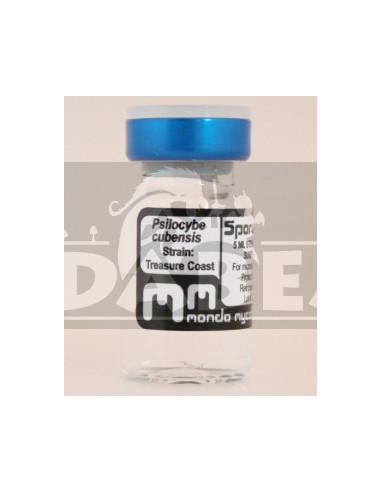
Orissa India Spore Vial 10 ml. — Psilocybe cubensis var. Orissa India. Spores in sterile aqueous solution, 10 ml vial with sterile syringe. Strain originating from the Indian state of Orissa (now Odisha), on the eastern coast of India. Documented as one of the varieties with the highest development of fruiting bodies within P. cubensis, with a cap of large diameter, especially from the second flush. Collection material and mycological research.
Orissa India Spore Vial
The Orissa India spore vial contains a sterile aqueous suspension of spores of Psilocybe cubensis var. Orissa India in a 10 ml vial with a sterile syringe. This variety comes from the Indian state of Orissa — officially renamed Odisha in 2011 — located on the eastern coast of India, bordered by the Bay of Bengal. It is one of the most referenced varieties in specialized mycological collections due to the exceptional size of its fruiting bodies.
Geographic Origin
Odisha (Orissa) is a state in Eastern India with an extensive coastline along the Bay of Bengal, characterized by a humid tropical climate with marked monsoons and high temperatures for much of the year. These conditions — high humidity, consistent temperature, and abundant organic substrate — are suitable for the natural habitat of Psilocybe cubensis, a species documented in various areas of the Indian subcontinent in association with organic-rich soils.
The presence of P. cubensis in India was documented by ethnomycologist R. Gordon Wasson and later by other researchers within studies on the geographical distribution of psilocybin mushrooms in Asia. The Orissa India variety is one of the most well-known Indian strains in the European mycological collection market.
Documented Morphological Characteristics
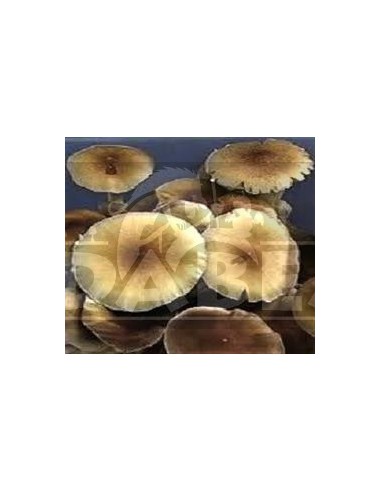
- Exceptional Size — the Orissa India variety is documented as one of the highest fruiting body developments within P. cubensis, with caps significantly larger than the average species.
- Differentiated Multi-Flush Behavior — the second and subsequent flushes tend to produce larger fruiting bodies than the first, an opposite pattern compared to most P. cubensis varieties, which typically exhibit greater development in the initial flush.
- Variable Cap Coloration — caramel to golden-brown tones in young specimens, progressively lightening towards the edge as they mature.
- Robust Stipe — stem diameter is larger than average, proportional to the cap development.
Vial Characteristics
The vial contains spores of Psilocybe cubensis var. Orissa India in sterile aqueous suspension (10 ml) with an included sterile syringe. Standard format for mycological microscopy — elliptical spores with thick walls and purple-brown coloration, visible from 400x magnification.
For the complete catalog of available varieties, visit the spore section of Edabea.
Storage
Store in the refrigerator between 2 °C and 8 °C, protected from direct light. Do not freeze. Under suitable conditions, spores maintain viability for months. Avoid rapid temperature changes between uses.
Legal Situation
The legal status of Psilocybe cubensis spores varies by jurisdiction. In many countries, spores — which do not contain psilocybin or psilocin — are not subject to the same regulations as mycelium or fruiting bodies. It is the buyer's responsibility to check the applicable regulations in their place of residence before placing an order. This product is marketed exclusively as mycological collection and research material.
Frequently Asked Questions
Why does the Orissa India variety produce larger fruiting bodies in later flushes?
The reverse development pattern of Orissa India — larger size in secondary flushes than in the first — is one of its most documented and distinguishing morphological traits. Most varieties of P. cubensis show greater development in the initial flush, with a progressive reduction in subsequent flushes. Orissa India exhibits the opposite pattern, making it an interesting variety for comparative study of multi-flush behavior within the species.
Is there documentation on P. cubensis in India?
Yes. Psilocybe cubensis has been documented in the Indian subcontinent by several researchers. R. Gordon Wasson, considered one of the founders of modern ethnomycology, included references to psilocybin mushrooms in Asia in his geographical distribution works. Subsequently, other authors have expanded the documentation of P. cubensis and related species in tropical regions of India, Sri Lanka, and Southeast Asia.
How does Orissa India morphologically differ from Ecuador in the catalog?
Both varieties produce large fruiting bodies, but with distinct profiles. Ecuador features robust and uniform development from the first flush, with a pronounced umbo as a distinguishing trait. Orissa India stands out particularly for the increase in size in later flushes and the greater diameter of the cap at its maximum development, generally being the largest variety in absolute size in the catalog.
Do the spores contain psilocybin?
No. Spores of Psilocybe cubensis do not contain psilocybin or psilocin — these compounds are synthesized during the development of mycelium and fruiting bodies, not in the dormant spores. This distinction is relevant legally in numerous jurisdictions where regulation affects active mycelium and fruiting bodies but not the spores.
Information compiled by the specialized team at Edabea Natura. Information based on reference mycological literature. Last updated: May 2026.
4 Items
Tap to zoom