Shopping Cart
There are no more items in your cart





Mc Kennaii 10 ml.
Last items in stock
€14.50
Tax included
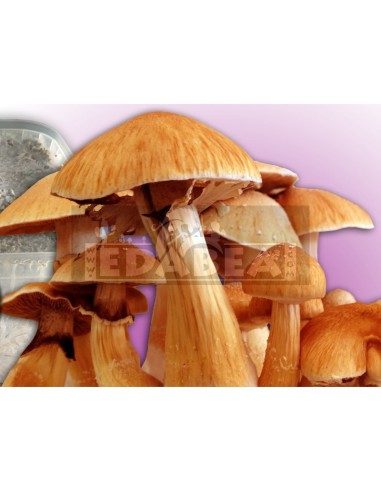
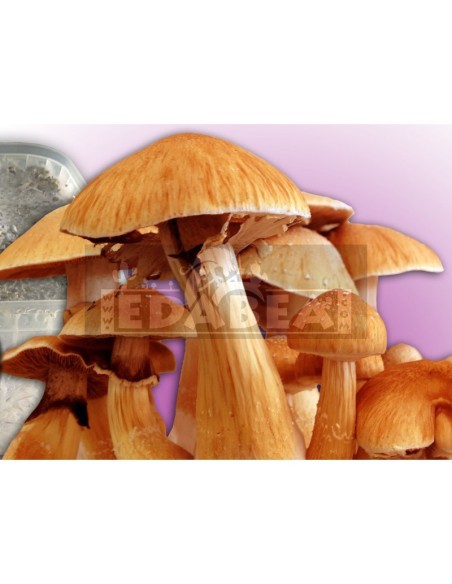
McKennaii Spore Vial 10 ml. Psilocybe cubensis var. McKennaii. Spores in sterile aqueous solution, 10 ml vial with sterile syringe. Strain of Dutch origin, developed as a laboratory hybrid in the Netherlands and named in honor of the ethnobotanist and author Terence McKenna (1946-2000), one of the most influential figures in the popular and academic documentation of the use of psychoactive plants in the 20th century. Dark brown variable-shaped caps, thick and robust stems. Collection and mycological research material.
Ratings and comments from our customers
McKennaii Spore Vial
The McKennaii spore vial contains a sterile aqueous suspension of Psilocybe cubensis var. McKennaii in a 10 ml vial with a sterile syringe included. This variety was developed in the Netherlands as a laboratory hybrid of not fully documented origin, and its name is a direct homage to Terence McKenna, the ethnobotanist, philosopher, and author whose work focused on the study of psilocybin mushrooms and their relationship with the history of human culture.
Terence McKenna and the Ethnobotany of Mushrooms
Terence Kemp McKenna (1946-2000) was one of the most influential authors and communicators in the field of ethnobotany and popular psychopharmacology in the 20th century. Born in Paonia, Colorado, he studied conservation ecology and shamanism at the University of California Berkeley and performed fieldwork in the Amazon that profoundly influenced his perspective on psychoactive plants and their role in the history of human consciousness.
Among his most cited works in ethnobotanical literature are Food of the Gods: The Search for the Original Tree of Knowledge (1992), where he develops the "stoned ape" hypothesis regarding the relationship between psilocybin mushroom consumption and the cognitive expansion of Homo sapiens in the Pleistocene, and True Hallucinations (1993), which documents his fieldwork in the Colombian Amazon. Along with his brother Dennis McKenna, ethnopharmacologist and author of several academic studies on plant alkaloids, he founded Botanical Dimensions in 1985, an organization dedicated to the preservation of ethnobotanical plants and the traditional knowledge associated with them.
McKenna is also the source of the quote about the expansion of tobacco into Lapland in less than a hundred years, referenced in Food of the Gods and in the Edabea blog article on rapé.
Dutch Origin and the Context of European Mycological Cultivation
The Netherlands has historically been one of the reference centers for the collection mycology market in Europe, with a tradition of smart shops and specialized herb stores active since the 1990s. Several P. cubensis varieties present in the European market originate from developments and selections made in Dutch laboratories and collections during that period. McKennaii is one of the most well-known examples: a laboratory strain with uncertain origins but widely distributed from the Netherlands, whose name connects the European collection market with the figure of McKenna.
Documented Morphological Characteristics
- Dark brown caps, darker than the average varieties in the catalog like Mexican or PES Hawaiian.
- Variable cap shape: may display a complex flat or convex profile depending on maturity stage and developmental conditions.
- Thick and robust stems, with a larger diameter than slimmer varieties like Ban Hua Thai.
Vial Characteristics
The vial contains Psilocybe cubensis var. McKennaii spores in sterile aqueous suspension (10 ml) with an included sterile syringe. Ellipsoid spores with thick walls and standard purplish-brown coloration of the species, visible from 400x magnification.
To consult the complete catalog of available varieties, visit the spores section of Edabea.
Storage
Store in a refrigerator between 2°C and 8°C, protected from direct light. Do not freeze. Under proper conditions, spores can maintain their viability for months. Avoid drastic temperature changes between uses.
Legal Situation
The legal situation of Psilocybe cubensis spores varies according to jurisdiction. In many countries, spores, which do not contain psilocybin or psilocin, are not subject to the same regulations as mycelium or fruiting bodies. It is the buyer's responsibility to verify the applicable regulations in their place of residence before placing an order. This product is marketed exclusively as mycological collection and research material.
Frequently Asked Questions
What is Terence McKenna's Stoned Ape Hypothesis?
In Food of the Gods (1992), McKenna proposes that the consumption of psilocybin mushrooms by hominins during the Pleistocene may have acted as an accelerating factor in the development of symbolic consciousness, language, and abstract cognitive ability in Homo sapiens. The hypothesis, known as the "Stoned Ape Theory," suggests that access to psilocybin mushrooms in African grasslands during the expansion of wild cattle may have influenced the cognitive evolution of our species. The hypothesis lacks majority support in current paleontology but has significantly impacted ethnobotanical dissemination and spurred investigations into the neurobiology of psilocybin compounds.
Who is Dennis McKenna and how does his work differ from Terence's?
Dennis McKenna is an ethnopharmacologist and author, brother of Terence McKenna. While Terence primarily focused on philosophical and ethnobotanical dissemination, Dennis has published peer-reviewed academic research on Amazonian plant alkaloids, including studies on the pharmacology of ayahuasca. Both brothers participated in the fieldwork in the Colombian Amazon in 1971 documented in True Hallucinations and in the La Chorrera experiment, and co-founded Botanical Dimensions together in 1985.
Why are the Netherlands a reference center for the collection mycology market?
Since the 1990s, the Netherlands developed a relatively tolerant legal framework for the sale of fresh psilocybin mushrooms (until 2008) and Psilocybe truffles (currently legal), which facilitated the development of an ecosystem of specialized shops, cultivation laboratories, and spore distributors with international projection. Several P. cubensis varieties present in today's European market originate from that active development period in the Netherlands.
Do the spores contain psilocybin?
No. Psilocybe cubensis spores do not contain psilocybin or psilocin. These compounds are synthesized during the development of mycelium and fruiting bodies, not in dormant spores. This distinction is relevant in many jurisdictions where regulations affect active mycelium and fruiting bodies but not spores.
Details provided by the specialized team at Edabea Natura. Information based on reference mycological literature. Last update: May 2026.
3 Items
Tap to zoom