Shopping Cart
There are no more items in your cart



Golden Teacher 10 ml.
Out-of-Stock
€14.50
Tax included
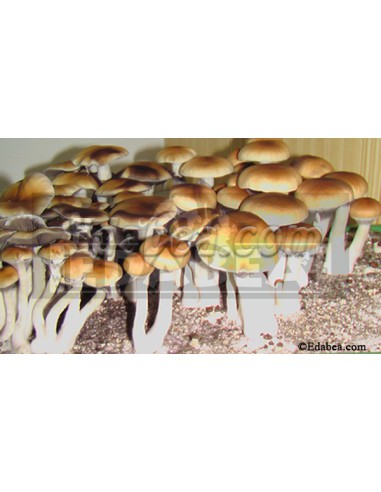
Golden Teacher Spore Vial 10 ml. Psilocybe cubensis var. Golden Teacher. Spores in sterile aqueous solution, 10 ml vial with sterile syringe. The Golden Teacher is the benchmark variety in the worldwide P. cubensis collection market, present in specialized catalogs since the late 80s. Unknown origin, possibly Florida. Characteristic golden cap color, medium to large fruiting bodies with documented cap diameters of up to 5 cm and heights of 13 cm, with a tendency for greater development in secondary flushes. Collection material and mycological research.
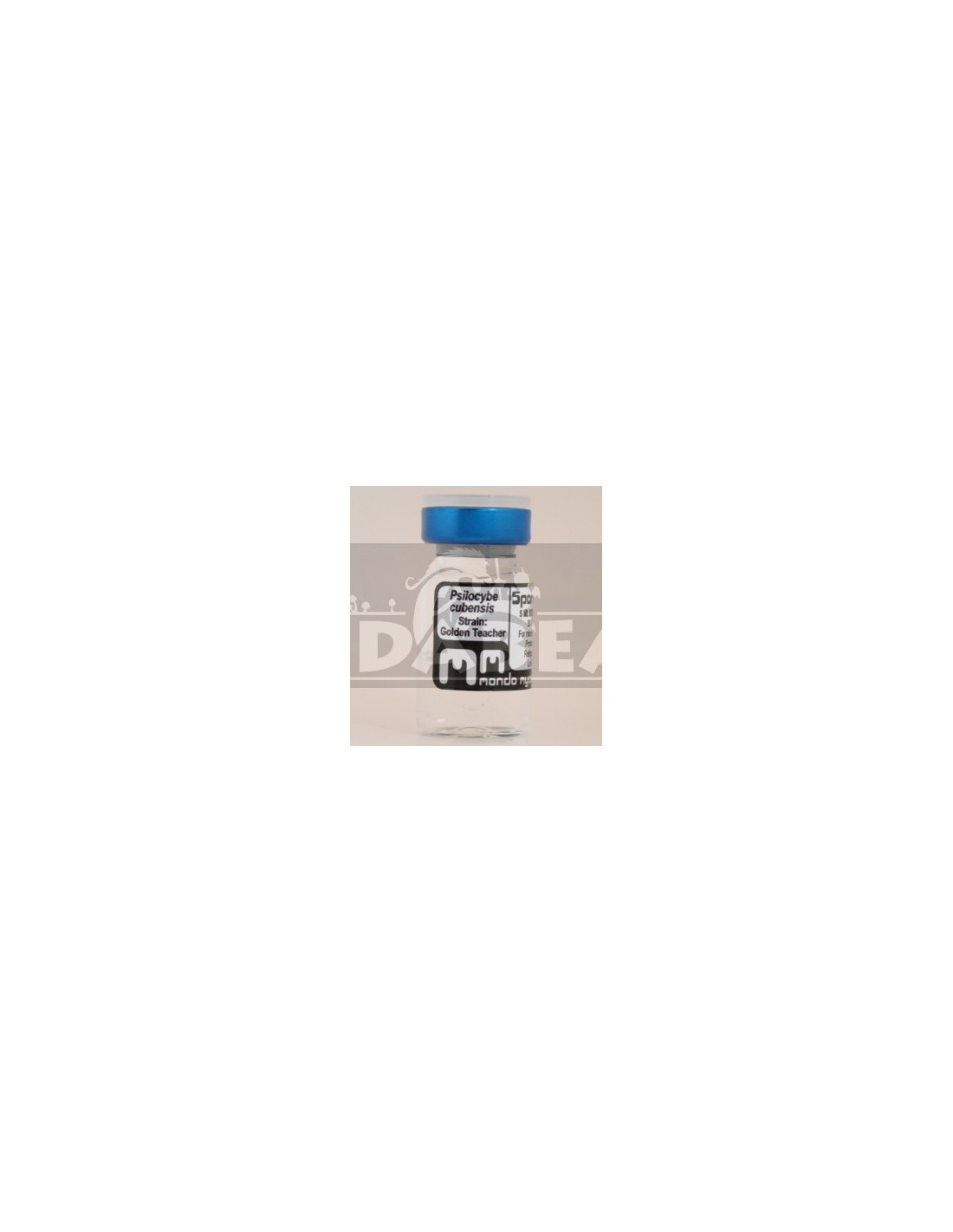
Golden Teacher Spore Vial
The Golden Teacher spore vial contains a sterile aqueous suspension of spores from Psilocybe cubensis var. Golden Teacher in a 10 ml vial with sterile syringe. The Golden Teacher is historically the most distributed variety in the P. cubensis collection market in Europe and America, with documented presence in spore catalogs since the late 1980s and inclusion in popular mycological literature through the work of Paul Stamets.
Origin and Name
The exact origin of the Golden Teacher variety is uncertain. The earliest references place it in the American collection market in the late 80s, with unverified attribution to growers in Florida, where other catalog varieties such as B+ and Treasure Coast also have documented or probable origin. The name "Golden Teacher" refers to the golden color of the cap ("golden") and the strain's reputation within the collector community as a reliable and well-studied variety ("teacher"), one of the most used reference points in microscopy and comparative cultivation of P. cubensis.
Paul Stamets included the Golden Teacher among the reference varieties in his work Psilocybin Mushrooms of the World (1996), which solidified its position as a benchmark variety in the international mycological collection community. It is also one of the two parental varieties of the Moby Dick hybrid in the Edabea catalog, alongside A+.
Relation with PES Hawaiian in the Catalog
As documented in the PES Hawaiian variety sheet, there is ongoing debate in the mycological community as to whether PES Hawaiian and Golden Teacher are the same strain under different names or two very closely related lines derived from the same original material. The morphological similarity between the two, the golden cap coloration, and the comparable production profile have fueled this discussion for decades. There is no published genetic characterization that definitively resolves the issue.
Documented Morphological Characteristics
- Golden cap: characteristic color that gives the variety its name: golden yellow to caramel tones, lighter than most varieties in the catalog, tending to fade towards the edge in mature specimens.
- Medium to large size: caps of up to 5 cm in diameter and fruiting bodies of up to 13 cm in height under standard cultivation conditions.
- Larger secondary flushes: second and third flushes tend to produce larger fruiting bodies than the first, a pattern shared with Orissa India in the catalog.
- Slower colonization than varieties such as Cambodian or B+, with fruiting that begins immediately after complete colonization of the substrate.
- In vitro fruiting if not transferred to fruiting chamber after colonization, a feature shared with Cambodian and Treasure Coast in the catalog.
Vial Characteristics
The vial contains spores of Psilocybe cubensis var. Golden Teacher in sterile aqueous suspension (10 ml) with the sterile syringe included. Elongated spores with a standard purplish-brown color visible at 400x magnification.
For the complete catalog of available varieties, visit the Edabea spore section.
Storage
Store in the refrigerator between 2 °C and 8 °C, protected from direct light. Do not freeze. Under suitable conditions, the spores maintain viability for months. Avoid sudden temperature changes between uses.
Legal Situation
The legal status of Psilocybe cubensis spores varies by jurisdiction. In many countries, spores, which do not contain psilocybin or psilocin, are not subject to the same regulation as mycelium or fruiting bodies. It is the buyer’s responsibility to check the applicable regulations in their place of residence before placing an order. This product is marketed exclusively as mycological collection material and research.
Frequently Asked Questions
Why is Golden Teacher the benchmark variety in the collection market?
The combination of well-documented morphology, continuous historical distribution since the 80s, inclusion in seminal bibliographic works such as Stamets' Psilocybin Mushrooms of the World (1996), and its predictable behavior in cultivation have made it the most widely used starting point in P. cubensis collection and comparative microscopy. Its characteristic golden cap color also makes it immediately recognizable compared to other varieties, facilitating its use as a visual reference in morphological documentation work.
What relation does Golden Teacher have with other varieties in the Edabea catalog?
Golden Teacher is one of the two parental strains of the Moby Dick hybrid in the catalog, along with A+. It is also the variety most frequently compared to PES Hawaiian due to the morphological similarities that have generated debate regarding its taxonomic identity. Additionally, it is the implicit reference variety in many size and coloration comparisons in the catalog sheets, as its 5 cm diameter golden cap is the best-known parameter in the P. cubensis collection market.
Why are secondary flushes larger than the first in Golden Teacher?
The pattern of increased development in flushes following the first is a documented characteristic in several P. cubensis varieties, including Golden Teacher and Orissa India. The most accepted explanation is that the substrate, although partially depleted of nutrients after the first flush, has been more completely colonized by the mycelium, which can distribute available resources more efficiently in subsequent flushes. This behavior varies among varieties and is one of the most studied aspects in comparative cultivation of the species.
Do the spores contain psilocybin?
No. Spores of Psilocybe cubensis do not contain psilocybin or psilocin. These compounds are synthesized during the development of mycelium and fruiting bodies, not in dormant spores. This distinction is relevant in many jurisdictions where regulations apply to active mycelium and fruiting bodies but not to spores.
Description prepared by the specialized team of Edabea Natura. Information based on reference mycological literature. Last updated: May 2026.
Score:
5
Mark Zabelis
-
The mushroom spores were perfect condition without any contamination,I would definitely buy again.took 2 weeks for the package to arrive.
Tap to zoom