Shopping Cart
There are no more items in your cart

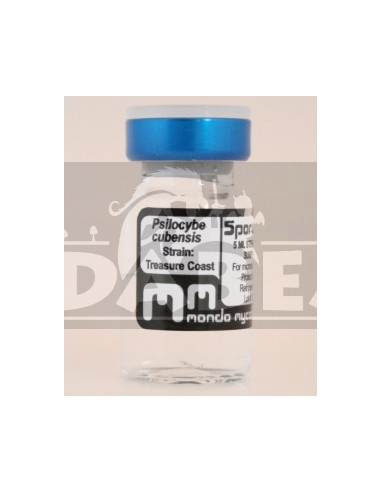
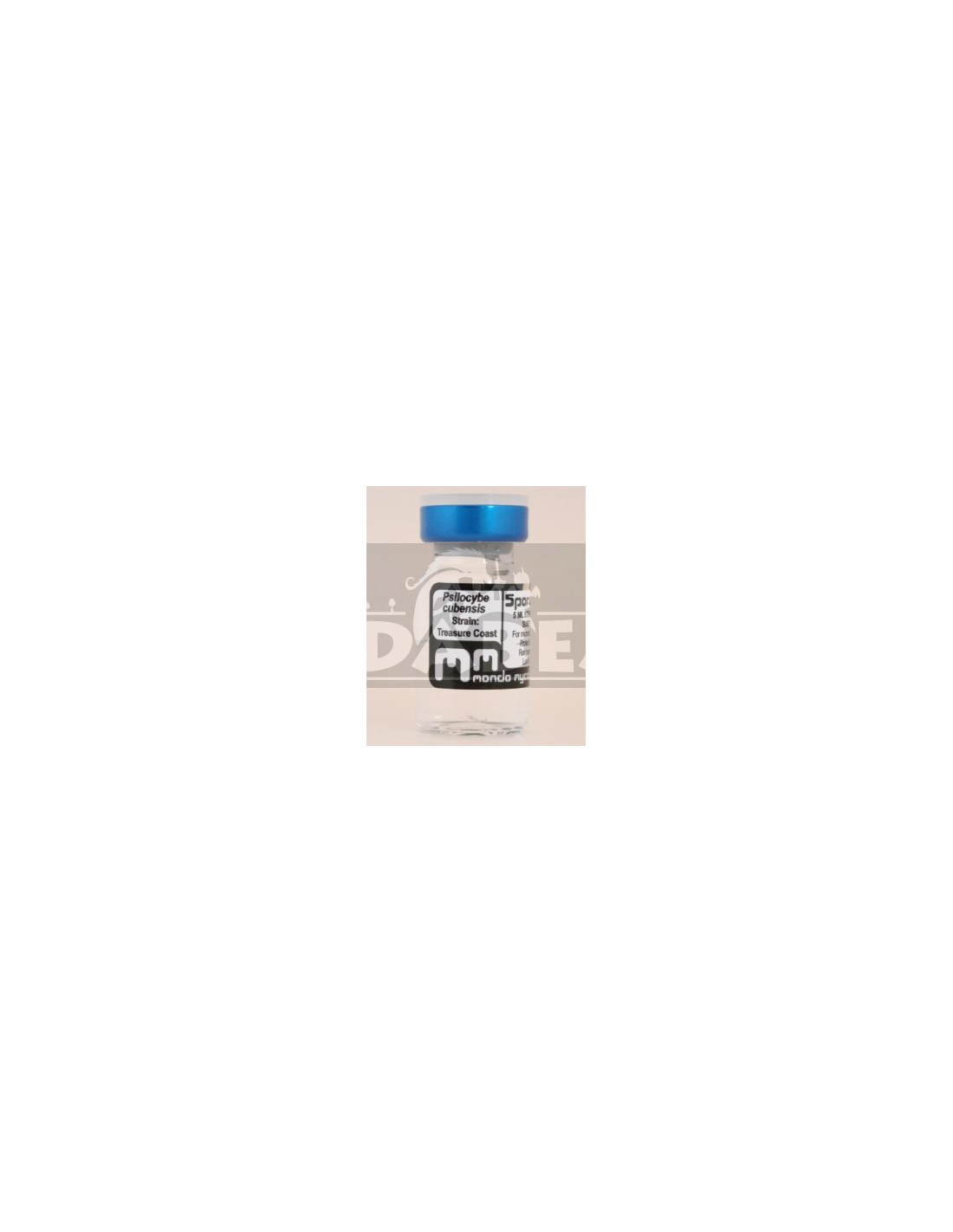
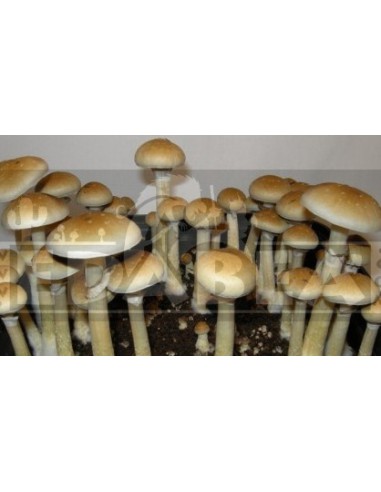
Treasure Coast 10 ml.
Last items in stock
€14.50
Tax included
Treasure Coast Spore Vial 10 ml. — Psilocybe cubensis var. Treasure Coast. Spores in sterile aqueous solution, 10 ml vial with sterile syringe. Strain isolated on the east coast of Florida (USA), in the region historically known as Treasure Coast — a historical designation that refers to the Spanish galleons sunk off this coast in 1715. Notable for its dense and aggressive substrate colonization, abundant production, and documented ability to spontaneously generate albino mutants. Collection and mycological research material.
Treasure Coast Spore Vial
The Treasure Coast spore vial contains a sterile aqueous suspension of spores from Psilocybe cubensis var. Treasure Coast in a 10 ml vial with an included sterile syringe. This variety was isolated on the Atlantic coast of Florida, in the region historically known as Treasure Coast, and is one of the few P. cubensis varieties in the catalog with documented origin in U.S. territory.
Geographical Origin — Treasure Coast, Florida
The name Treasure Coast refers to a region along Florida's Atlantic coast, encompassing Indian River, St. Lucie, Martin, and Palm Beach counties. The designation is historically rooted: in July 1715, a fleet of eleven Spanish galleons transporting treasure from the American colonies shipwrecked off this coast during a hurricane, sinking with an estimated cargo valued in millions of pesos in gold, silver, and jewels. The remains of this fleet named the region, where underwater recovery operations continue into the 21st century.
Ecologically, Florida's coast has a humid subtropical climate with high temperatures and abundant rainfall for much of the year — conditions conducive to the presence of Psilocybe cubensis in organic-rich soils, especially in pasture and grazing areas. Florida is one of the U.S. states with the highest documented diversity of wild psilocybin mushrooms.
Documented Morphological Characteristics
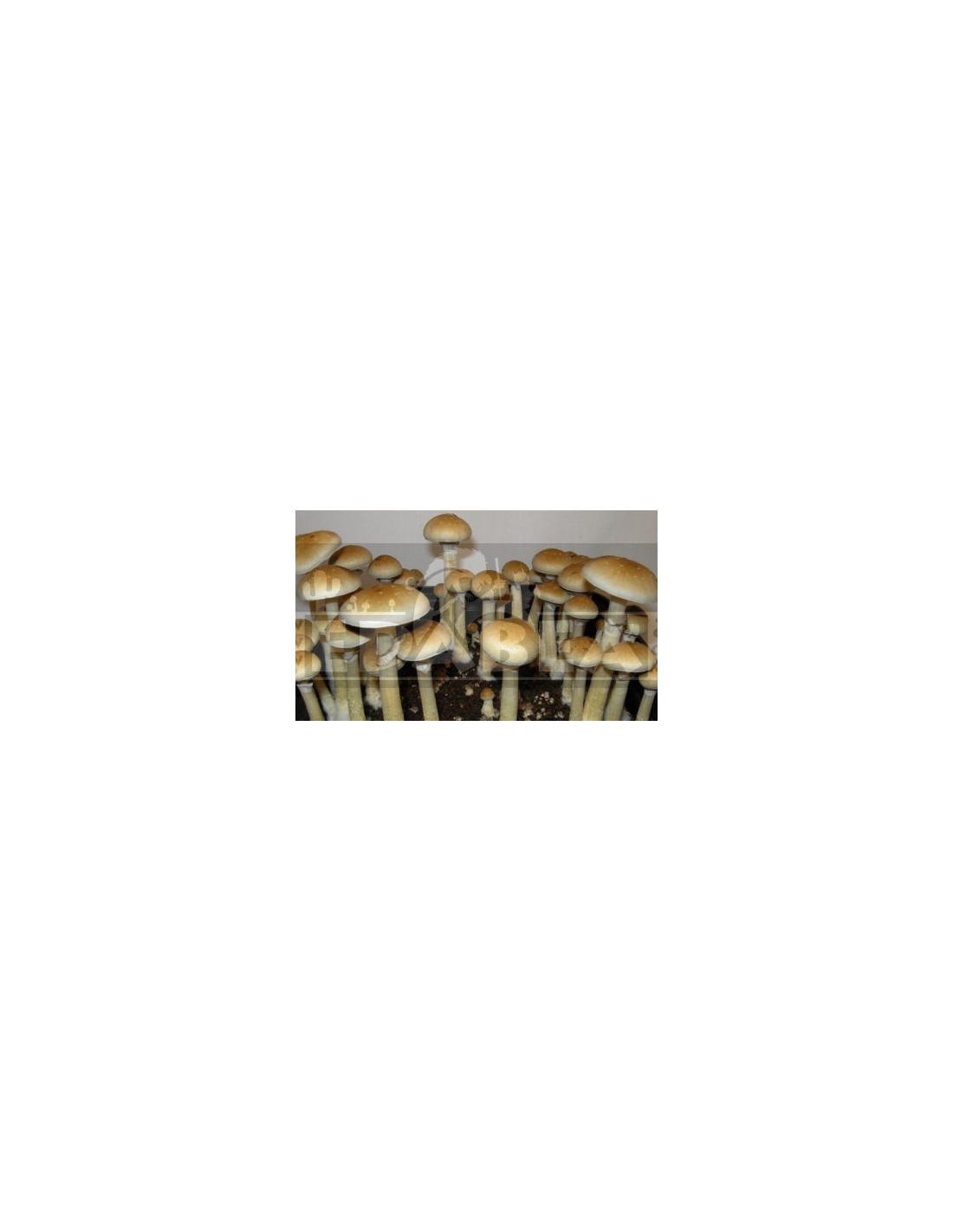
- Dense and Aggressive Colonization — the Treasure Coast variety exhibits one of the densest mycelial covers in the catalog, covering the substrate and the casing layer with compact mycelium before initiating the fruiting cycle. This intensive colonizing behavior is one of its most documented traits.
- Abundant Production — both in the number of individual fruit bodies and in total yield per flush, above the average for the species.
- In Vitro Fruiting — documented ability to produce fruit bodies directly from the inoculated substrate without transfer, a trait it shares with the Cambodian variety in the catalog.
- Spontaneous Generation of Albino Mutants — the Treasure Coast variety is documented to produce albino specimens occasionally among its normal fruit bodies. This tendency for the expression of the albino phenotype makes it a relevant reference for the study of pigmentation genetics in P. cubensis.
Relation to Albino Varieties in the Catalog
The spontaneous production of albino mutants by the Treasure Coast establishes a genetic link of interest to the Moby Dick variety in the catalog — a hybrid A+ × Golden Teacher that expresses complete albino phenotype. The appearance of unpigmented specimens in a normally colored variety like Treasure Coast illustrates the recessive nature of the genes associated with albinism in P. cubensis and how that phenotype can express unpredictably in populations with certain genetic variability.
Vial Characteristics
The vial contains spores of Psilocybe cubensis var. Treasure Coast in sterile aqueous suspension (10 ml) with an included sterile syringe. Ellipsoid spores with thick cell walls and standard purple-brown coloration of the species, visible from 400x magnification.
For the complete catalog of available varieties, visit the spore section of Edabea.
Storage
Store in a refrigerator between 2 °C and 8 °C, protected from direct light. Do not freeze. Under appropriate conditions, the spores maintain their viability for months. Avoid sudden temperature changes between uses.
Legal Situation
The legal situation of Psilocybe cubensis spores varies by jurisdiction. In many countries, spores — which do not contain psilocybin or psilocin — are not subject to the same regulation as mycelium or fruit bodies. It is the buyer's responsibility to verify the applicable laws in their place of residence before ordering. This product is sold exclusively as mycological collection and research material.
Frequently Asked Questions
Why is that region of Florida called Treasure Coast?
The name refers to the shipwreck of the Spanish galleon fleet on July 11, 1715, when eleven ships loaded with colonial American treasure sank off Florida's east coast during a hurricane. The cargo included gold and silver coins, bars, and jewels. The remains of the fleet are distributed along several kilometers of underwater coast and have been the subject of recovery expeditions since the 20th century — some with significant finds still ongoing. The name Treasure Coast became associated with the region as a reference to this underwater historical heritage.
What does it mean that Treasure Coast produces spontaneous albino mutants?
The occasional appearance of albino specimens in a standard coloration variety indicates that that population carries recessive genes associated with albinism — not normally expressed under typical conditions, but which can manifest in a proportion of individuals. This behavior makes the Treasure Coast a variety of interest for those studying pigmentation genetics in P. cubensis, and explains why some stabilized albino lines may originate from strains with this characteristic.
What other varieties in the catalog exhibit in vitro fruiting?
In vitro fruiting — production of fruit bodies directly from the inoculated substrate without transfer — is an unusual trait within P. cubensis. In the Edabea catalog, besides Treasure Coast, the Cambodian variety is documented for this same characteristic. Its presence in two varieties from very different geographical origins (Cambodia and Florida) suggests it may be a trait that emerges independently in different lines of the species.
Do the spores contain psilocybin?
No. The spores of Psilocybe cubensis do not contain psilocybin or psilocin. These compounds are synthesized during the development of the mycelium and fruit bodies, not in the dormant spores. This distinction is relevant in many jurisdictions where the regulation affects active mycelium and fruit bodies but not spores.
Information prepared by the specialized team at Edabea Natura. Information based on referenced mycological bibliography. Last updated: May 2026.
2 Items
Tap to zoom