Shopping Cart
There are no more items in your cart
Kratom: A Comprehensive Guide
Categories :
Kratom
Varieties, Composition, Processing, and Regulation:
Kratom (Mitragyna speciosa Korth. Havil.) is a tropical tree from the Rubiaceae family, native to the humid regions of Southeast Asia: Thailand, Indonesia, Malaysia, Myanmar, and Papua New Guinea. Its leaves contain over 40 identified alkaloids, with mitragynine being the predominant one. This guide provides information on taxonomy, chemical composition, processing, commercial varieties, and the legal framework surrounding the species. For a specific description of the main alkaloid, refer to our article on what mitragynine is. For information on cultivation from seed, check our article on how to cultivate kratom from seeds.
.jpg)
Botanical Classification
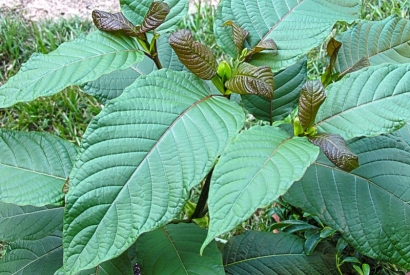
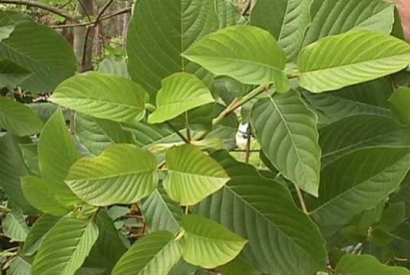
Mitragyna speciosa was described by Korthals in 1839 and reclassified in its current genus by Haviland in 1897. It belongs to the Naucleeae tribe within the Rubiaceae family. It is a tree that can reach between 4 and 16 meters under natural conditions, with oval leaves measuring 15 to 20 cm and a pronounced pinnate venation. It grows in riverbank soils and forest areas with high moisture—conditions that influence the alkaloid composition of the leaves (Shellard, E.J. et al., 1978. Planta Medica, 34(3), 253–263).
Chemical Composition — Main Alkaloids
Mitraginine (C23H30N2O4): predominant monoterpenoid indole alkaloid, represents between 60 and 70% of the total alkaloid content of the mature leaf. It acts as a partial agonist of mu and kappa opioid receptors, with additional documented activity on adrenergic and serotonergic receptors (Matsumoto, K. et al., 2004. Life Sciences, 74(17), 2143–2155).
7-Hydroxymitragynine: present in very low concentrations in fresh leaves (less than 0.01% in analyzed batches), with a significantly higher affinity for mu opioid receptors than mitragynine.
Paynantheine and speciogynine: second and third most abundant alkaloids respectively. Both act as antagonists of mu receptors according to in vitro studies.
As an analytical reference from Edabea's catalog, batch 22.885 (October 2025, ISO 17025 lab ref. L440, UHPLC-DAD analysis) recorded: Green Maeng Da—1.37% mitragynine, 1.98% total alkaloids; White Bali—1.22% mitragynine, 1.88% total alkaloids. All heavy metal, microbiology, and pesticide parameters were compliant.
Historical Origin and Documented Traditional Uses
The use of Mitragyna speciosa in Southeast Asia has been documented since the 19th century. The most referenced traditional uses in ethnobotanical literature include the chewing of fresh leaves by Thai and Malaysian agricultural workers—documented by Low in 1836—and the preparation of infusions from dried leaves (Veltri, C. & Grundmann, O., 2019. Substance Abuse and Rehabilitation, 10, 23–35).
In Thailand, the traditional use led to legal prohibition through the Kratom Act of 1943, which was partially reversed in 2021 when Thailand removed kratom from its list of controlled substances. Indonesia, the current main producer, maintains kratom legal for export, although its internal consumption is subject to regulatory debate.
Processing — How Commercial Material is Obtained
Drying and Classification by Vein
The post-harvest drying process determines the vein color and, to some extent, the alkaloid profile of the resulting material. Prolonged drying in the sun with higher oxidation produces red vein; indoor drying with lower oxidation produces white vein; the intermediate process combining indoor and outdoor phases produces green vein. Variations in oxidation level produce documented differences in the relative proportion of alkaloids (Veltri & Grundmann, 2019, op. cit.).
Yellow Vein — Differentiated Post-Harvest Process
The yellow vein does not correspond to a true botanical vein of Mitragyna speciosa. It results from prolonged curing, material mixing, or controlled fermentation that produces a transformation in the color of the powder and modifies the relative proportion of alkaloids. Its designation is commercial, not botanical.
Commercial Formats
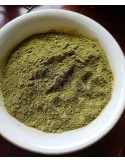
After drying, the leaves are ground to a fine powder—the most common format—or left as shredded leaves (cut leaf), which preserves the original plant structure. Concentrated extracts are obtained through solvent extraction and reapplication on a plant base, expressed as a percentage of mitragynine or relative X scale.
.png)
Varieties by Geographic Origin
The place of origin refers to the region of the plant material's provenance. Differences in alkaloid profiles exist between origins but are less determinative than the drying process and are subject to variability between batches from the same origin.
| Variety | Origin | Common Format |
|---|---|---|
| Bali | Bali, Indonesia | Powder 25 g / 100 g |
| Maeng Da | Selected mature leaves | Powder and shredded leaf |
| Borneo | Kalimantan, Indonesian Borneo | Powder 25 g / 100 g |
| Thai | Thailand | Powder 25 g / 100 g |
| Sumatra | Sumatra, Indonesia | Powder 25 g / 100 g |
| Vietnam | Vietnam | Powder 25 g / 100 g |
| Jongkong | Jongkong Region, Kalimantan | Powder 25 g / 100 g |
Check the complete catalog of varieties in the Edabea kratom category, organized by vein and origin.
Classification by Vein Color
The four commercial veins correspond to different drying processes, not distinct botanical varieties. All belong to the same species Mitragyna speciosa.
Red vein — prolonged drying process, greater sun exposure and oxidation.
Green vein — intermediate drying process combining indoor and outdoor phases.
White vein — indoor drying with less exposure to light and lower oxidation.
Yellow vein — commercial designation, not botanical. Differentiated post-harvest process.
Analytical Quality Control
New batches in Edabea's catalog are analyzed using UHPLC-DAD for alkaloids, ICP-MS for heavy metals, and GC-MS/MS for pesticides (EN 15662 standard), at an ISO 17025 accredited laboratory (ref. L440). Data from batch 22.885 are available in the Edabea kratom category.
Storage of Material
Kratom powder should be stored in an airtight, sealed container, protected from moisture, direct light, and heat. The material is susceptible to absorbing ambient moisture. Proper storage preserves the stability of the alkaloid profile during the batch's validity.
Legal Status
The legal status of Mitragyna speciosa varies by jurisdiction. It is the buyer's responsibility to check the applicable regulations in their place of residence before placing an order. This product is sold exclusively as botanical collection material and ethnobotanical research.
Frequently Asked Questions about Kratom
What is the difference between red, green, white, and yellow vein?
The main difference is the drying and curing process post-harvest, not the species or genetics of the plant. The red vein is associated with prolonged drying with higher oxidation; the white with indoor drying with minimal oxidation; the green with intermediate processes. The yellow vein is not a true botanical vein—it results from a differentiated post-harvest process. The differences in alkaloid profiles between veins are documented, although they are not absolute or predictable with exactitude among batches from different origins.
What is Maeng Da and how does it differ from standard kratom?
Maeng Da is a designation that identifies leaves selected for their greater maturity and potential alkaloid concentration. It is not a distinct species or a formal botanical variety—it is a selection criterion for harvest material within Mitragyna speciosa. Similarly, "Super" refers to leaves harvested from the upper position of the tree, and "Horn" to leaves with irregular leaf morphology. None of these designations correspond to a different taxonomic variety.
Do you analyze kratom batches before selling them?
Yes. New batches are analyzed using UHPLC-DAD for the complete alkaloid profile, ICP-MS for heavy metals, and GC-MS/MS for pesticide residues, in an ISO 17025 accredited laboratory. As a reference, batch 22.885 recorded 1.37% mitragynine in Green Maeng Da and 1.22% in White Bali, with compliant results in all safety parameters.
How should kratom be correctly stored?
In an airtight sealed container, protected from moisture, direct light, and heat. Kratom powder is susceptible to absorbing ambient moisture, which can alter its texture and favor microbial development. Exposure to UV light and high temperatures accelerates the degradation of alkaloids.
What is the difference between standard powder and kratom extracts?
The standard powder contains the natural concentration of alkaloids—typically between 1 and 2% mitragynine. The extracts concentrate those alkaloids through solvent extraction and reapplication on a plant base. The extracts in Edabea's catalog are expressed as a percentage of mitragynine (5% = 50 mg/g) or in relative X scale. For more details, check the kratom extracts category.
Article crafted by the specialized team at Edabea Natura, with over 15 years of experience in the selection and commercialization of ethnobotanical materials. Last updated: April 2026.
References
- Matsumoto, K. et al. (2004). Life Sciences, 74(17), 2143–2155.
- Shellard, E.J. et al. (1978). Planta Medica, 34(3), 253–263.
- Veltri, C. & Grundmann, O. (2019). Substance Abuse and Rehabilitation, 10, 23–35.
Share this content