Shopping Cart
There are no more items in your cart


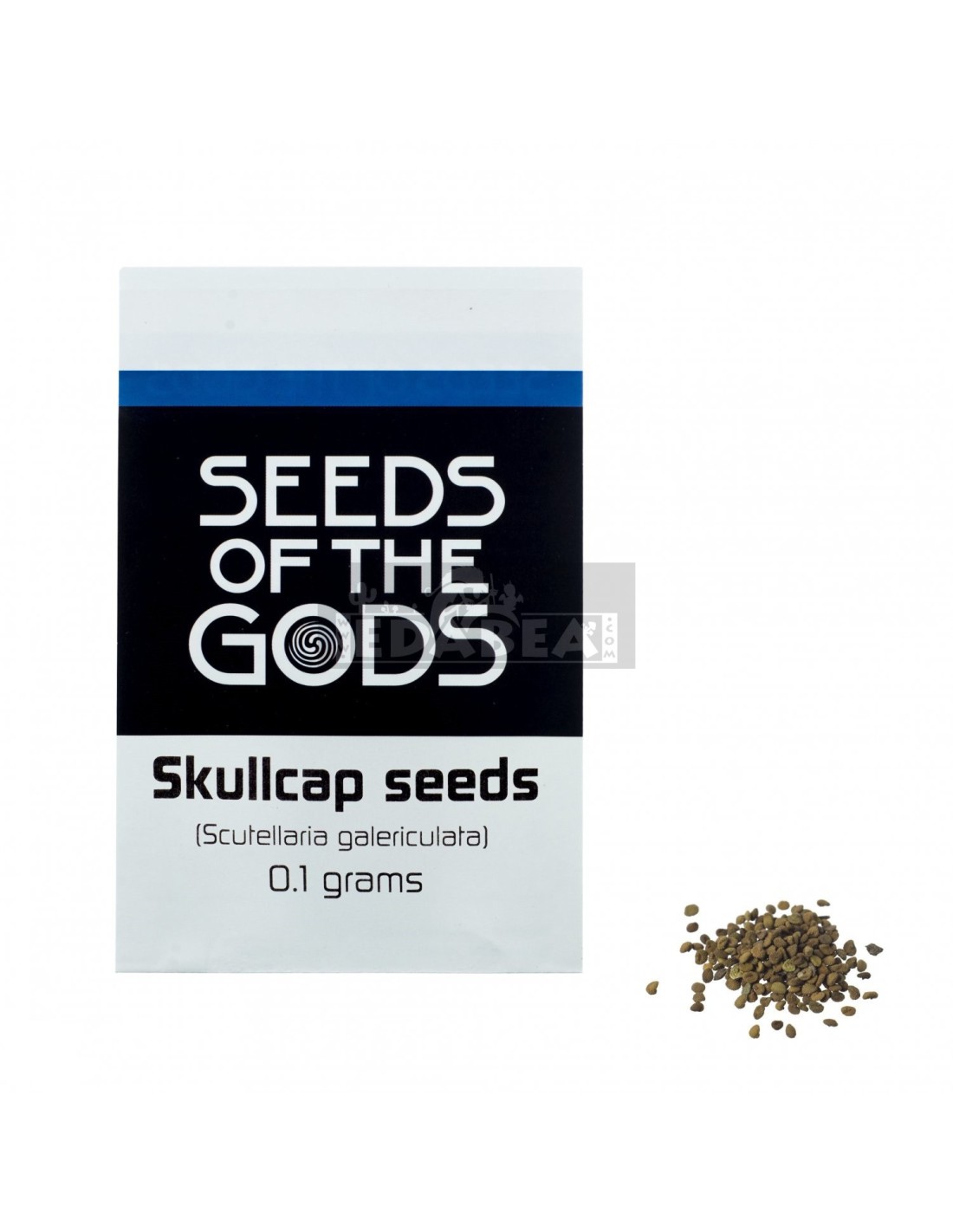
Skullcap (Scutellaria galericulata) seeds
Out-of-Stock
€6.60
Tax included
Skullcap (Scutellaria galericulata) — botanical collection seeds. A perennial herbaceous plant from the Lamiaceae family, native to Europe, Asia, and North America, where it thrives along riverbanks and wet areas. Known in traditional European and North American herbalism, it features characteristic blue-violet flowers. Easy to cultivate with prior stratification. Botanical collection material.
Ratings and comments from our customers
What is Skullcap
Skullcap (Scutellaria galericulata), commonly known as scutellaria or helmet, is a perennial herbaceous plant belonging to the Lamiaceae family — the same family as mint, rosemary, and Nepeta cataria. It is native to Europe, temperate Asia, and North America, where it naturally grows along riverbanks, streamside meadows, and swampy forests.
Its common name in English, Skullcap, refers to the characteristic morphology of its flowers: the calyx features an upward bulge reminiscent of a helmet or cap, a botanical characteristic that also gives its name to the genus — Scutellaria, from the Latin scutella ("small shield or platter").
Botanical Description
Scutellaria galericulata is an erect plant that can reach heights of between 20 and 50 cm. It features the square stems characteristic of the Lamiaceae family, opposite leaves that are lanceolate-ovate with slightly serrated edges and a smooth texture. Its tubular flowers are blue-violet, bilabiate — with an upper lip shaped like a helmet and a lower lip open — arranged in the axils of the upper leaves.
It blooms from June to September, producing a continuous and highly ornamental flowering. It is a rhizomatous plant that progressively spreads, forming colonies under suitable moisture conditions. Unlike other species in the genus like Scutellaria lateriflora — the most well-known North American species in herbalism — Scutellaria galericulata is the most widespread European species of the genus.
History and Ethnobotanical Context
The Scutellaria genus has a documented dual ethnobotanical history in Europe and North America.
In European herbalism, Scutellaria galericulata appears documented in medieval herbals and in the folk pharmacopoeia of various regions in Central and Western Europe, where it was primarily used as a calming plant. Its use in infusion is recorded in the traditional herbalism of several European countries.
In North America, the related species Scutellaria lateriflora — known as mad dog skullcap — was extensively used by Native American herbalists and was later adopted by 19th-century North American herbal medicine. The Cherokee and Iroquois peoples used different species of the genus in medicinal contexts, documented in North American ethnobotanical literature.
In traditional Chinese medicine, the root of Scutellaria baicalensis — another species of the same genus — is one of the most commonly used ingredients in classical Chinese herbalism, known as Huang Qin (黄芩), with documented presence of over 2,000 years in Chinese medical texts. Although it is a distinct species from galericulata, they share a phytochemical profile based on flavonoids — mainly baicalin and baicalein — documented in numerous modern scientific publications.
Cultivation
Scutellaria galericulata is an easily cultivatable plant, particularly adapted to areas with available moisture:
- Prior stratification: place seeds in a sealed plastic bag with lightly moistened vermiculite — use three times as much vermiculite as seeds. Keep in the refrigerator for at least a week before sowing.
- Sowing: indoors, between February and March.
- Germination: approximately two weeks under temperature conditions of 18-20 °C.
- Transplanting: outdoors after the danger of frost, in rows spaced 30 cm apart.
- Substrate: moist and rich in organic matter. Tolerates heavier soils than other plants in the family.
- Exposure: partial shade or indirect sunlight. In its natural habitat, it grows under the partial shade of riverbanks and water margins.
- Watering: regular and abundant. It is a plant of humid environments that does not tolerate prolonged drought.
- Multiplication: by seeds or by dividing the rhizome in spring.
Harvest
The aerial parts — leaves and flowers — are harvested when the plant is in full bloom. Use scissors leaving approximately 8 cm of growth from the base to encourage regrowth. The leaves and flowers can be dried in the shade for preservation.
Legal Aspects
The cultivation of Scutellaria galericulata is completely legal in Spain and the European Union, with no regulatory restrictions. This product is marketed as botanical collection material and ornamental cultivation.
Frequently Asked Questions
Why is it called Skullcap?
The English name Skullcap refers to the morphology of the floral calyx, which has an upper protrusion that visually resembles a helmet or cap. This same characteristic gives its name to the Latin genus — Scutellaria, from the Latin scutella ("small shield or platter") — and to the Spanish name escutelaria.
What is the difference between Scutellaria galericulata and Scutellaria lateriflora?
Scutellaria galericulata is the most widespread European species of the genus, found in the riverbanks and wet areas of Europe, Asia, and North America. Scutellaria lateriflora is the best-known North American species in herbalism, extensively used by Native American peoples and 19th-century herbalists. Both share a flavonoid-based phytochemical profile, although there are some differences in composition.
What is its relation to traditional Chinese medicine?
Scutellaria baicalensis — a distinct species of the same genus — is one of the most commonly used ingredients in classical Chinese herbalism, known as Huang Qin, with documented use of over 2,000 years. Although it is a different species from galericulata, they share a flavonoid profile — baicalin and baicalein — which has prompted growing scientific interest in the Scutellaria genus.
Is it easy to cultivate?
Yes, given the right moisture conditions. The prior stratification in the refrigerator is the most important step to ensure germination. Once established, it is a resilient and perennial plant that regrows each spring.
Is it legal to buy Skullcap seeds in Spain?
Yes. Scutellaria galericulata is completely legal in Spain and the European Union, with no regulatory restrictions.
Tap to zoom