

Shopping Cart
There are no more items in your cart
What Is a Bong? Complete Beginner’s Guide & Parts Explained – Edabea
Categories :
Paraphernalia
A bong (or water pipe) is a smoking device with a water chamber that cools and humidifies the smoke before it reaches the mouthpiece.
For beginners, understanding its anatomy and how it works makes the difference between buying “a nice-looking one” and choosing a practical, easy-to-clean, comfortable model.
As an online grow shop, at Edabea we are asked the same question daily: “Which bong should I choose if it’s my first time?”. The answer usually lies less in the design and more in details like size, joint type, and whether the parts are removable.
What is a bong and what is it for?
A bong is a pipe with a water reservoir where smoke passes through the liquid, creating bubbles. This process allows the smoke to reach the mouth cooler and less dry than with other devices.
In practice, it mainly serves to modify the inhalation experience: softening throat impact, adding moisture, and—depending on the design—adding extra diffusion (percolation) that makes airflow smoother.
- Cool the smoke through temperature exchange with water and glass.
- Humidify the draw, which some users perceive as less harsh.
- Partially filter soluble or heavier particles (without making it “safe”).
- Improve airflow control compared to small pipes.
Important: having water does not mean it “removes the bad stuff.” It simply changes the smoke path; therefore, it should always be approached with information and responsible use, especially regarding regulated substances.
How does a bong work? (simple explanation)
The process is simple: when suction is created at the mouthpiece, air enters through the bowl, travels down the stem, and passes through the water. This bubbling stage makes the smoke lose heat and gain moisture before rising through the neck.
At Edabea, we explain it as “three stages”: air intake, water passage, and exit. If the bong includes a diffuser or percolator, micro-bubbles further distribute the smoke, potentially making it smoother (at the cost of more cleaning).
Key idea: the more diffusion (more bubbles and longer path), the smoother it tends to be; but also more residue stays inside and maintenance increases.
Parts of a bong: basic anatomy and function
Knowing the parts of a bong helps you compare models and anticipate cleaning effort. Most share a common structure.
At Edabea, we advise beginners to check two things: removable stem and bowl, and easy neck access for cleaning.

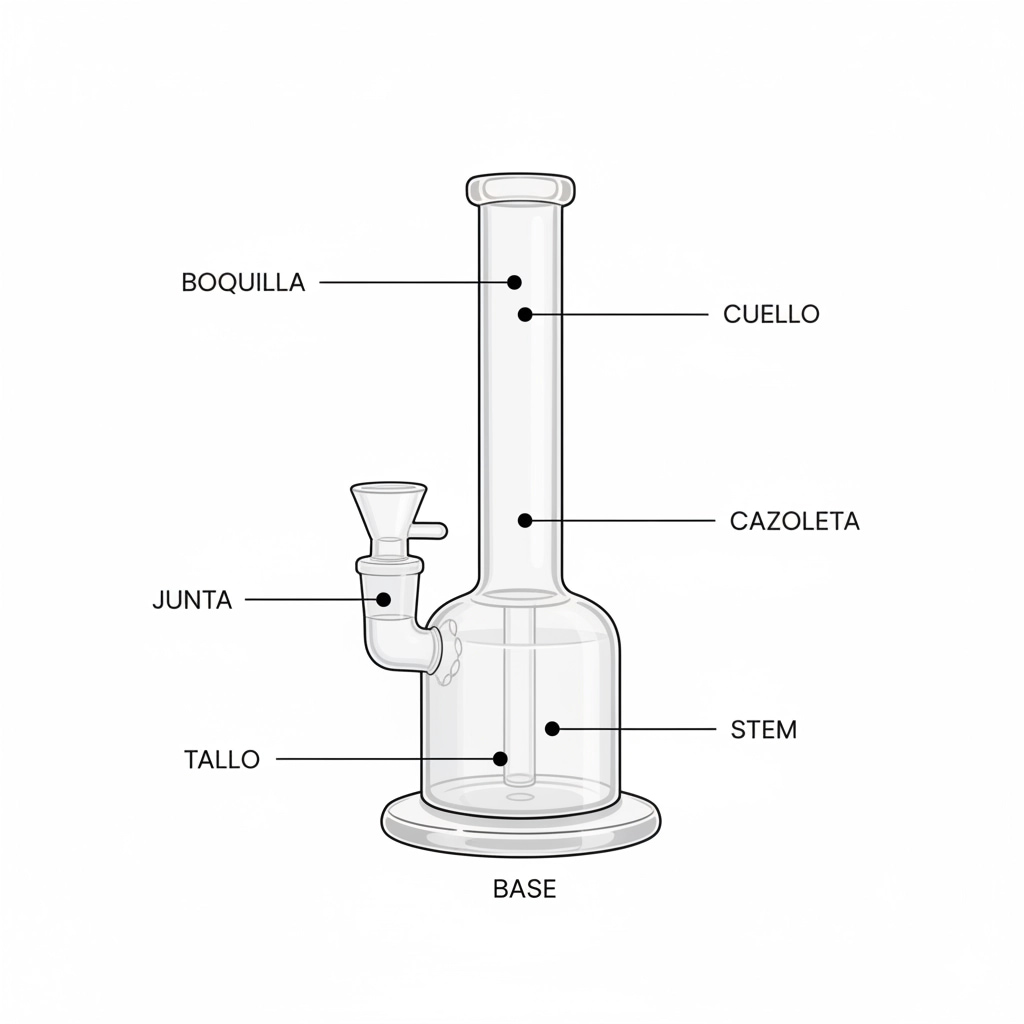
| Part | Function | What beginners should check |
|---|---|---|
| Base / water chamber | Holds water and stabilizes the bong. | Wide base = less tipping risk. |
| Downstem | Guides smoke into water for bubbling. | Better if removable with simple diffuser. |
| Joint | Connection between stem/bowl and body. | Common sizes: 10/14/18 mm; choose standard for easy replacements. |
| Bowl | Loading area (where material is placed). | Simple, sturdy, easy to rinse. |
| Neck | Channel where smoke rises. | Medium/tall neck = more cooling, more volume. |
| Mouthpiece | Contact point for inhalation. | Comfortable shape, smooth rim. |
| Percolator (optional) | Adds extra diffusion with micro-bubbles. | For beginners: simple percolation, easy to clean. |
| Carb hole (optional) | Side hole for airflow control. | Useful but not essential for first bong. |
This helps you read product specs wisely: material, joint size, removable parts, diffusion type—often more important than design.
Types of bongs and which one suits beginners
The best bong depends on storage, maintenance, and priorities (durability vs. flavor). For beginners: comfort + easy cleaning.
At Edabea, we suggest: silicone for durability, glass for neutral taste, compact formats for portability.
- Glass (borosilicate): cleaner taste, stylish; handle carefully.
- Silicone: durable, portable, beginner-friendly.
- Acrylic: affordable but may retain odors over time.
- Ceramic: aesthetic, good temperature retention; more fragile.
A simple glass bong with removable parts is often the most satisfying choice.
What to check before buying a bong
Consider storage, cleaning time, and whether you prefer simple or complex designs. For first purchase: simple and functional.
- Size: medium works best for home use.
- Stability: wide base prevents accidents.
- Removable parts: easier maintenance.
- Standard joint: easy replacements.
- Percolation: keep it simple.
If you're ready to choose, explore our selection to buy bongs suited to different budgets and experience levels.
Maintenance and cleaning basics
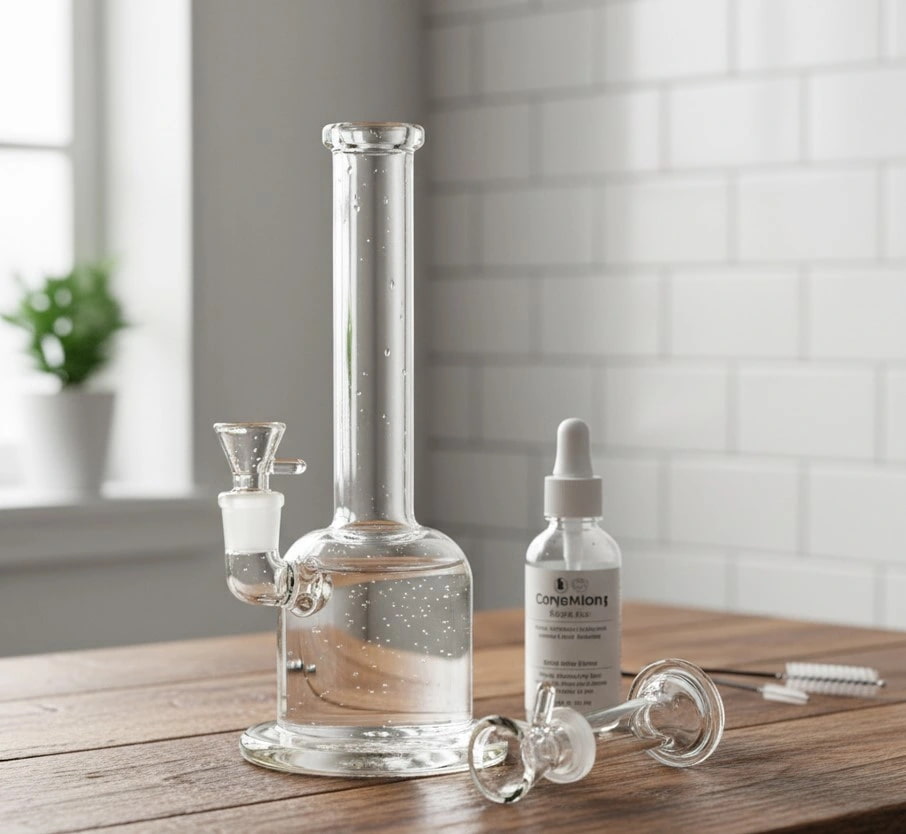
Cleaning preserves airflow, flavor, and reduces odor.
- Change water regularly.
- Rinse after use.
- Dry before storage.
- Check joints for leaks.
If cleaning feels overwhelming, the design may be too complex. For beginners, simplicity is the best investment.
Legality and discretion
Legal frameworks vary. Always inform yourself and act responsibly.
For Spain-specific info, see our drug sanctions table.
At Edabea, we value privacy with discreet packaging and fast shipping.
Common beginner questions
Does a bong filter everything harmful?
No. It cools and may retain some soluble compounds, but it is not a purifier.
Best material for beginners?
Silicone for durability; glass for neutral feel.
How to avoid hard-to-clean models?
Choose removable parts and simple percolation. Less is more.
Ultimately, focus on airflow, parts, and cleaning ease—not just aesthetics.
Share this content