

Shopping Cart
There are no more items in your cart
Mesembrina: The Main Alkaloid of Kanna
Categories :
Kanna
Mesembrine: The Main Alkaloid of Kanna (Sceletium tortuosum)
Mesembrine is the major alkaloid of Sceletium tortuosum L. (Bolus), the succulent plant from the Aizoaceae family, known as kanna or kougoed, native to the arid regions of southern Africa. It is the reference compound for the phytochemical characterization of the plant and the most studied of the alkaloids in the genus Sceletium. In this article, we describe its chemical structure, documented mechanism of action, its concentration in the plant, and the formats available in Edabea's catalog. For the complete historical and ethnobotanical context of the plant, you can check our blog post about the history and uses of kanna.
Chemical Classification and Structure
Mesembrine is an alkaloid classified as a Sceletium alkaloid, a phytochemical group unique to the Sceletium genus with no direct equivalent in other botanical families. Structurally, it is a tertiary alkaloid with a tetrahydroindanon nucleus—a bicyclic structure with a nitrogen atom—distinguishing it from indolic alkaloids (like DMT or psilocin) and phenethylamines.
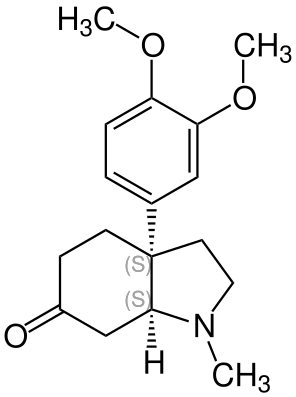
Mesembrine was first identified and isolated in the 19th century, and its chemical structure was completely elucidated in the 20th century. It is the predominant alkaloid in most chemotypes of Sceletium tortuosum, although its relative proportion compared to other alkaloids of the plant—mesembrenone, mesembrenol, tortuosamine—varies depending on the chemotype, geographical origin, and the preparation process of the material (Gericke, N. & Viljoen, A.M., 2008. Journal of Ethnopharmacology, 119(3), 653–663).
Documented Mechanism of Action
Mesembrine has been the subject of pharmacological research due to two documented mechanisms of action in the scientific literature:
Serotonin Reuptake Inhibition (SSRI): Mesembrine acts as a serotonin reuptake inhibitor, meaning it slows down the removal of serotonin from the synaptic space. This mechanism is the same as that of clinical SSRI antidepressants (fluoxetine, sertraline), although with different potency and selectivity (Harvey, A.L. et al., 2011. Journal of Ethnopharmacology, 137(3), 1124–1129).
PDE4 Inhibition: Mesembrenone—the second most important alkaloid of Sceletium tortuosum—acts as an inhibitor of the PDE4 enzyme, involved in the intracellular regulation of cAMP and in inflammatory and cognitive processes. Mesembrine and mesembrenone act synergistically in the plant, explaining why full-spectrum extract differs from extracts standardized only to mesembrine (Smith, M.T. et al., 1996. Journal of Ethnopharmacology, 50(3), 119–130).
Concentration in the Plant and Chemotypes
Sceletium tortuosum shows significant chemical variability among individuals—what is known in phytochemistry as chemotypes. In some individuals, mesembrine is the predominant alkaloid; in others, it is mesembrenone. This variability is relevant for the standardization of commercial extracts since the proportion of alkaloids in the starting plant material directly affects the profile of the final extract.
The traditional fermentation process of the plant material—which results in kougoed used for centuries by the San and Khoikhoi peoples of southern Africa—modifies the relative proportion of alkaloids: fermentation converts part of the mesembrenone into mesembrine, altering the alkaloid profile compared to fresh, unfermented material.
Documented Pharmacological Effects
The pharmacological effects of mesembrine and the alkaloids from Sceletium tortuosum have been described in ethnobotanical literature and preclinical studies. The serotonin reuptake inhibition—mechanism shared with SSRIs—is associated with documented effects on mood and anxiety in animal studies and in traditional usage literature. In traditional San and Khoikhoi medicine, kougoed was used as an anxiolytic and to alleviate depressed mood (Smith, M.T. et al., 1996. Journal of Ethnopharmacology, 50(3), 119–130).
PDE4 inhibition by mesembrenone is associated in preclinical studies with effects on cognition and inflammation. A clinical trial with standardized extract of Sceletium tortuosum (Zembrin) published by Chiu et al. (2014) documented anxiolytic effects and improvement in cognitive function in healthy participants, with an acceptable safety profile at the studied doses. The duration of the effects of kougoed in traditional use is typically described as several hours.
The combination of both mechanisms—SSRI and PDE4—in the whole plant explains why full-spectrum extract presents a pharmacological profile that cannot be reproduced with either of the isolated alkaloids separately (Harvey, A.L. et al., 2011. Journal of Ethnopharmacology, 137(3), 1124–1129).
Mesembrine in Edabea's Catalog Formats
The different kanna formats available in Edabea’s catalog present distinct alkaloid profiles according to the processing applied:
- Kanna ET2 — standardized extract with a specific alkaloid profile defined by the ET2 extraction process.
- Kanna 10X — extract with a relative concentration 10 times higher than that of the base plant material.
- Kanna Full Spectrum — full-spectrum extract that preserves the relative proportion of all alkaloids from the original plant, including mesembrine, mesembrenone, mesembrenol, and tortuosamine.
- Kanna Seeds — botanical cultivation material of Sceletium tortuosum.
The main difference between the Full Spectrum and standardized extracts lies in the alkaloid profile: the Full Spectrum preserves the synergy between mesembrine, mesembrenone, and other minor alkaloids; standardized extracts mainly concentrate one or more selected alkaloids according to the extraction process.
Legal Status
The legal status of Sceletium tortuosum and its alkaloids may vary depending on the jurisdiction. It is the buyer's responsibility to verify applicable regulations in their place of residence before placing an order. Edabea products are sold exclusively as botanical collection material and ethnobotanical research.
Frequently Asked Questions about Mesembrine
What is mesembrine and why is it the main alkaloid of kanna?
Mesembrine is the majority tertiary alkaloid of Sceletium tortuosum in most chemotypes of the species. It is the reference compound for the characterization and standardization of kanna extracts, and the most studied of the alkaloids in the Sceletium genus. Its mechanism of action as a serotonin reuptake inhibitor (SSRI) has been documented in specialized scientific literature, generating interest in the pharmacological research of the plant.
What is the difference between mesembrine and mesembrenone?
They are the two main alkaloids of Sceletium tortuosum, with different mechanisms of action. Mesembrine primarily acts as a serotonin reuptake inhibitor (SSRI). Mesembrenone acts as a PDE4 inhibitor, an enzyme involved in inflammatory processes and the regulation of intracellular cAMP. In the plant, both coexist in variable proportions depending on the chemotype and preparation process—the traditional fermentation converts part of mesembrenone into mesembrine, altering the relative proportion between the two.
What is kougoed and how is it related to mesembrine?
Kougoed is the traditional preparation of Sceletium tortuosum used for centuries by the San and Khoikhoi peoples of southern Africa. The process involves fermenting the plant material for days or weeks, altering the alkaloid profile of the plant: fermentation converts part of mesembrenone into mesembrine, producing a material with a higher proportion of mesembrine compared to fresh, unfermented material. It is the most documented traditional ethnobotanical process for this species.
What is the difference between a Full Spectrum extract and a standardized extract of kanna?
A standardized extract concentrates one or more selected alkaloids according to the extraction process, which may modify the relative proportion between mesembrine, mesembrenone, and other minor alkaloids compared to the original plant material. A full-spectrum extract preserves the relative proportion of all alkaloids from the plant—mesembrine, mesembrenone, mesembrenol, tortuosamine—without altering their ratio. This difference is relevant because mesembrine and mesembrenone act through different mechanisms (SSRI and PDE4, respectively), and their synergy in the complete plant profile is a documented factor in the literature on Sceletium tortuosum.
Is mesembrine the only alkaloid in kanna?
No—it is the predominant one in most chemotypes, but Sceletium tortuosum contains other alkaloids in the same group: mesembrenone (the second most important), mesembrenol, mesembranol, and tortuosamine, among others. Mesembrine is the reference compound because it is the most abundant and the most studied, but the complete phytochemical profile of the plant includes all these compounds in variable proportions depending on the chemotype and preparation process.
About This Content
Article prepared by the specialized team of Edabea Natura, with over 15 years of experience in the selection and commercialization of ethnobotanical materials. The phytochemical and pharmacological information is based on the cited bibliographic sources. Last updated: April 2026.
Bibliographic References
- Gericke, N. & Viljoen, A.M. (2008). Sceletium — a review update. Journal of Ethnopharmacology, 119(3), 653–663.
- Harvey, A.L. et al. (2011). Pharmacological actions of the South African medicinal and functional food plant Sceletium tortuosum and its principal alkaloids. Journal of Ethnopharmacology, 137(3), 1124–1129.
- Smith, M.T. et al. (1996). Psychoactive constituents of the genus Sceletium. Journal of Ethnopharmacology, 50(3), 119–130.
Share this content