

Shopping Cart
There are no more items in your cart
How to Grow Kanna (Sceletium tortuosum) from Seed
Categories :
Kanna
Kanna (Sceletium tortuosum) is a valuable South African succulent plant, native to the arid and semi-arid regions of the Karoo and Namaqualand. Known for its historical uses among the Khoikhoi and San peoples, it has been part of the cultural tradition of Southern Africa for centuries. In this guide, we explain the complete process for growing it from seed.
If you want to delve deeper into the historical and scientific context of the plant before starting, you can check our article about the status of the Kanna.
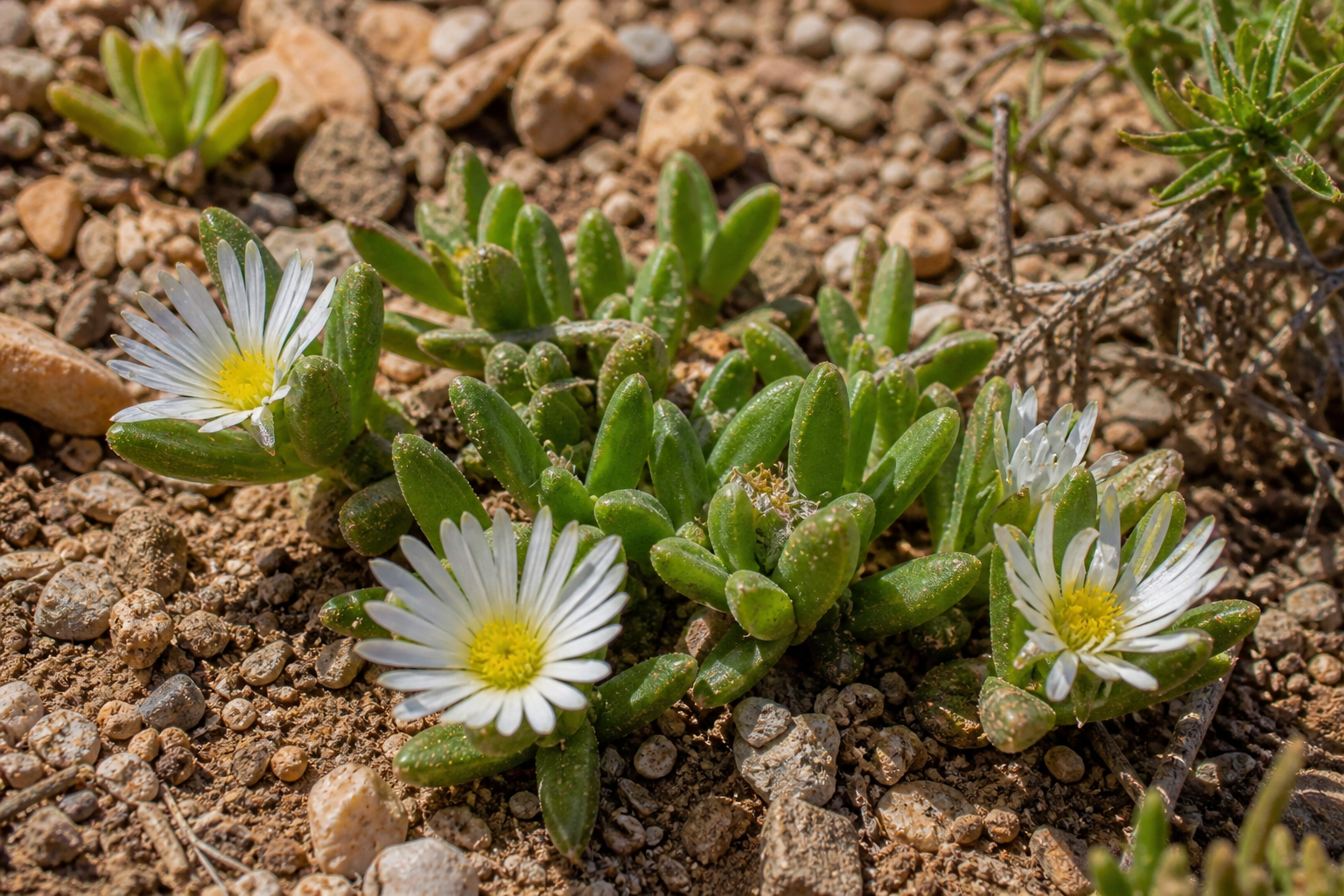
Sceletium tortuosum in its natural habitat of the South African Karoo
Seed Characteristics
The seeds of Sceletium tortuosum are small and have a relatively hard protective coating that can slow down germination if not properly prepared. Unlike many temperate plants, they do not require cold stratification — they are native to a hot semi-arid area where their seeds are adapted to germinate in warm conditions, not cold. The proper technique to improve germination is pre-soaking, not stratification.
Seed Preparation
Before planting, soak the seeds in warm water for 12-24 hours to soften the coating and facilitate water absorption. Do not force the coating open manually — the hydration process is sufficient, and forcing it may damage the embryo.
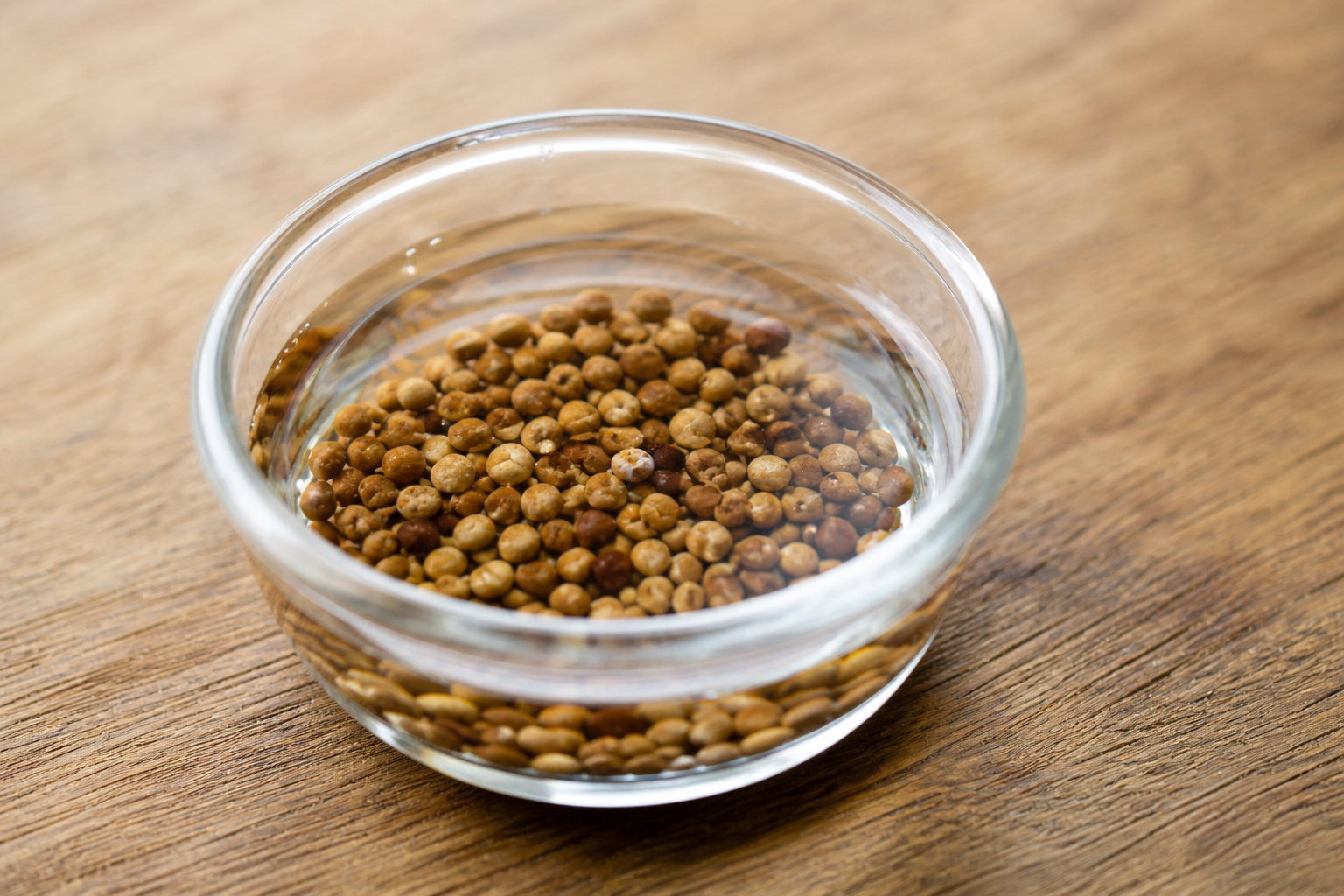
Seeds soaking in warm water for 12-24 hours to facilitate germination
Substrate and Container
Kanna is a succulent plant that does not tolerate waterlogging. Use a light substrate with excellent drainage — a mixture of coarse sand and peat in equal parts is suitable. The container should have drainage holes. For individual seeds, small pots allow for more precise watering control.
Planting
Place each seed at a depth of 0.5-1 cm in the substrate — no deeper, as small seeds need to be near the surface for the seedling to reach light. One seed per pot prevents competition in the early stages. You can mark the position with a stick if the substrate is uniform.
Germination Conditions
Germination requires temperatures between 20 and 25 °C and consistent humidity without waterlogging. Cover the pots with clear plastic or a plastic dome to maintain ambient humidity. Place them in a location with indirect light — intense direct light during this phase can stress seedlings before they are established. Germination usually occurs within 2 to 4 weeks.
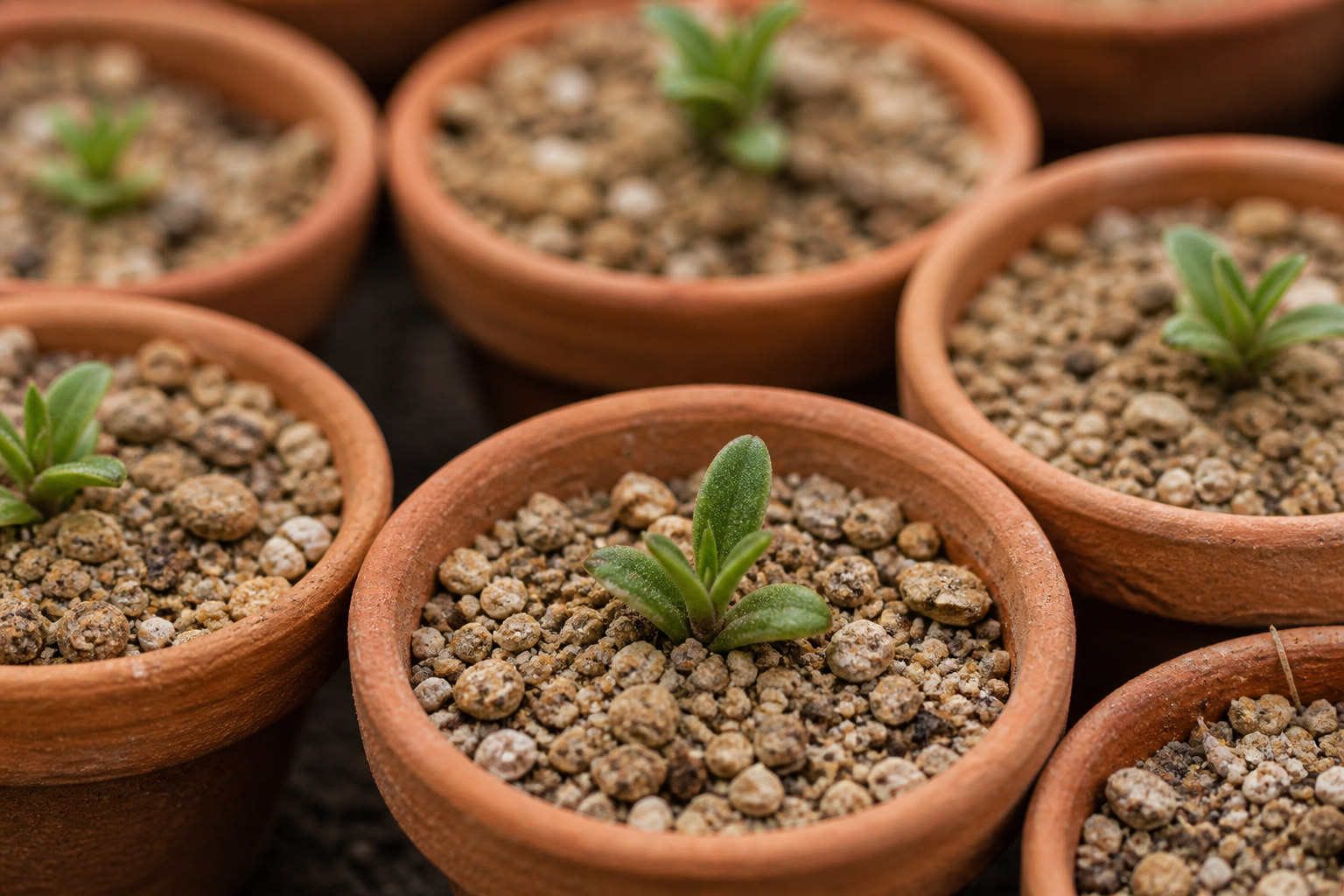
Seedlings of Sceletium tortuosum germinating in clay pots
Seedling Care
Once germinated, gradually remove the plastic covering to acclimatize the seedlings to ambient humidity. Keep the substrate slightly moist — the most common mistake with succulents is overwatering, which can rot the roots. When the seedlings develop 2-3 true leaves, you can apply a very diluted light fertilizer.
Monitor for mold appearing in the substrate — a sign of excess moisture — or for thrips and insects. Preventative management with good ventilation is usually sufficient in most cases.
Transplanting
When the seedlings have at least 4-5 true leaves and the roots are visible at the bottom of the pot, it’s time to transplant them to a larger container. Handle the fine roots carefully — Sceletium tortuosum has a delicate root system in its early stages. Use a substrate similar to the original.
Growth and Maintenance
During growth, Kanna requires bright light — it can tolerate some direct sun once established, especially in indoor conditions — and temperatures between 20 and 28 °C. Moderate humidity is sufficient. A light pruning can be done to encourage a more compact structure. Outdoors in Mediterranean climates, it can live without difficulties for years.
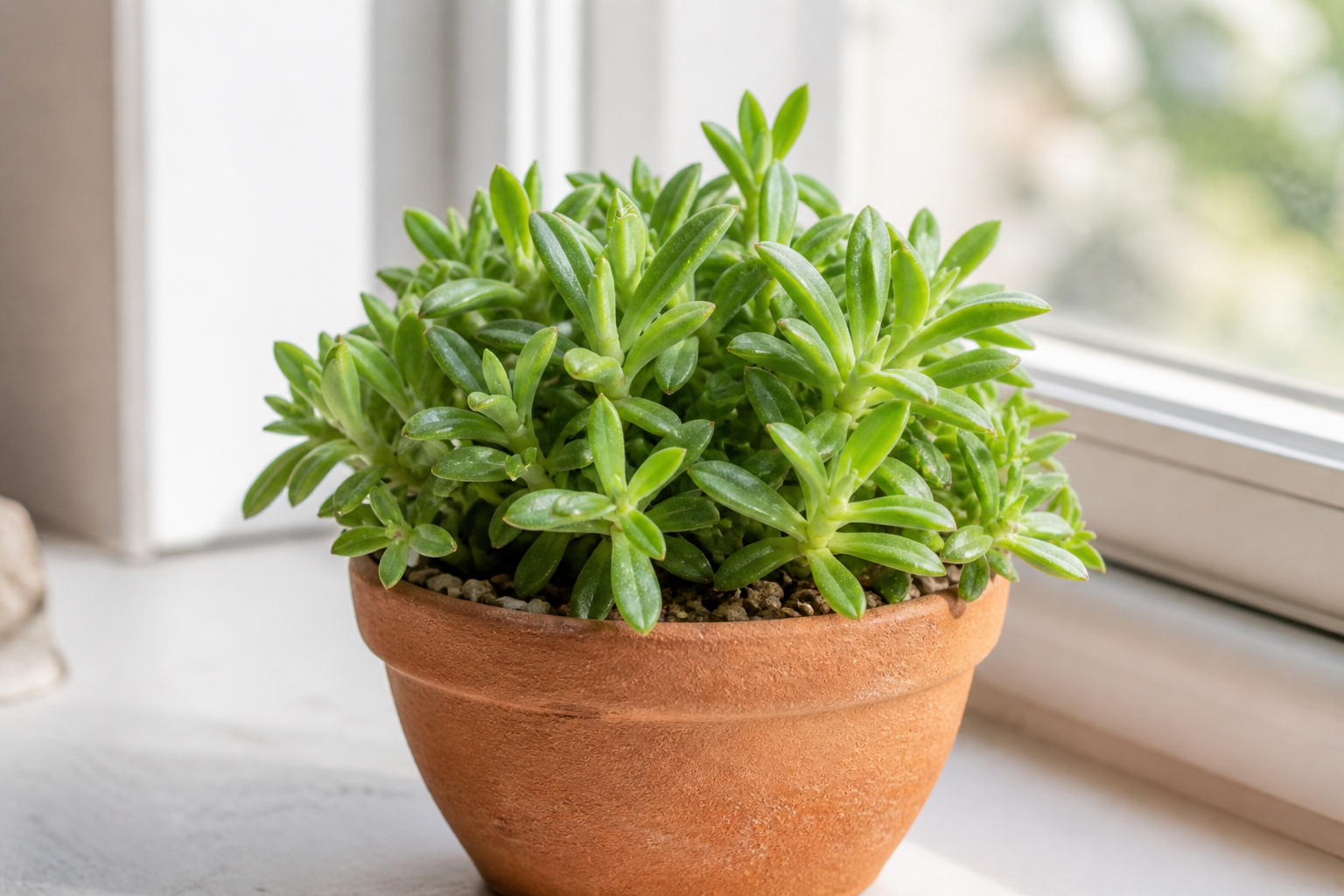
Adult Kanna (Sceletium tortuosum) in a clay pot
Flowering and Harvesting
The plant takes several months to fully develop. Leaves can be harvested once the plant is well established. The traditional process of preparing the leaves among the Khoikhoi was the kougoed fermentation — fresh leaves were piled, crushed, and allowed to ferment for several days, a process that transforms the alkaloid profile of the plant. The main alkaloid of Sceletium tortuosum is mesembrine — you can read more about its chemistry and properties in our article on mesembrine.
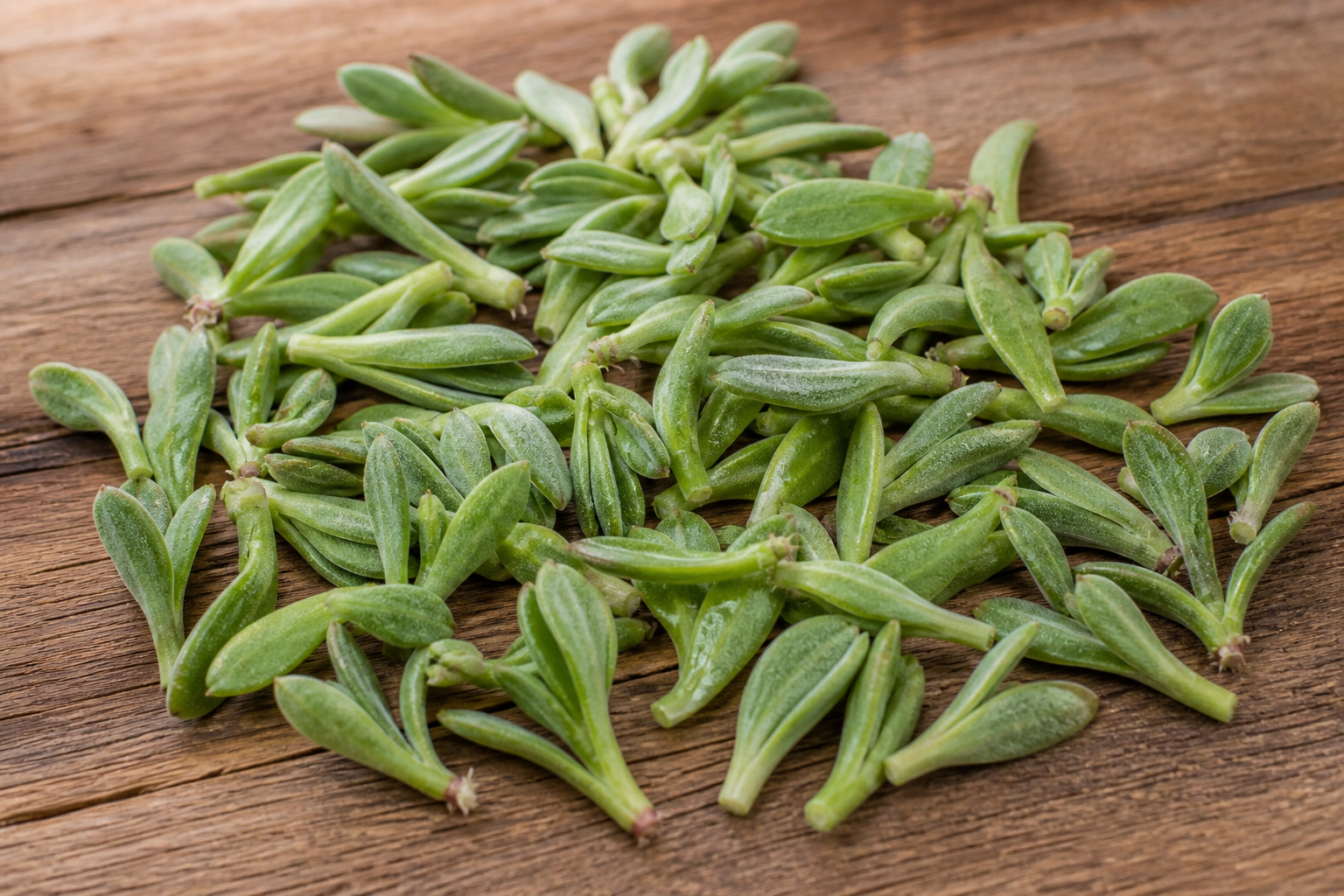
Fresh leaves of Sceletium tortuosum before the kougoed fermentation process
Dry the leaves in a cool, dark place, in paper bags or ventilated containers, to preserve their alkaloid profile.
Seed Storage
The seeds should be stored in a dry, cool place, in airtight jars away from light, to preserve their viability for as long as possible.
Comparison of Cultivation Methods
| Method | Advantages | Disadvantages |
|---|---|---|
| Indoor | Total control of light, temperature, and humidity | Requires constant monitoring and artificial lighting |
| Outdoor | Less investment in equipment, natural light | Greater exposure to pests and climate variations |
| Greenhouse | Climate protection with natural light | Higher initial cost |
Frequently Asked Questions
How can I speed up Kanna germination?
Pre-soaking the seeds in warm water for 12-24 hours is the most effective method to speed up germination. Maintaining a stable temperature between 20-25 °C and constant humidity completes the optimal conditions. Cold stratification is not necessary — in fact, cold can inhibit germination in a plant adapted to the warm semi-arid climate of the Karoo.
How long does it take to grow from seed?
Germination usually occurs between 2 and 4 weeks. Plants take several months to reach adult size and be ready for the first leaf harvest. Patience is especially important with Sceletium tortuosum — it is a relatively slow-growing plant compared to other herbaceous species.
What is kougoed?
Kougoed is the traditional Khoikhoi process of preparing Kanna leaves — fresh leaves were crushed, piled, and allowed to ferment for several days before drying. This fermentation process transforms the alkaloid profile of the plant, converting some precursors into mesembrine and other alkaloids of the mesembrano group. It is one of the most documented examples of intentional ethnobotanical processing to modify the chemical profile of a plant.
Where can I get Kanna seeds?
You can purchase Sceletium tortuosum seeds directly from our Kanna section, where you will also find other available formats of the plant.
Share this content