Shopping Cart
There are no more items in your cart

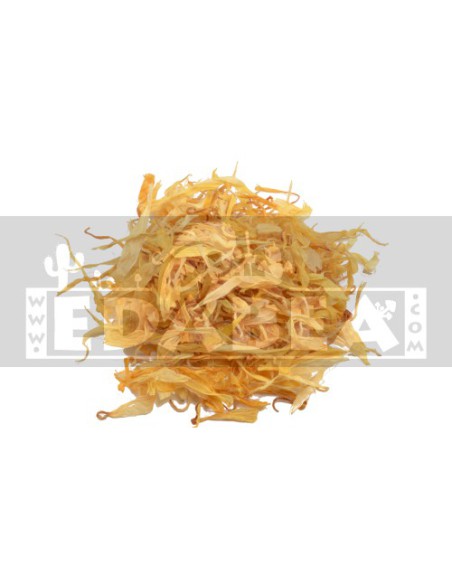
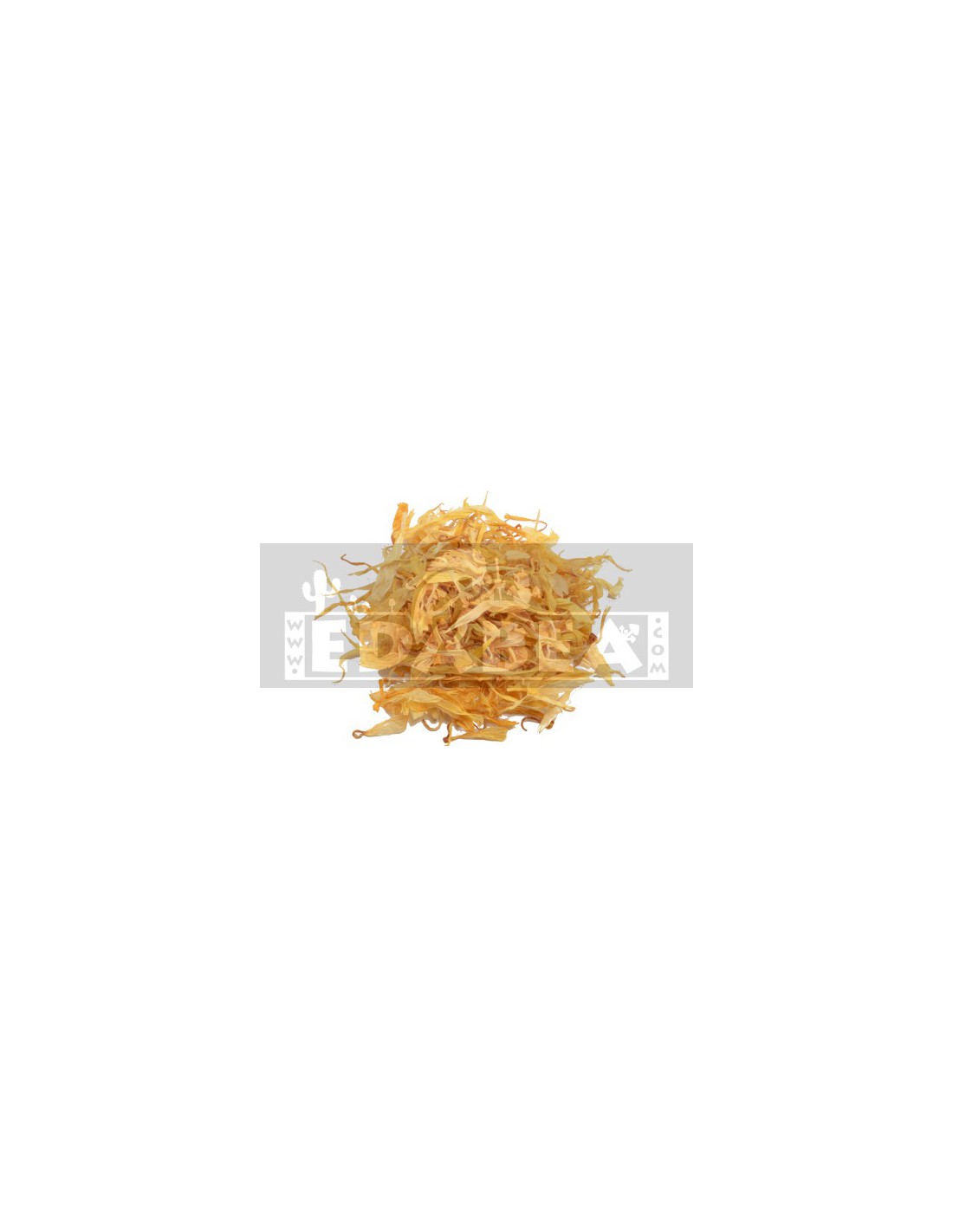
Calendula officinalis 100 g
€6.55
Tax included
Calendula (Calendula officinalis) — dried flower petals, 100 g. Annual herbaceous plant of the Asteraceae family, native to the Mediterranean basin, with documented presence in Greek, Roman, and Arab pharmacopoeias. Its petals contain carotenoids, flavonoids, and essential oils. Botanical collection material.
Ratings and comments from our customers
Calendula — Product Information
Calendula (Calendula officinalis) is an annual herbaceous plant of the Asteraceae family, native to the Mediterranean basin and southern Europe. It comes in 100 g dried flower petals. It is one of the most cultivated ornamental and herbal plants in the world, with a documented history spanning more than 2,000 years.
Etymology and History
The name Calendula derives from the Latin calendae — the first day of each month in the Roman calendar — referring to the plant's practically continuous blooming throughout the year in temperate climates. The term officinalis — present in the scientific name of numerous plants such as Lavandula officinalis, Melissa officinalis, or Rosmarinus officinalis — indicates that the plant was sold in the officinae, the medieval apothecaries or pharmacies, and thus had official recognition in the pharmacopoeia of the time.
Calendula is documented in the medical writings of ancient Greece and Rome, and in the medieval Arab pharmacopoeia. In Europe, it was extensively cultivated in medieval monastic gardens and appears described in major European herbaria of the 16th and 17th centuries.
Botanical Description
Calendula officinalis is a herbaceous plant ranging from 30 to 60 cm in height, with lanceolate leaves of intense green color and composite flowers of bright yellow-orange color. As a member of the Asteraceae family — the same family as chamomile, sunflower, and echinacea — its flowers are actually floral chapters composed of ligulate flowers on the outside (the visible petals) and tubular flowers in the center. The petals are the part of greatest botanical and historical interest.
It blooms practically year-round in Mediterranean climates — hence its Latin name — and is a very easy-to-cultivate, resilient plant adaptable to various soil types.
Phytochemical Profile
The petals of Calendula officinalis primarily contain carotenoids — responsible for their characteristic yellow-orange color, including lutein, zeaxanthin, and β-carotene — flavonoids (isorhamnetin, narcissus, quercetin), triterpenes (oleanolic acid and its derivatives), essential oils, and polysaccharides. Carotenoids are the most phytochemically studied compounds in this species and are responsible for much of its interest in modern research.
Historical and Cultural Uses
Beyond its herbal use, calendula has had a notable presence in history as a dye plant. Its petals have been used for centuries to dye fabrics yellow and as a substitute for saffron to color foods — in fact, it was popularly known as "poor man's saffron" in medieval Europe. This use as a natural colorant is still relevant in modern food and cosmetic industries.
There is historical documentation of the use of calendula as a hair dye in Northern Europe. Viking women used calendula infusions to lighten and give golden tones to blonde hair — one of the oldest documented cosmetic uses of the plant in Northern Europe. Its use has also been documented in canary breeding to intensify the yellow color of feathers by including it in the birds' diet.
Calendula also has a presence in Mediterranean culinary tradition — its petals have been used as an ingredient and colorant in soups, rice, and other dishes, especially in traditional Spanish and Portuguese cuisine.
Calendula in the Cosmetic Industry
Extracts from Calendula officinalis are among the most commonly used herbal ingredients in formulating cosmetics — creams, lotions, oils, and soaps — primarily because of their content in carotenoids and triterpenes. The European Pharmacopoeia includes the calendula flower as a vegetable drug with minimum specifications for flavonoid content.
Conservation
Store in a cool, dry place protected from direct light, in an airtight container. The carotenoids in the petals are sensitive to degradation from light exposure — storing in opaque containers or dark places better preserves the color and phytochemical profile.
Legal Aspects
Calendula officinalis is completely legal with no regulatory restrictions. The legal situation may vary by jurisdiction. This product is marketed exclusively as botanical collection material.
Frequently Asked Questions
What does "officinalis" mean in the scientific name?
The term officinalis in botanical nomenclature indicates that the plant was sold in the officinae — the medieval apothecaries or pharmacies — and had official recognition in the pharmacopoeia of the time. It is an epithet present in the scientific name of numerous plants with a long herbal history: Lavandula officinalis, Melissa officinalis, Salvia officinalis, Rosmarinus officinalis. Its presence in a plant's scientific name is a direct indicator of its historical importance in European herbology.
Why was it called "poor man's saffron"?
During the Middle Ages and the Renaissance, saffron (Crocus sativus) was a high-priced spice, accessible only to the wealthiest classes. The petals of calendula, which produce a similar yellow-orange color to saffron, were used as an affordable substitute to color foods, fabrics, and drinks. This function as a saffron substitute earned it the popular name "poor man's saffron" in several European languages.
What is the relation to chamomile?
Both belong to the Asteraceae family and have a long history in European herbology, but they are botanically distinct plants from different genera. Chamomile (Matricaria chamomilla) has white flowers and a phytochemical profile dominated by azulene and α-bisabolol. Calendula has yellow-orange flowers and a profile dominated by carotenoids and triterpenes. They are also available in the catalog of plants and botanical products from Edabea.
8 Items
Tap to zoom