Shopping Cart
There are no more items in your cart

Banisteriopsis caapi, Black Vine
€14.95
Tax included
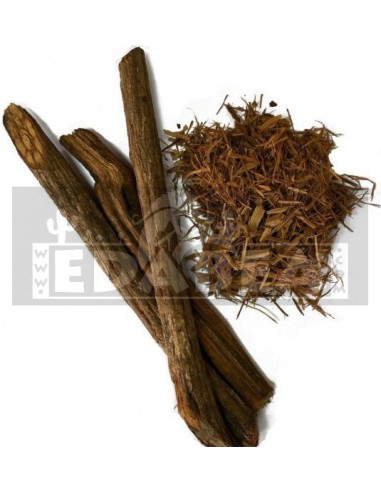
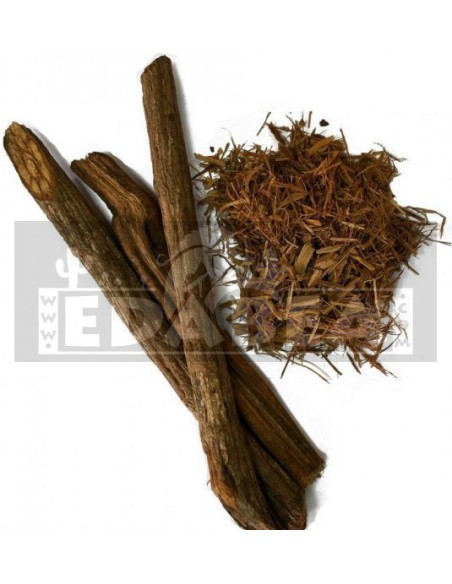
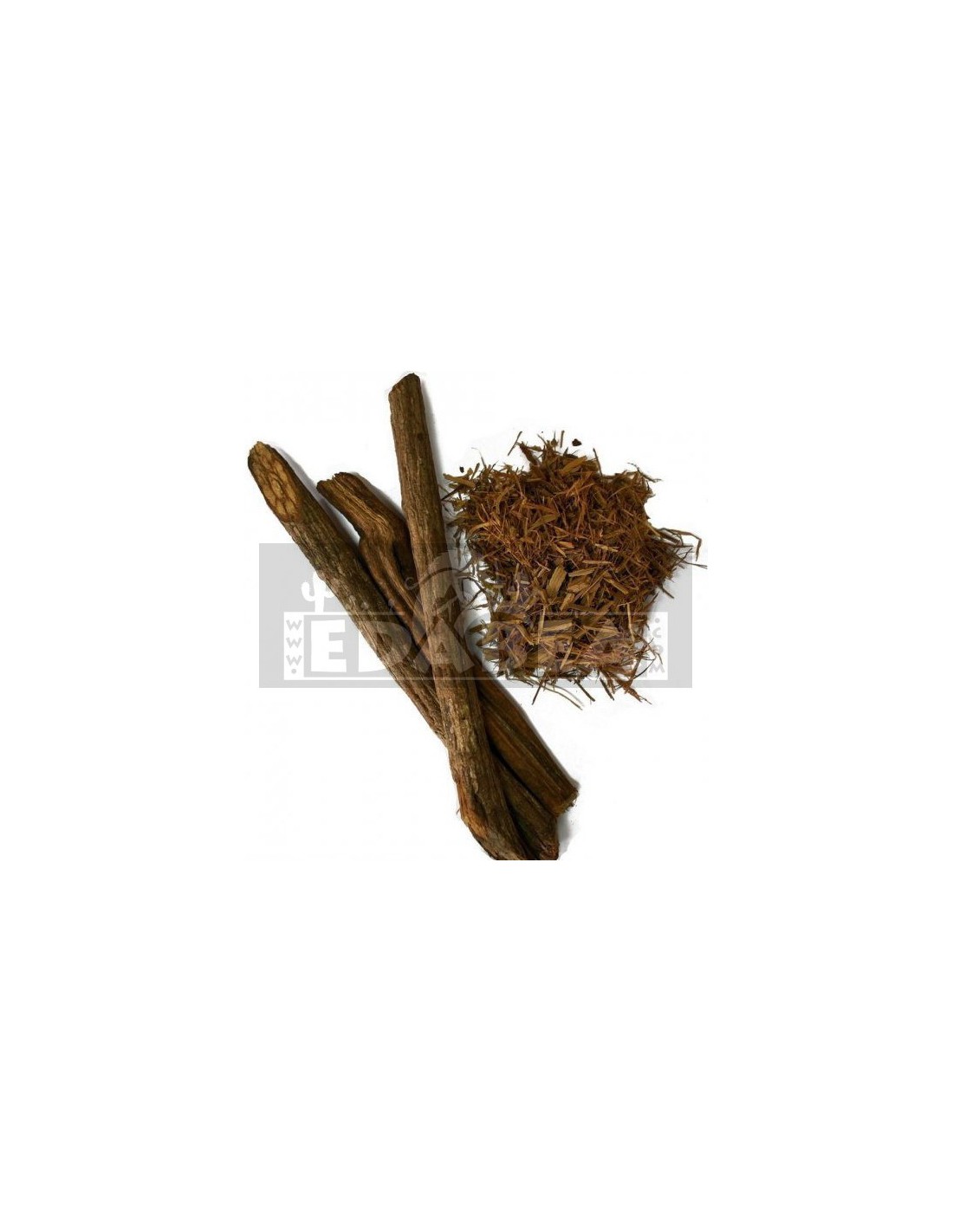
Banisteriopsis caapi Black Vine (B. caapi), ground vine from the Amazon basin. The most documented variety in ethnobotanical and phytochemical literature — it contains harmine, harmaline, and tetrahydroharmine, beta-carboline alkaloids with MAOI activity. Available in 100 g and 500 g. Selected by the Edabea team, with over 15 years of specialization in ethnobotany. For botanical collection and ethnobotanical research.
Banisteriopsis caapi Black Vine | Ground Vine — 100 g and 500 g
Banisteriopsis caapi is a climbing vine from the Malpighiaceae family, native to the Amazon basin, considered in ethnobotanical literature as the central component of the traditional preparation known as ayahuasca. The variety known as Black Vine has the most historical presence in Amazonian ceremonial use and is the most widely documented in available phytochemical research (Callaway et al., 1999; McKenna et al., 1984). At Edabea, we offer the vine in fine cut format, available in 100 g and 500 g packaging.
Origin and Material Selection
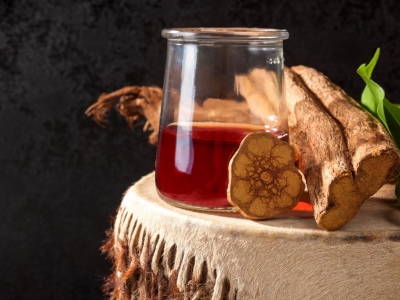
The material comes from the Amazon basin, the species' natural distribution region and the area with the most documented ethnobotanical use. The term "Black Vine" refers to the characteristic dark color of the mature stem — one of the morphological criteria used by Amazonian shamanic traditions to distinguish varieties within the species (Luna, 1986; Schultes & Hofmann, 1979).
At Edabea, we select the mature vine, the part of the plant with the highest concentration of beta-carboline alkaloids according to available phytochemical literature (Callaway, 2005). The material is presented in fine cut format, suitable for handling, archiving, and botanical study.
What the Black Vine Contains — Documented Alkaloids
Banisteriopsis caapi contains a well-characterized profile of beta-carboline alkaloids in scientific literature: harmine, harmaline, and tetrahydroharmine (THH). These compounds act as reversible inhibitors of monoamine oxidase (MAOI), a mechanism documented in several pharmacological studies (Callaway et al., 1999; McKenna et al., 1984). The relative proportions of each alkaloid vary depending on the variety, the part of the plant analyzed, and the conditions of cultivation and processing (Callaway, 2005).
The Black Vine has slightly distinct phytochemical profiles compared to other varieties of B. caapi — Yellow Vine and Red Vine (B. muricata) — differences that have been the subject of characterization in specialized ethnobotanical and phytochemical literature.
Ethnobotanical Context
The ceremonial use of Banisteriopsis caapi is documented among more than 70 indigenous peoples of the Amazon basin — including the Shipibo-Conibo, the Shawi, the Huni Kuin, and the Siona — with a historical trajectory that predates European contact by several centuries. Ethnobotanist Richard Evans Schultes dedicated decades to studying this species in the Amazon starting in the 1940s; his works, collected in Plants of the Gods (1979, with Albert Hofmann) and Vine of the Soul (1992), remain fundamental references in the field.
In 2008, the National Culture Institute of Peru declared the traditional knowledge and uses of ayahuasca as Cultural Heritage of the Nation, recognizing the historical and cultural value of the shamanic knowledge system associated with this plant.
For further historical and botanical context, you can consult our specialized ayahuasca blog.
Conservation
The ground vine is sensitive to humidity and temperature changes. To maintain its stability over time:
- Store in a well-sealed container, preferably airtight.
- Keep in a cool, dry place protected from direct light.
- Avoid humidity, prolonged heat, and cross-contamination with other materials.
Frequently Asked Questions about Banisteriopsis caapi Black Vine
What part of the plant is sold?
The mature vine is sold in fine cut format. It is the part of the plant most commonly used in traditional Amazonian preparation and the one that contains the highest presence of beta-carboline alkaloids according to available phytochemical literature (Callaway et al., 1999). The root and leaves are not sold in this reference — for dried leaves of B. caapi, consult the specific catalog sheet.
What is the difference between Black Vine, Yellow Vine, and Red Vine?
The Black Vine and Yellow Vine are varieties of Banisteriopsis caapi differentiated morphologically by the internal stem coloration with slightly different phytochemical profiles documented in the literature (Callaway, 2005). The names come from the Amazonian shamanic classification system, which distinguishes varieties by organoleptic and morphological criteria. The Red Vine corresponds to Banisteriopsis muricata, a botanically distinct species of the same genus (Schultes & Hofmann, 1979).
What are beta-carboline alkaloids?
Beta-carboline alkaloids are nitrogenous compounds that occur naturally in several plant species. In Banisteriopsis caapi, the main ones are harmine, harmaline, and tetrahydroharmine. Their presence in this species has been well-characterized in phytochemical literature since the pioneering work of McKenna et al. (1984) and has been the subject of multiple subsequent analytical studies.
What is the legal status of Banisteriopsis caapi?
The legal status may vary depending on the jurisdiction. It is the responsibility of the buyer to verify the applicable regulations in their place of residence. This product is sold exclusively as botanical collection material and for ethnobotanical research.
Which format is more suitable, 100 g or 500 g?
The 100 g format is suitable for collection, botanical archiving, or initial study of the material. The 500 g format is geared towards researchers, botanists, or collectors working with larger volumes or wanting a broader reference for phytochemical comparisons.
About this content
This sheet was prepared by the specialized team of Edabea Natura, with over 15 years of experience in the selection and marketing of ethnobotanical materials. The phytochemical and ethnobotanical information is based on the cited bibliographic sources and direct knowledge of the material. Last updated: April 2026. For inquiries about availability or characteristics of the current batch, contact contacto@edabea.com.
References: Callaway, J.C. (2005). Various alkaloid profiles in decoctions of Banisteriopsis caapi. Journal of Psychoactive Drugs, 37(2), 151–155. — Callaway, J.C. et al. (1999). Pharmacokinetics of hoasca alkaloids in healthy humans. Journal of Ethnopharmacology, 65(3), 243–256. — Luna, L.E. (1986). Vegetalismo: Shamanism among the Mestizo Population of the Peruvian Amazon. Stockholm: Almqvist & Wiksell. — McKenna, D.J., Towers, G.H.N., & Abbott, F. (1984). Monoamine oxidase inhibitors in South American hallucinogenic plants. Journal of Ethnopharmacology, 10(2), 195–223. — Schultes, R.E., & Hofmann, A. (1979). Plants of the Gods. New York: McGraw-Hill.
BA-GA
14 Items

Tap to zoom