Shopping Cart
There are no more items in your cart

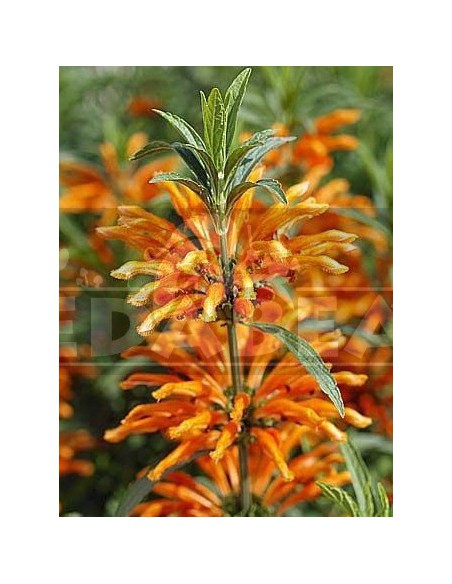
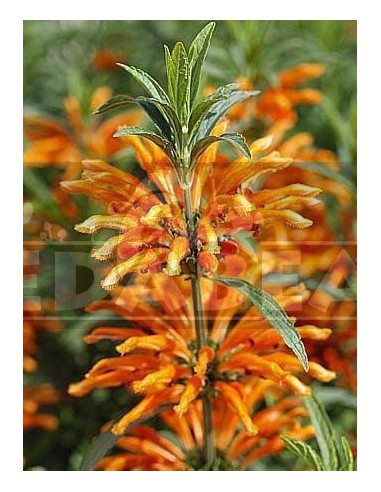
Klip Dagga 20 Seeds
Out-of-Stock
€7.70
Tax included
Klip Dagga (Leonotis nepetifolia) — 20 seeds for botanical collection. An annual herbaceous plant from the Lamiaceae family, native to tropical Africa and widely cultivated for ornamental purposes due to its striking tubular flowers in orange. Used in traditional medicine in Southern Africa, Central America, and in traditional Chinese and Vietnamese medicine. Easy to grow outdoors with full sun exposure.
Ratings and comments from our customers
What is Klip Dagga
Klip Dagga (Leonotis nepetifolia), whose Afrikaans name roughly means "rock dagga", is an annual herbaceous plant belonging to the Lamiaceae family — the same family as mint, rosemary, and Nepeta cataria. It is native to the sub-Saharan region of tropical Africa and parts of Central America, and has become widely naturalized in tropical and subtropical areas around the world.
It is closely related to Leonotis leonurus (Wild Dagga), sharing botanical family and parts of its ethnobotanical history in Southern Africa, although they are distinct species. Leonotis nepetifolia is distinguished by its wider distribution and its flowers clustered in very characteristic spherical whorls along the stem.
Botanical Description
Leonotis nepetifolia is an erect plant that can reach heights of 1 to 3 meters. It has the characteristic square stems of the Lamiaceae family, with opposite ovate leaves that have toothed edges and a distinctive aroma when rubbed. Its flowers are the most striking feature: tubular, bright orange, clustered in dense spherical whorls that are regularly spaced along the stem, creating a very ornamental visual effect.
It blooms from late summer to fall, producing a large quantity of seeds that facilitate its reproduction. The tubular floral morphology makes it particularly attractive to hummingbirds in its natural range, as well as to bees and butterflies in ornamental cultivation in Europe.
Etnobotanical Context
Leonotis nepetifolia has documented ethnobotanical uses in various medicinal traditions within its natural distribution area.
In Southern Africa, the Khoikhoi (Hottentots) tribes used various parts of the plant for medicinal and ceremonial purposes, a practice documented in colonial ethnographic records from the 18th and 19th centuries, as well as in modern ethnobotanical literature from Southern Africa.
In traditional Chinese and Vietnamese medicine, the species is documented for use as a purgative and vermifuge, integrated into the herbal pharmacopoeia of both traditions.
In Central America and the Caribbean, where the plant naturalized following European colonization, its use in folk medicine for treating snake bites and other external uses is documented in regional ethnobotanical literature.
Its ornamental cultivation is widely documented in tropical and subtropical gardens around the world, especially appreciated for the visual uniqueness of its orange flowers.
Cultivation
Klip Dagga is a relatively easy plant to cultivate, adapted to warm, sunny climates:
- Soil: well-drained. A mixture of 2 parts soil and 1 part sand works well. Waterlogging is its main enemy.
- Sun Exposure: full sunlight. It is a plant of African desert origin that requires maximum exposure.
- Watering: minimal. Water only when the substrate has completely dried out — it is very drought-resistant.
- Temperature: does not tolerate frost. Move outdoors only after the last frosts of the season.
- Sowing: directly outdoors in spring or indoors between February and March for transplanting after frost.
- Germination: 10 to 20 days under warm conditions with good lighting.
- Propagation: both from seeds and cuttings — cuttings root easily in summer.
- Container Cultivation: perfectly viable with well-drained soil and very moderate watering.
Legal Aspects
The cultivation of Leonotis nepetifolia is completely legal in Spain and the European Union. It is an ornamental plant with no regulatory restrictions. This product is marketed as botanical collection material and ornamental cultivation.
Frequently Asked Questions
What is the difference between Klip Dagga and Wild Dagga?
Leonotis nepetifolia (Klip Dagga) and Leonotis leonurus (Wild Dagga) are two distinct species of the same genus. They share a botanical family and part of their ethnobotanical history in Southern Africa, but differ in morphology — Wild Dagga has longer flowers and narrower leaves — and in geographic distribution. Klip Dagga has a wider distribution and is naturalized in Central America and the Caribbean.
Why is it called Klip Dagga?
The name comes from Afrikaans: klip means "rock" or "stone" and dagga is the South African colloquial term for smoking plants used for ceremonial or medicinal purposes. The name distinguishes this species from Wild Dagga (Leonotis leonurus), with which it shares parts of its ethnobotanical history.
Is it easy to grow in Spain?
Yes. The Mediterranean climate is very favorable for this plant. It requires little watering, a lot of sunlight, and well-drained soil. The only limitation is its sensitivity to frost — in areas with cold winters, it should be grown in pots to protect it or treated as an annual.
Is it legal to buy Klip Dagga seeds in Spain?
Yes. Leonotis nepetifolia is completely legal in Spain and the European Union, with no regulatory restrictions.
Tap to zoom