
Shopping Cart
There are no more items in your cart


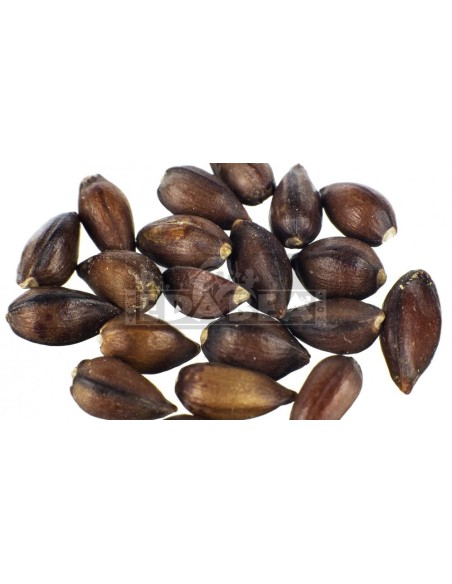


Ephedra Sinica 20 Seeds
Out-of-Stock
€7.20
Tax included
Ephedra sinica (Ma Huang) — 20 seeds for botanical collection. A gymnosperm native to Central Asia and China with over 5,000 years of documented use in traditional Chinese medicine. Its stems contain ephedrine and pseudoephedrine, alkaloids noted in scientific literature and used in modern pharmacology. Unlike Ephedra nevadensis, it is subject to regulatory restrictions in many countries due to its ephedrine content.
Ratings and comments from our customers
What is Ephedra sinica
Ephedra sinica, known in traditional Chinese medicine as Ma Huang (麻黄), is a gymnospermic shrub belonging to the genus Ephedra and the division Gnetophyta, one of the oldest lineages of vascular plants on Earth. It is native to the arid and semi-arid regions of China, Mongolia, and Siberia, where it grows in dry, rocky soils at various altitudes.
Its stems contain significant concentrations of ephedrine and pseudoephedrine, phenylethylamine alkaloids documented in modern phytochemical and pharmacological literature. Ephedrine isolated from Ephedra sinica is the basis for numerous modern medications and was one of the first plant alkaloids to be systematically studied by Western pharmacology, beginning with the work of Japanese pharmacologist Nagai Nagayoshi, who first isolated it in 1885.
Botanical Description
Ephedra sinica is an erect or semi-erect shrub that can reach between 30 and 70 cm in height. It shares with other species of the genus the characteristic morphology of Gnetophyta: green, jointed, and photosynthetic stems with leaves reduced to small membranous scales at the nodes — practically vestigial. This adaptation minimizes water loss through transpiration in the arid environments where it grows.
It is a dioecious plant — with separate male and female specimens — that produces cones instead of flowers. Mature female cones produce seeds enveloped in reddish, fleshy bracts. Compared to Ephedra nevadensis, it has thinner stems and a darker green coloration, and its content of active alkaloids is significantly higher.
History and Ethnobotanical Context
Ephedra sinica has one of the longest documented uses in the history of medicine. Ma Huang is mentioned in the Shennong Bencao Jing — the Classic of Herbal Medicine of the Divine Farmer — one of the foundational texts of traditional Chinese medicine, with estimated dating between 2700 BC and 200 AD, making it one of the most ancient plants with documented use in the world.
In traditional Chinese medicine, Ma Huang is classified as a plant of warm nature and spicy flavor, primarily used for treating respiratory conditions, fever, and edema. Its use is noted in major pharmacopoeias of classical Chinese medicine, including the Bencao Gangmu by Li Shizhen (1596), the most comprehensive encyclopedia of Chinese materia medica in history.
In the 19th century, Western interest in Chinese medicine led to the isolation of ephedrine in 1885 by Nagai Nagayoshi, and later to its development as a drug by pharmacologist K.K. Chen in the 1920s, paving the way for an entire family of sympathomimetic drugs derived from ephedrine.
Cultivation
Ephedra sinica is a robust, low-maintenance plant, similar in requirements to Ephedra nevadensis:
- Substrate: loose, dry, and well-drained. A mix of 50% sand and 50% cactus soil is suitable.
- Sowing: spread the seeds over the substrate surface and cover lightly with the same soil. Moisten and cover the pot with clear plastic with small holes to maintain humidity and temperature.
- Germination Temperature: 20 °C. Lower temperatures delay germination.
- Sowing Season: fall indoors, keeping a constant temperature.
- Germination: quick — can be transplanted from the first week.
- Light: maximum possible sunlight exposure.
- Watering: very moderate. It is a plant from arid environments that does not tolerate excess moisture.
- Transplanting: in spring, it can be moved outdoors. The roots need space — use wide containers.
- Outdoor Temperature: avoid frost and intense cold.
Legal Aspects
Ephedra sinica is subject to regulatory restrictions in several countries within the European Union and in Spain due to its ephedrine content, classified as a precursor of controlled substances. The legal situation varies by jurisdiction and declared use. It is the responsibility of the buyer to inform themselves about applicable regulations in their place of residence before placing any order.
This product is marketed exclusively as material for botanical collection and ethnobotanical research.
Frequently Asked Questions
What does Ma Huang mean in Chinese?
Ma Huang (麻黄) translates roughly to "yellow herb" or "rough yellow herb" — ma refers to the rough texture of the stems and huang to the yellowish color of the dried plant. It is one of the oldest documented plant names in Chinese medicine, with over 5,000 years of recorded use.
What is the difference between Ephedra sinica and Ephedra nevadensis?
Ephedra sinica is native to Central Asia and China, contains significant amounts of ephedrine and pseudoephedrine, and is subject to regulatory restrictions in various countries. Ephedra nevadensis is native to the southwestern United States, does not contain ephedrine in significant amounts, and is completely legal without restrictions. They are two species of the same genus with completely different phytochemical profiles and ethnobotanical trajectories.
What is ephedrine?
Ephedrine is a phenylethylamine alkaloid found in the stems of Ephedra sinica, first isolated in 1885. It is the basis for numerous modern medications and one of the first plant alkaloids systematically studied by Western pharmacology. It is classified as a precursor of controlled substances in several countries, which explains the regulatory restrictions on the plant.
Is it legal to buy Ephedra sinica seeds in Spain?
The legal status of Ephedra sinica in Spain is subject to restrictions due to its ephedrine content. It is recommended to check current local regulations before purchasing.
Tap to zoom
