
Shopping Cart
There are no more items in your cart


Kanna (Sceletium tortuosum)
available
€6.95
Tax included
Kanna (Sceletium tortuosum) — traditional powder from a succulent plant native to Southern Africa, with a documented history of use among the Khoikhoi and San peoples since the 17th century (Smith et al., 1996). Contains the full alkaloid profile of the species — mesembrine, mesembrenone, mesembrenol, and tortuosamine — in its natural concentration (Gericke & Viljoen, 2008). Available in 1 g. Selected by the Edabea team, with over 15 years of expertise in ethnobotany. For botanical collection and ethnobotanical research.
Kanna (Sceletium tortuosum) | Traditional Powder — 1 g
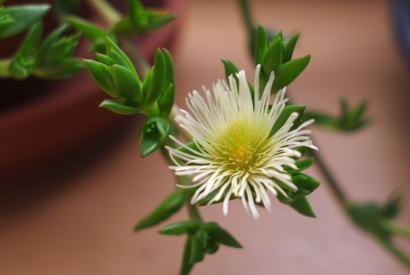
Kanna (Sceletium tortuosum) is a succulent plant of the Aizoaceae family, native to the arid and semi-arid regions of Southern Africa — primarily South Africa and Namibia. It presents the closest form to the original plant material historically used by the Khoikhoi and San peoples, with documented records dating back to the 17th century (Smith et al., 1996). At Edabea, we offer it in the form of traditional powder, available in 1 g.
Traditional Powder — the format closest to historical use
Unlike concentrated extracts in the catalog, traditional kanna powder retains the whole alkaloid profile of the plant — mesembrine, mesembrenone, mesembrenol, and tortuosamine — in natural proportions, along with other plant components present in the species. It serves as a reference format for comparative studies between raw material and various concentrated extracts available.
The traditional preparation of Sceletium tortuosum by the Khoikhoi and San peoples involved a fermentation process of the leaves and stems before use — a practice documented in ethnobotanical literature, associated with modifications in the alkaloid profile of the plant material during the process (Gericke & Viljoen, 2008). The commercially available powder corresponds to dried non-fermented plant material, distinguishing it from traditionally fermented material.
Documented Phytochemical Profile
The main alkaloids of Sceletium tortuosum are well-characterized in scientific literature: mesembrine, mesembrenone, mesembrenol, and tortuosamine (Gericke & Viljoen, 2008). Mesembrine is the most studied alkaloid in the species and has been the subject of pharmacological investigation for its documented interaction with serotonin transporters (Harvey et al., 2011).
Alkaloid concentration varies according to the geographical origin of the material, cultivation conditions, the part of the plant analyzed, and the processing state — factors documented in the phytochemical literature of the species (Smith et al., 1996). To delve deeper into the profile of the main alkaloid, you can consult our specialized article on mesembrine.
Catalog Position — Powder vs Extracts
| Presentation | Format | Alkaloid Profile | Concentration |
|---|---|---|---|
| Kanna Powder | Whole plant powder | Whole, natural proportions | Base (non-concentrated) |
| ET2 Extract | Powder extract | Standardized | Concentrated |
| Smokanna Extract | Dense extract | Concentrated without plant material | High concentration |
| 10X Extract | Granular | Concentrated without plant material | 10× compared to base |
| Full Spectrum | Full extract | Whole concentrated | Concentrated |
Etnobotanical Context
The use of Sceletium tortuosum by the Khoikhoi and San peoples of Southern Africa has been documented since the earliest European records of the 17th century. The Dutch explorer Jan van Riebeeck noted its use in writing in 1662, and the species was first botanically described by the naturalist William Burchell in the early 19th century (Smith et al., 1996).
Within Khoikhoi and San tradition, kanna was exchanged as a valued commodity, with its use integrated into specific social and ceremonial contexts. The traditional fermentation of the plant material — an ethnobotanically documented practice — is one of the most unique elements of the knowledge associated with this species (Gericke & Viljoen, 2008).
To expand on the historical and botanical context, you can consult our specialized article: Kanna or Sceletium tortuosum: the status of the question.
Storage
The plant powder is sensitive to moisture and direct light. To maintain its stability and botanical characteristics over time:
- Store in a well-sealed container, preferably airtight.
- Keep in a cool, dry place, protected from direct light.
- Avoid moisture, prolonged heat, and cross-contamination with other materials.
Frequently Asked Questions about Kanna Powder
What is the difference between traditional powder and kanna extracts?
The traditional powder retains the whole alkaloid profile of the plant in its natural proportions, along with all the vegetable components present in the species. The extracts are concentrated obtained from the plant material, with a higher density of alkaloids per unit weight and without the non-alkaloid compounds of the powder. The powder is the reference format for comparative studies between raw material and concentrated extracts.
What is the traditional fermentation of kanna?
Fermentation is a documented practice in the traditional use of Sceletium tortuosum by the Khoikhoi and San peoples. It involves crushing the fresh leaves and stems and allowing them to ferment for days or weeks. Researchers have noted that this process can modify the alkaloid profile of the plant material (Gericke & Viljoen, 2008). The powder we market corresponds to dried non-fermented plant material, differentiating it from traditionally fermented material.
What are the main alkaloids of Sceletium tortuosum?
The principal documented alkaloids are mesembrine, mesembrenone, mesembrenol, and tortuosamine (Gericke & Viljoen, 2008). Mesembrine is the most studied of the species due to its documented interaction with serotonin transporters (Harvey et al., 2011). To delve deeper into its profile, you can consult our specialized article.
What is the legal status of kanna?
The legal status may vary according to jurisdiction. It is the buyer's responsibility to verify the applicable regulations in their residence. This product is sold exclusively as botanical collection material and for ethnobotanical research.
About this content
This sheet was prepared by the specialized team of Edabea Natura, with over 15 years of experience in the selection and marketing of ethnobotanical materials. The phytochemical and ethnobotanical information is based on cited bibliographic sources and on direct knowledge of the material from each batch. Last updated: April 2026. For inquiries regarding availability or characteristics of the current batch, contact at contacto@edabea.com.
References: Gericke, N. & Viljoen, A.M. (2008). Sceletium — a review update. Journal of Ethnopharmacology, 119(3), 653–663. — Harvey, A.L. et al. (2011). Pharmacological actions of the South African medicinal and functional food plant Sceletium tortuosum and its principal alkaloids. Journal of Ethnopharmacology, 137(3), 1124–1129. — Smith, M.T. et al. (1996). Psychoactive constituents of the genus Sceletium N.E.Br. and other Mesembryanthemaceae. Journal of Ethnopharmacology, 50(3), 119–130.
CW
6 Items
Related articles on blog

Tap to zoom
