Shopping Cart
There are no more items in your cart
Mimosa hostilis, the tree of regeneration
Categories :
Ayahuasca
Mimosa tenuiflora — botanical profile
Mimosa hostilis, whose currently accepted scientific name is Mimosa tenuiflora (Willd.) Poir., is a plant native to the Americas that grows naturally across a broad range: from southeastern Mexico and Central America to the semi-arid regions of northeastern Brazil. In Brazil, it is widely known as jurema or jurema-preta — the latter to distinguish it from jurema-branca (Mimosa verrucosa), a related but distinct species. In Mexico, its traditional name is tepezcohuite, sometimes translated as "skin tree", a reference to its longstanding use in dermatological applications.
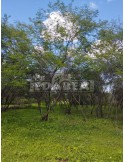
In its natural habitat, Mimosa tenuiflora belongs to a tropical dry forest ecosystem characterized by torrential seasonal rains and prolonged dry periods. It colonizes degraded or disturbed terrain — rocky hillsides, roadsides, eroded slopes — and is considered a pioneer species with high tolerance for poor soils and drought. Its growth habit is shrubby to arboreal, reaching up to 8 meters in height. The bark is dark and furrowed on older specimens; flowers are small, white and cylindrical, grouped in spike-like racemes. Seed pods are flat, containing 4–6 seeds. It is the root bark, however, that concentrates the phytochemical compounds of primary ethnobotanical interest.
The species is commercially available as Mimosa Hostilis Root Bark Powder — fine powder or coarsely ground — and as Mimosa Hostilis seeds for botanical cultivation.
Phytochemical composition
The root bark of Mimosa tenuiflora presents a well-documented phytochemical profile. Anton et al. (1993) identified the following constituents: tannins, saponins, alkaloids, glucose, xylose, rhamnose, arabinose, lupeol, phytosterols, lipids, calcium oxalate crystals and starch. The authors noted that the alkaloid content may limit its conventional pharmacological development due to complexity of isolation.
What distinguishes Mimosa tenuiflora from other species in the genus is the presence of tryptamine alkaloids — specifically 5-hydroxytryptamine and N,N-dimethyltryptamine (DMT). Meckes-Lozoya et al. (1990) documented DMT concentrations of approximately 1% in dried root bark, while trunk bark contains significantly lower amounts, around 0.03%. This differential concentration between root and trunk bark is consistently noted in the phytochemical literature and is one of the defining characteristics of the species within the botanical trade.
For a detailed review of the DMT molecule — its structure, pharmacological research and scientific context — see our article on what DMT is and what it is used for.
.jpg)
Traditional uses of Mimosa tenuiflora
Mimosa tenuiflora has one of the richest documented histories of traditional use among ethnobotanically relevant species in the Americas. Its properties — antimicrobial, antifungal and tissue-regenerating — have been documented across Pre-Hispanic and Amazonian cultural contexts, where it was used for the treatment of burns, skin wounds and infections, gastrointestinal conditions and as a raw material for cosmetics and construction.
In Mexico, multiple indigenous communities in the states of Oaxaca, Chiapas and Yucatán documented the use of bark preparations — infusions and powders — for the treatment of skin conditions, including infected wounds, inflammatory processes and fungal infections. Traditional knowledge of these applications persisted throughout colonial periods and into the 20th century, when two major disasters brought them to national attention.
In 1982, the eruption of the El Chichón volcano in Chiapas left thousands of burn victims in areas with limited medical infrastructure. Local communities turned to traditional bark preparations to manage burn wounds while awaiting formal medical attention. Two years later, in 1984, the San Juanico explosions at a PEMEX liquefied gas storage facility near Mexico City produced hundreds of severe burn casualties. The scale of the disaster again prompted the use of traditional tepezcohuite preparations. Both events accelerated scientific interest in the species and led to a significant body of research into its wound-healing and antimicrobial properties (Camargo-Ricalde, 2000).
This history of dermatological use has continued into contemporary applications. The bark extract has been incorporated into cosmetic formulations — ointments, soaps and balms — based on its documented tissue-regenerating properties. Actress Salma Hayek publicly described using tepezcohuite-based preparations as part of her skincare routine, and in 2012 launched a cosmetic product line incorporating this ingredient, bringing the species to broader international attention outside specialized ethnobotanical circles.
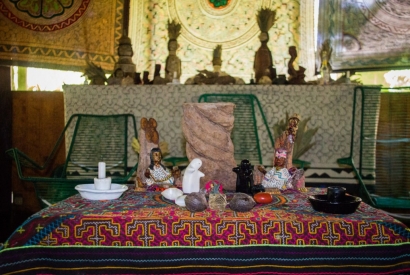
In Brazil, the traditions associated with jurema-preta are distinct in character. Indigenous communities — including the Pancararu, Kariri-Shoko and other groups of the northeastern sertão — have prepared a ritual drink known as ajucá or anjucá, made from the bark and roots of Mimosa tenuiflora. This preparation, central to the Jurema religious complex, has been documented in Brazilian anthropological literature since the 19th century. Gonçalves de Lima, during fieldwork with the Pancararu in Pernambuco, was among the first researchers to connect the psychoactivity described in ethnographic accounts to the DMT content of the plant (Souza et al., 2008).
For more on the origin, cultivation and harvest of this species, see our dedicated article: Mimosa Hostilis: origin, cultivation, harvest and traditional uses.
.jpg)
Ethnobotanical research on ritual use
The pharmacological basis of the Jurema ritual drink has been the subject of academic study. Souza et al. (2008), in their review Jurema-Preta (Mimosa tenuiflora Poir.): a review of its traditional use, phytochemistry and pharmacology, summarize the ethnographic and phytochemical evidence for the drink's documented effects in indigenous ritual contexts, noting that the active alkaloid profile is consistent with oral DMT activity when combined with MAO-inhibiting compounds such as β-carbolines — a combination also discussed by Schultes and Hofmann (1980) in The Botany and Chemistry of Hallucinogens and by Ott (1999) in his pharmacological study of pharmahuasca preparations.
The broader academic context of Mimosa tenuiflora in ayahuasca research — including its use as a DMT source in so-called "anahuasca" or pharmahuasca preparations — has been documented extensively in the ethnopharmacological literature from the 1990s onward. This research is descriptive and pharmacological in nature, focused on the plant's chemical profile and its historical role in indigenous ritual traditions.
.jpg)
Contemporary ethnobotanical interest
Since the 1990s, interest in Mimosa tenuiflora has expanded considerably beyond its geographic regions of origin. The species has become one of the most referenced tryptamine-containing plants in the specialized ethnobotanical literature, partly due to the global growth of ayahuasca research and the broader documentation of indigenous plant knowledge traditions. Its root bark is one of the most widely traded ethnobotanical materials internationally, with demand concentrated in Europe and North America within the botanical research and collection market.
This expansion has also generated regulatory interest. The legal status of Mimosa tenuiflora varies considerably across jurisdictions — see the section below.
Legal status
The legal situation of Mimosa tenuiflora varies by jurisdiction. In most countries, the plant itself is not scheduled. However, its alkaloid content — specifically DMT — is a controlled substance under international law (UN Convention on Psychotropic Substances, 1971) and in the legislation of many individual countries. It is the buyer's responsibility to verify the applicable regulations in their place of residence before placing an order. This product is sold exclusively as botanical collection material and ethnobotanical research material.
Frequently asked questions about Mimosa Hostilis
Are Mimosa tenuiflora and Mimosa hostilis the same species?
Yes. Mimosa tenuiflora (Willd.) Poir. is the currently accepted scientific name according to most major botanical databases, including Plants of the World Online and GBIF. Mimosa hostilis is a former synonym that remains widely used in the ethnobotanical trade and in older scientific literature. In Brazil the plant is most commonly known as jurema-preta; in Mexico as tepezcohuite. All three names refer to the same species.
Which part of the plant contains the highest DMT concentration?
The root bark consistently shows the highest DMT concentrations in the phytochemical literature — approximately 1% in dried material, according to Meckes-Lozoya et al. (1990). Trunk bark contains significantly lower amounts, around 0.03%. This differential is one of the reasons root bark is the primary material traded in the specialized botanical market. Inner root bark — the fibrous material obtained after removal of the outer layer — is the standard commercial presentation.
What is the difference between fine powder and coarsely ground root bark?
Both formats are produced from the same raw material lot. Fine powder presents a uniform, homogeneous texture — suitable for formulations, cosmetic preparations and research applications requiring consistent particle size. Coarsely ground material retains more of the original fibrous structure of the bark, making it morphologically more recognizable — preferred for botanical archiving or collection purposes. At Edabea, both formats are processed within 48 hours of dispatch from whole material, avoiding the oxidation and moisture loss that occurs in pre-ground stock stored for weeks.
What are the documented traditional uses of Mimosa tenuiflora?
The most extensively documented traditional uses are dermatological — treatment of burns, wounds, skin infections and inflammatory conditions, particularly in indigenous Mexican communities. The bark's tissue-regenerating properties came to wider attention following the El Chichón volcanic eruption (1982) and the San Juanico disaster (1984), when traditional preparations were used in emergency wound management. In Brazil, the bark has been used in the preparation of the ritual jurema drink within the religious traditions of indigenous communities in the northeastern sertão, documented in anthropological literature from the 19th century onward. Additional documented uses include cosmetics, gastrointestinal remedies and agroforestry applications (construction, fodder, soil restoration).
Is Mimosa tenuiflora legal to buy?
In most countries, Mimosa tenuiflora root bark is not a scheduled substance and may be purchased, possessed and used for botanical collection and research purposes. However, regulations differ between jurisdictions, and some countries apply controls based on alkaloid content or intended use. It is the buyer's responsibility to verify the regulations applicable in their place of residence before ordering. At Edabea, all material is sold exclusively as botanical collection and ethnobotanical research material.
Where can I find more information on the origin and sustainable harvest of Mimosa Hostilis?
Our dedicated article covers the geographic origin, botanical ecology, harvest methods and sustainability considerations associated with Mimosa tenuiflora root bark trade: Mimosa Hostilis: origin, cultivation, harvest and traditional uses. For the phytochemical context of DMT — the primary tryptamine alkaloid in this species — see our article on what DMT is and what it is used for.
Content produced by the specialized team at Edabea Natura, with over 15 years of experience in the selection and marketing of ethnobotanical materials. Phytochemical and ethnobotanical information is based on the bibliographic sources cited below. Last updated: May 2026. For inquiries on availability or current batch characteristics, contact contacto@edabea.com.
References: Anton, R., et al. (1993). Pharmacognosy of Mimosa tenuiflora (Willd.) Poiret. Journal of Ethnopharmacology, 38, 153–157. — Camargo-Ricalde, S.L. (2000). Descripción, distribución, anatomía, composición química y usos de Mimosa tenuiflora (Fabaceae-Mimosoideae) en México. Revista de Biología Tropical, 48(4), 939–954. — Meckes-Lozoya, M., et al. (1990). N,N-dimethyltryptamine alkaloid in Mimosa tenuiflora bark. Journal of Ethnopharmacology, 28(2), 183–193. — Ott, J. (1999). Pharmahuasca: human pharmacology of oral DMT plus harmine. Journal of Psychoactive Drugs, 31(2), 171–177. — Schultes, R. & Hofmann, A. (1980). The Botany and Chemistry of Hallucinogens. Charles Thomas Publishers. — Souza, R., et al. (2008). Jurema-Preta (Mimosa tenuiflora Poir.): a review of its traditional use, phytochemistry and pharmacology. Brazilian Archives of Biology and Technology, 51(5).
Share this content