Shopping Cart
There are no more items in your cart
Dimethyltryptamine (DMT) Ancestral and Contemporary Use | EDABEA
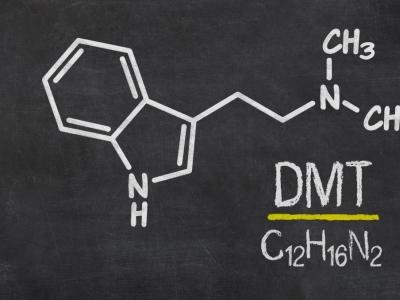
Dimethyltryptamine (DMT) is an indole alkaloid of the tryptamine family that occurs naturally in numerous plants and in small amounts in mammalian tissues. It is the main psychoactive component of ayahuasca — the Amazonian ceremonial preparation that combines DMT-rich plants with plant-derived MAO inhibitors — and has been used in ritual and spiritual contexts by indigenous peoples of South America for centuries. This article describes the documented traditional uses of DMT, its archaeological and historical context, and the current state of scientific research on the molecule. For a detailed description of the therapeutic potential of DMT in contemporary clinical research, you can check our article on DMT and its therapeutic potential.
%20(2).jpg)
DMT in Amazonian Ethnobotanical Tradition
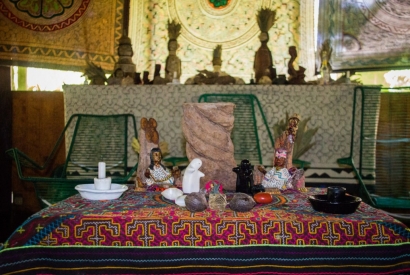
The ritual use of DMT-rich plants in the Amazon basin is documented by ethnohistorical and archaeological sources that predate European contact by centuries. Peoples such as the Shipibo-Conibo, the Ashaninka, the Shuar, and other groups from western Amazonia have integrated ayahuasca into their traditional knowledge systems as a tool for diagnosis, healing, and spiritual communication. In these contexts, the preparation and administration of ayahuasca is the responsibility of specialists — the healers or ayahuasqueros — who possess botanical and ritual knowledge accumulated over generations.
In the worldview of these traditions, ayahuasca is not a recreational substance, but a tool for accessing knowledge within a structured cosmological system. Its use is framed within specific ceremonial protocols — prior diets, intentions, chants (ícaros), and community context — that form an inseparable part of the practice.
.jpg)
Archaeological Evidence of DMT Use
Archaeological evidence of the use of psychoactive substances rich in tryptamines in South America is significant and geographically diverse. Inhalation tubes containing traces of tryptaminic alkaloids dating back approximately 4,000 years have been found in northwest Argentina — the San Pedro de Atacama region — associated with funerary and ritual contexts. Similar artifacts related to the consumption of plants from the Anadenanthera genus, rich in bufotenin and DMT, have been documented in coastal Venezuela and the Antilles.
This evidence demonstrates that the use of tryptamine-containing plants was not limited to a single culture or geographical region but was part of a broad ritual complex distributed throughout much of pre-Columbian South America and the Caribbean (Schultes, R.E. & Hofmann, A., 1979. Plants of the Gods. McGraw-Hill).
Western Rediscovery and 20th Century Research
Western scientific interest in DMT began in the first half of the 20th century when ethnobotanist Richard Evans Schultes began the systematic documentation of Amazonian psychoactive plants. In 1946, Brazilian chemist Oswaldo Gonçalves de Lima isolated DMT for the first time from Mimosa hostilis. Chemical synthesis was performed by Manske in 1931, prior to natural isolation.
In 1956, Hungarian psychiatrist Stephen Szára administered synthesized DMT to volunteers and published the first clinical studies on its pharmacological effects, establishing its activity on the central nervous system. In the 1960s, DMT was included in the psychedelic research framework taking place at North American and European universities until the 1971 Convention on Psychotropic Substances virtually halted all clinical research with such substances for decades.
Alexander Shulgin, although better known for his work with phenethylamines, also documented and analyzed DMT in his studies on tryptamines, contributing to the pharmacological characterization of the compound in the context of psychedelic research during the 70s and 80s.
.jpg)
Mechanism of Action and Pharmacology
DMT primarily acts as an agonist at the 5-HT2A serotonin receptors of the central nervous system — the same mechanism shared by other classic psychedelics like psilocybin and LSD (Nichols, D.E., 2016. Pharmacological Reviews, 68(2), 264–355). Unlike salvinorin A — which acts on kappa opioid receptors — or mesembrine — which acts on the serotonin transporter — DMT is a classic serotonergic psychedelic in terms of mechanism.
Oral DMT is not active without prior inhibition of the enzyme monoamine oxidase (MAO), which rapidly metabolizes it before it reaches the central nervous system. In the preparation of ayahuasca, the beta-carboline alkaloids from Banisteriopsis caapi — harmine, harmaline, tetrahydroharmine — act as reversible MAO inhibitors allowing the orally ingested DMT to be active and produce prolonged effects of 4 to 6 hours (Callaway, J.C. et al., 1999. Journal of Analytical Toxicology, 23(7), 524–532).
Ayahuasca in the Contemporary Context
In recent decades, ayahuasca has transcended its original Amazonian context and has spread to urban contexts in Latin America, Europe, and North America, both in shamanic tourism formats and in retreat centers or in syncretic religious communities such as Santo Daime and União do Vegetal — Brazilian churches that use ayahuasca as a sacrament and whose use has been legally recognized in Brazil and some European countries.
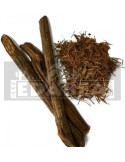
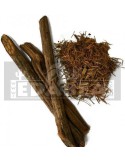
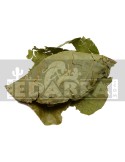
This globalization process has generated debates about cultural appropriation, the safety of ceremonies outside traditional contexts, and the sustainability of the demand for plants like Banisteriopsis caapi and Psychotria viridis. At Edabea, we work with a selection of botanical ingredients for ayahuasca marketed exclusively as botanical collection material and ethnobotanical research.
.jpg)
Contemporary Clinical Research
The resurgence of scientific research with psychedelics since 2006 has included DMT among the molecules of interest. Researchers from Imperial College London have published preliminary results from trials with intravenous DMT in combination with psychotherapy for treatment-resistant depression. Small Pharma completed phase I/IIa trials with results that have generated regulatory interest. Research is currently in phases I and II — with no approved therapeutic indications for widespread use outside of controlled research contexts (Carhart-Harris, R.L. et al., 2016–2023. Imperial College London Centre for Psychedelic Research).
For a detailed description of the current state of this research and the proposed mechanisms, you can check our article on DMT and its therapeutic potential.
Legal Situation
DMT is classified as a psychotropic substance under most international legal frameworks since the 1971 Convention on Psychotropic Substances. The situation of the plants containing it varies according to the jurisdiction — in some countries, DMT-rich plants are legal while the isolated molecule is controlled. It is the buyer's responsibility to verify the applicable regulations in their residence. Edabea's products are marketed exclusively as botanical collection material and ethnobotanical research.
About this Content
This article was prepared by the Edabea team for educational and historical purposes. The ethnobotanical and pharmacological information is based on the cited bibliographical sources. It does not constitute a recommendation for use nor does it promote the consumption of any substance. Last updated: April 2026.
Bibliographical References
- Callaway, J.C. et al. (1999). Pharmacokinetics of hoasca alkaloids in healthy humans. Journal of Analytical Toxicology, 23(7), 524–532.
- Carhart-Harris, R.L. et al. (2016–2023). Imperial College London Centre for Psychedelic Research.
- Nichols, D.E. (2016). Psychedelics. Pharmacological Reviews, 68(2), 264–355.
- Schultes, R.E. & Hofmann, A. (1979). Plants of the Gods. McGraw-Hill.
Share this content