Buy Mushroom Cultivation Kits — Mycelium Cakes of Psilocybe cubensis
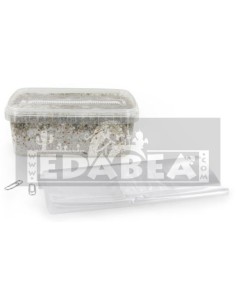
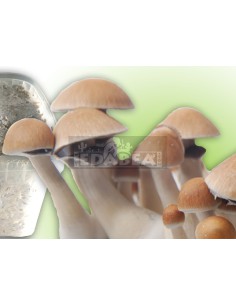
Mushroom cakes or mushroom cultivation kits are substrate blocks fully colonized by the mycelium of Psilocybe cubensis, ready to initiate the fruiting phase under controlled conditions. At Edabea, we select each reference based on verified quality criteria upon receipt: colonization density, absence of visible contamination, and genetic consistency with the declared strain. The catalog is organized into classic strains and hybrid strains, with over 15 years of experience in selecting and marketing mycological material.
What is a mycelium cake?
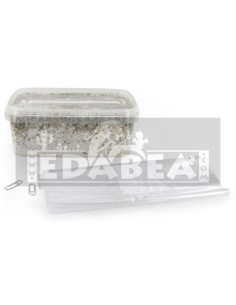
A mycelium cake is a substrate block — usually made from vermiculite, coconut fiber, or sterilized grains — completely colonized by the fungal mycelium network. Unlike cultivation from spores, where the grower must prepare the substrate, inoculate it, and manage complete colonization, the kit arrives with that phase already completed, significantly reducing the risk of contamination from competing fungi like Trichoderma spp. and simplifying the process for the grower (Stamets, P., 1996. Psilocybin Mushrooms of the World. Ten Speed Press).
Each kit is designed to follow the official 100% mycelium cultivation instructions available in our store.
Available classic strains
The classic strains of Psilocybe cubensis are genetic lines with a long-documented history in controlled cultivation, characterized by their phenotypic stability, predictable fruiting cycles, and extensive reference bibliography in practical mycology (Guzmán, G., 1983. The Genus Psilocybe. J. Cramer). Among the references available in the catalog:
| Strain |
Cap Morphology |
Mycelium Characteristics |
Reference |
| Mexicana |
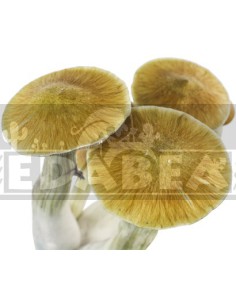
Conical to convex cap, golden brown coloration, slender and elongated stem |
Homogeneous colonization, fine aerial mycelium |
Reference strain in Mesoamerican ethnomycology (Wasson, R.G., 1957) |
| B+ |
Broad caps, variable caramel coloration, persistent annulus |
Dense mycelium, high adaptability to different substrates |
One of the most cultivated strains worldwide (Stamets, P., 1996, op. cit.) |
| McKennaii |
Larger cap, brown-orange coloration, intense sporulation |
Rhizomorphic mycelium, vigorous colonization |
Strain named after the ethnobotanist Terence McKenna |
| Penis Envy |
Thick and robust stem, underdeveloped cap, compact and dense fruiting bodies |
Slower colonization, very dense mycelium |
Phenotypic mutation of P. cubensis with distinct morphology (Stamets, P., 1996, op. cit.) |
Available hybrid strains
The hybrid strains are the result of controlled crosses between genetic lines of different origins, with selection directed towards differentiated morphological traits or yields. They show greater phenotypic variability among individuals and, in some cases, more pronounced growth characteristics than classic lines (Guzmán, G., Allen, J.W. & Gartz, J., 2000. Ethno-mycological Journal, 1, 71–73). Among the references available:
Botanical context: Psilocybe cubensis as the reference species in cultivation
Psilocybe cubensis (Earle) Singer is a basidiomycete fungus of pantropical distribution, originally described by Franklin Sumner Earle in Cuba in 1906 and reclassified by Rolf Singer in 1949. Its natural distribution encompasses tropical and subtropical areas of Central America, South America, Southeast Asia, and Australia, where it typically grows on substrates rich in decomposing organic matter (Guzmán, G., 1983, op. cit.).
The species is morphologically characterized by its cap (pileus) of golden brown color that lightens with maturity, cylindrical stem with a persistent membranous annulus, gills that are gray to dark violet with maturity, and a blue reaction (bluing) to cutting or mechanical pressure, a phenomenon associated with the enzymatic oxidation of psilocin (Stamets, P., 1996, op. cit.). This blue reaction is a recognized taxonomic marker within the genus, although it does not constitute a quantitative indicator of psilocybin content.
The first isolation of the active principles of Psilocybe was performed by Albert Hofmann and collaborators in 1958, identifying psilocybin (4-phosphoryloxy-N,N-dimethyltryptamine) and psilocin (4-hydroxy-N,N-dimethyltryptamine) as secondary metabolites of ethnobotanical interest (Hofmann, A., Heim, R. & Brack, A., 1958. Helvetica Chimica Acta, 41(6), 1358–1374).
Legal aspects
The legal status of fungi in the genus Psilocybe and their active principles varies by jurisdiction. It is the responsibility of the buyer to verify the applicable regulations in their place of residence before making a purchase. Products in this category are marketed exclusively as mycological material for cultivation and ethnobotanical research.
Frequently asked questions about mushroom cakes and cultivation kits
What is the difference between a mushroom cake and a cultivation kit?
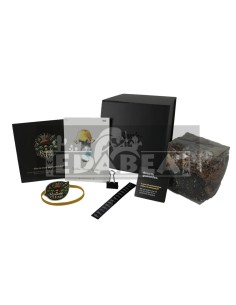
In most cases, the terms are used synonymously: both refer to a substrate block colonized by mycelium ready for the fruiting phase. Technically, the mycelium cake is strictly the colonized substrate block, whereas some cultivation kits may include additional elements such as a cultivation bag, closure clip, or reference documentation. In Edabea's catalog, both formats are presented under the term mushroom cakes or 100% mycelium kits, with content specified in each individual product sheet.
What species do the kits in the catalog contain?
The vast majority of mycelium cakes available in this category correspond to Psilocybe cubensis (Earle) Singer genetics, the most cultivated species in psychedelic mycology due to its adaptability to different substrates, relative phenotypic stability, and extensive bibliographic documentation (Guzmán, G., 1983, op. cit.). The classic and hybrid strains are all selected varieties within this same species, not different species.
How do classic strains differ from hybrids?
Classic strains are genetic lines with a long-documented history in controlled cultivation, with well-known behaviors and predictable fruiting cycles. Hybrid strains result from directed crosses between lines of different origins, selecting for specific morphological traits — greater robustness of the stem, higher mycelial density, lesser pigmentation — that phenotypically differentiate them from the parental lines. The differences between strains are morphological and behavioral in cultivation; all belong to Psilocybe cubensis as the botanical species.
What is the ethnobotanical origin of Psilocybe cubensis?
The ritual use of fungi from the genus Psilocybe is documented in Mesoamerican traditions with a historical continuity that dates back to rock representations and pre-Columbian ceramic pieces. Its modern ethnomycological systematization began with R. Gordon Wasson's fieldwork among the Mazatec people of Oaxaca in the 1950s, where he recorded the ceremonial use of these species under the Nahuatl name teonanácatl (Wasson, R.G., 1957. Life Magazine; Wasson, R.G., 1980. The Wondrous Mushroom: Mycolatry in Mesoamerica. McGraw-Hill). Schultes and Hofmann later documented the geographical distribution of neurotropic species and their integration into shamanic systems of various American cultures (Schultes, R.E. & Hofmann, A., 1979. Plants of the Gods. McGraw-Hill).
Where can I find the cultivation instructions?
The official cultivation instructions for 100% mycelium kits are available in the Edabea cultivation guide. Each kit also includes downloadable reference documentation in several languages from the individual product sheet.
This sheet was prepared by the specialized team at Edabea Natura, with over 15 years of experience in selecting and marketing ethnobotanical and mycological materials. The phytochemical and ethnobotanical information is based on the cited bibliographic sources and on direct knowledge of the material from each batch. Last update: April 2026. For inquiries about availability or characteristics of the current batch, contact contacto@edabea.com.
Bibliographic references
- Guzmán, G. (1983). The Genus Psilocybe. Vaduz: J. Cramer.
- Guzmán, G., Allen, J.W. & Gartz, J. (2000). A worldwide geographical distribution of the neurotropic fungi. Ethno-mycological Journal, 1, 71–73.
- Hofmann, A., Heim, R. & Brack, A. (1958). Psilocybin and Psilocin, two psychotropic substances from Mexican psychoactive mushrooms. Helvetica Chimica Acta, 41(6), 1358–1374.
- Schultes, R.E. & Hofmann, A. (1979). Plants of the Gods. New York: McGraw-Hill.
- Stamets, P. (1996). Psilocybin Mushrooms of the World. Berkeley: Ten Speed Press.
- Wasson, R.G. (1957). Seeking the magic mushroom. Life Magazine, 49–60.
- Wasson, R.G. (1980). The Wondrous Mushroom: Mycolatry in Mesoamerica. New York: McGraw-Hill.